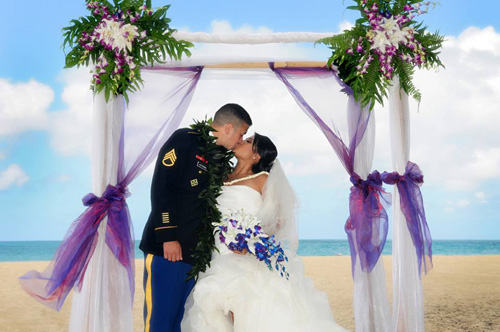
A traditional Hawaiian wedding is full of meaning, from the first notes of the ukulele to the last call of the conch shell. Here is how the ceremony unfolds, step by step, and how you can make each tradition your own.
Before the ceremony
Prelude: Hawaiian Music
As your guests arrive, they hear the sea and the gentle strumming of the ukulele, with island songs by Hawaiian legends like Gabby Pahinui and Israel “Brother Iz” Kamakawiwoʻole. The music usually begins about 20 minutes before the ceremony, so everyone can settle in while the wedding party gets ready. See our wedding music.
Tap any photo to see it full size.
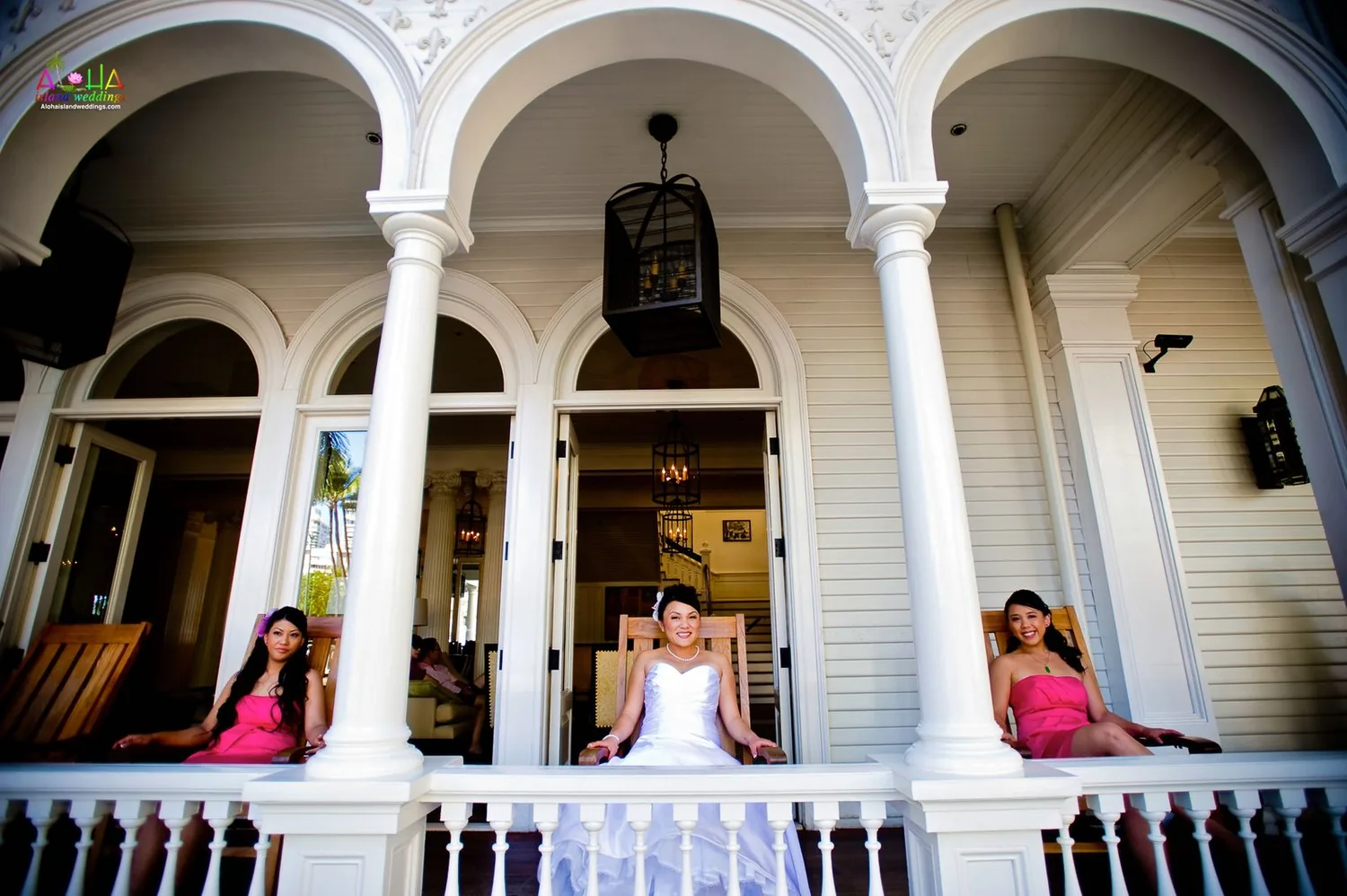
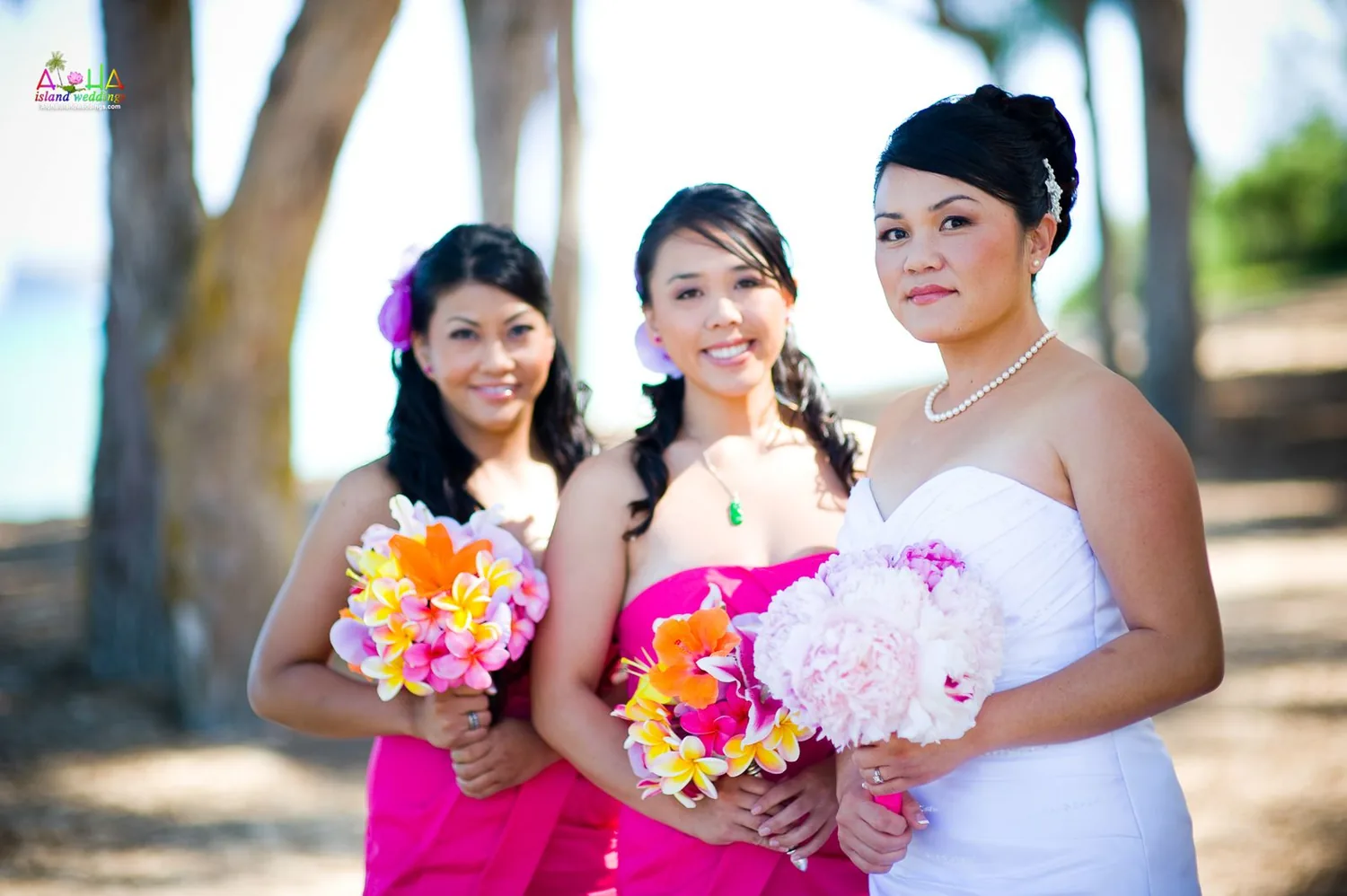
Step one
The Entrance of the Groom & the Mothers
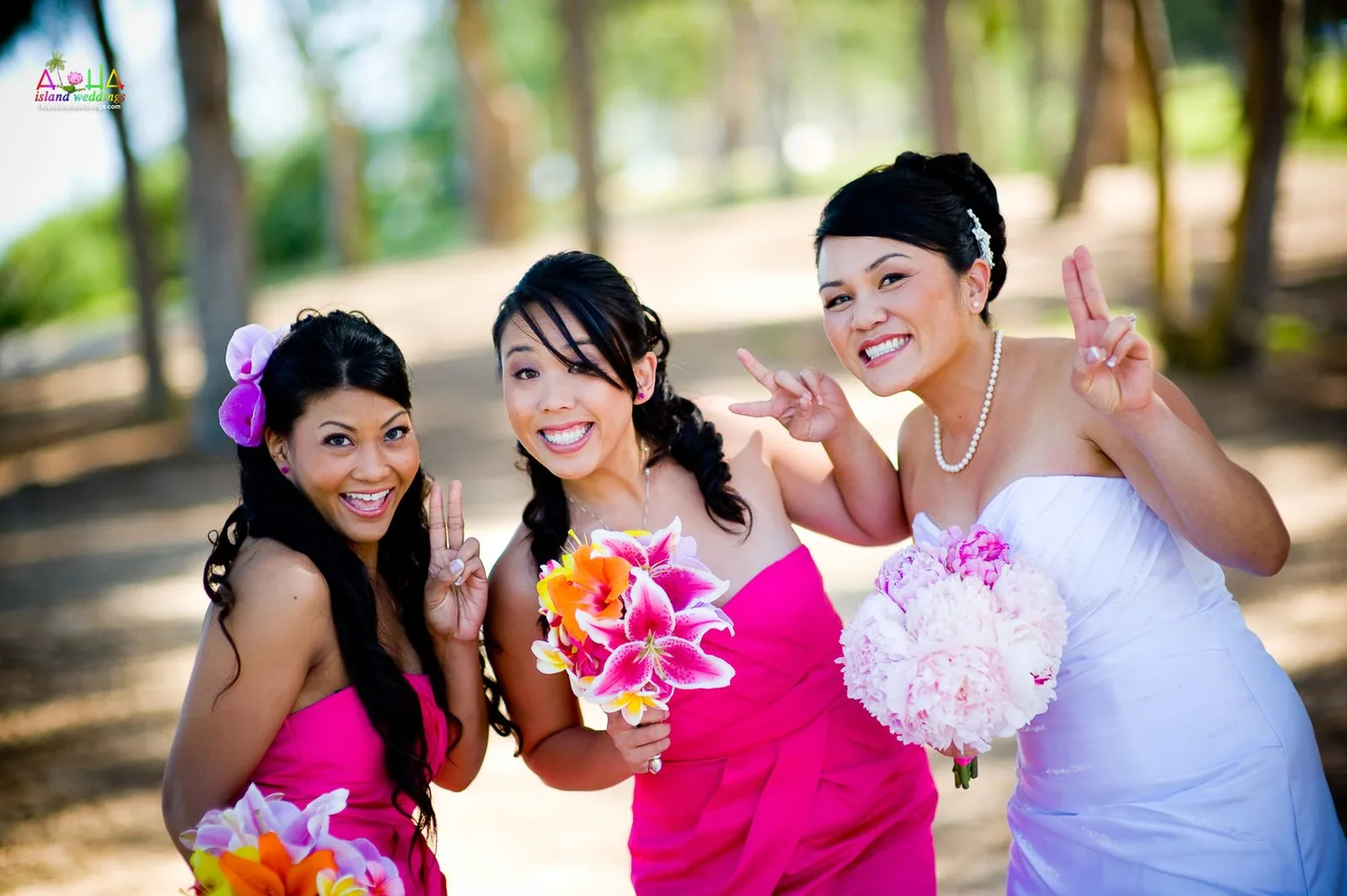
The minister, called the Kahu, walks with the groom to the front of the ceremony and may chant a mele that introduces him as the man who is getting married.
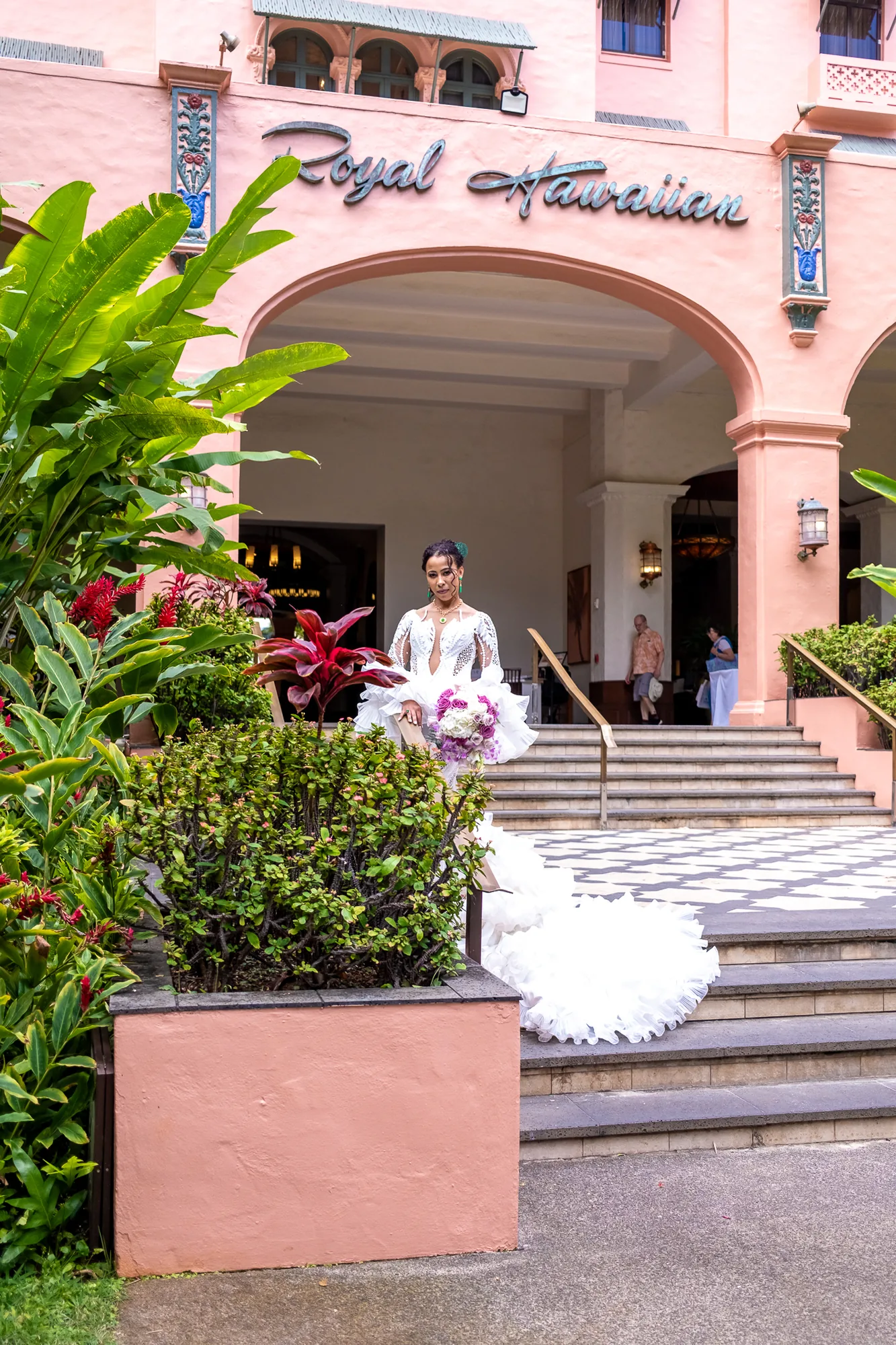
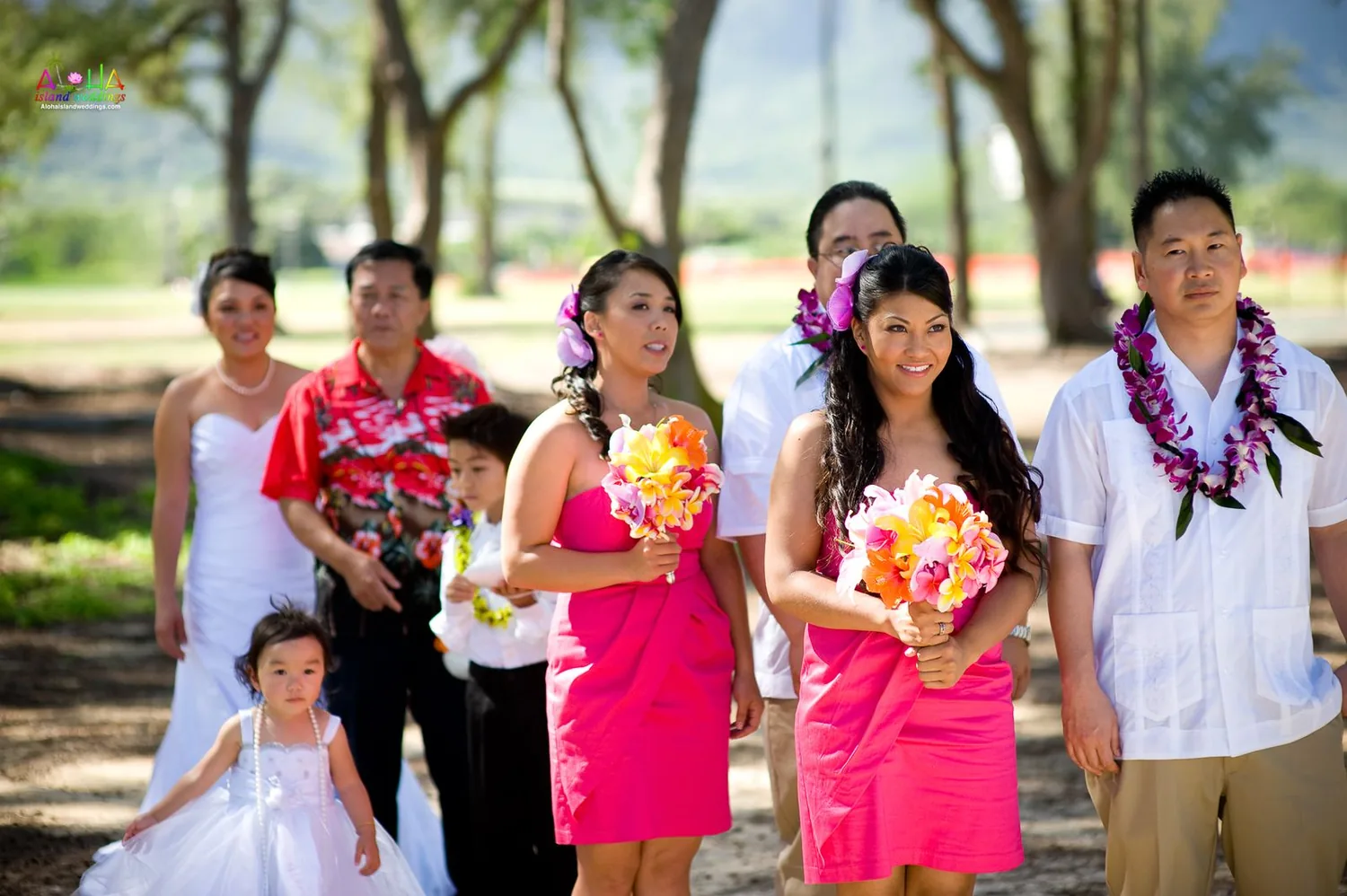
In Hawaii the mothers are honored in the ceremony. Each may be escorted by a close member of the family, and once the mothers are seated, the processional begins. The bridesmaids walk in alone or with the groomsmen, the maid of honor enters last and stands closest to the bride, and then the ring bearer and flower girl may begin.
Tap any photo to see it full size.
Step two
The Pū Announces the Bride
The entrance of the bride is announced by the sounding of the conch shell, the pū. It is blown to call the land, air, earth and sea to witness the wedding. Once the Kahu has blown the pū, the bride begins her walk, and the groom turns to watch her arrive. See our conch shell ceremony.
Step three
The Lei Ceremony
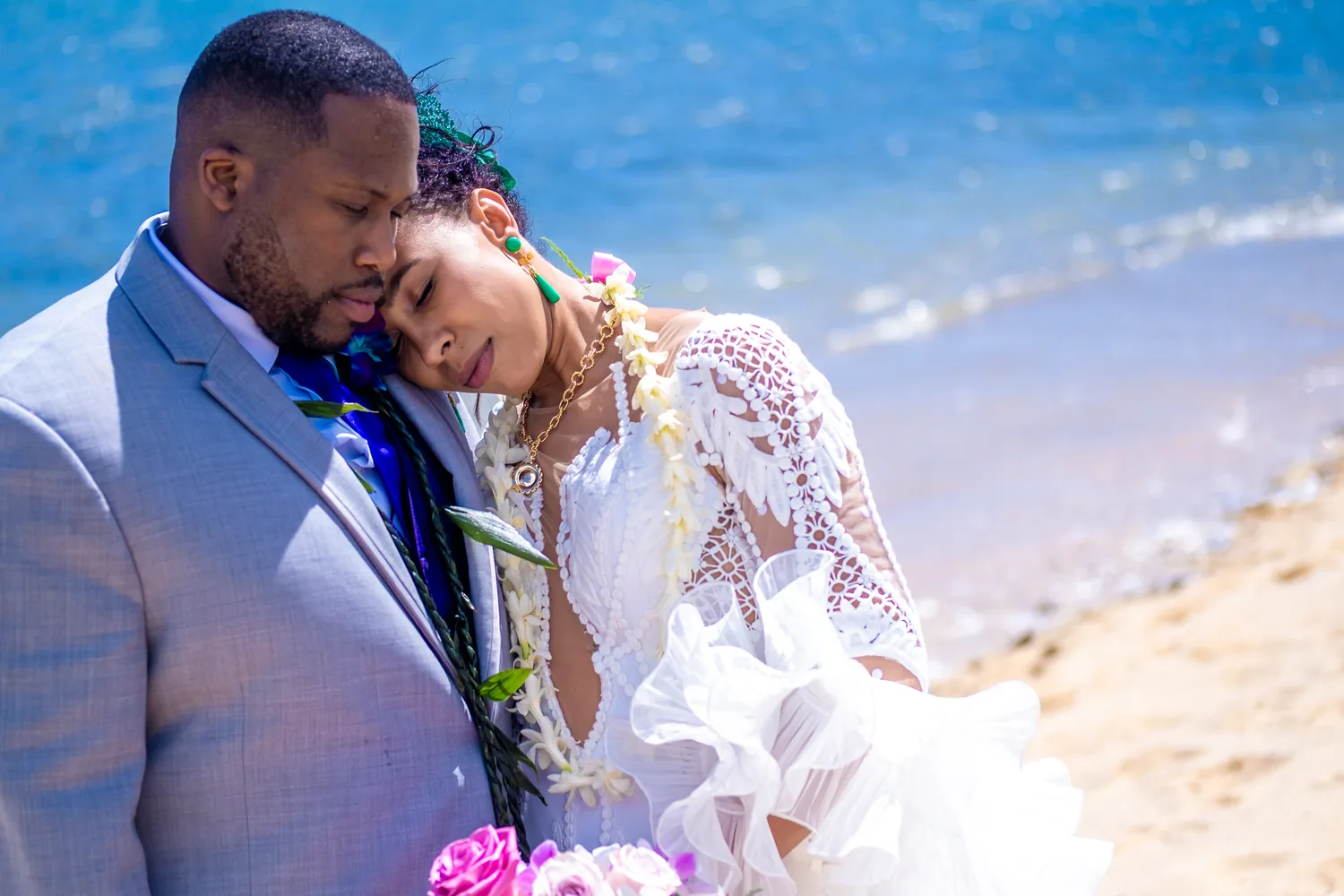
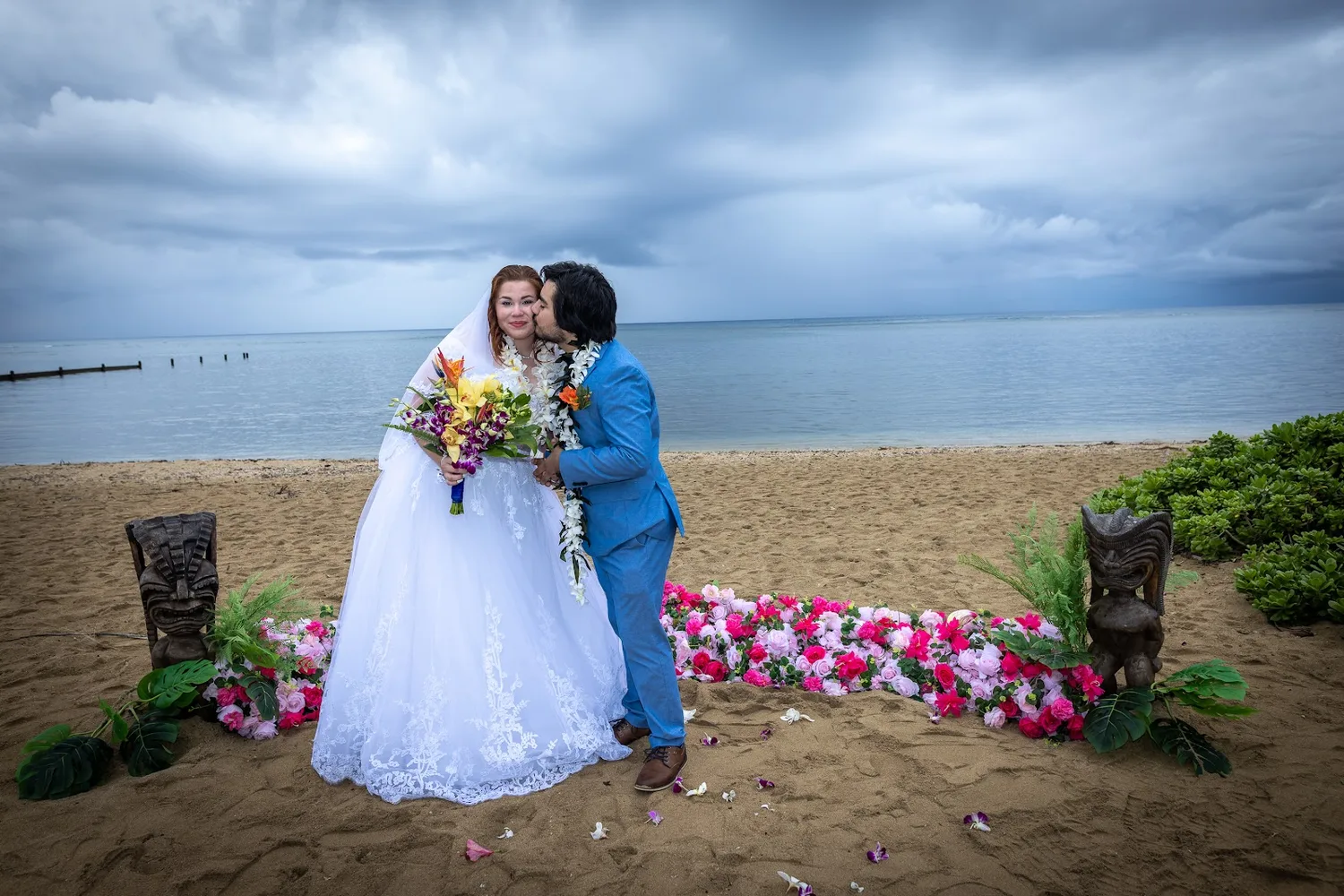
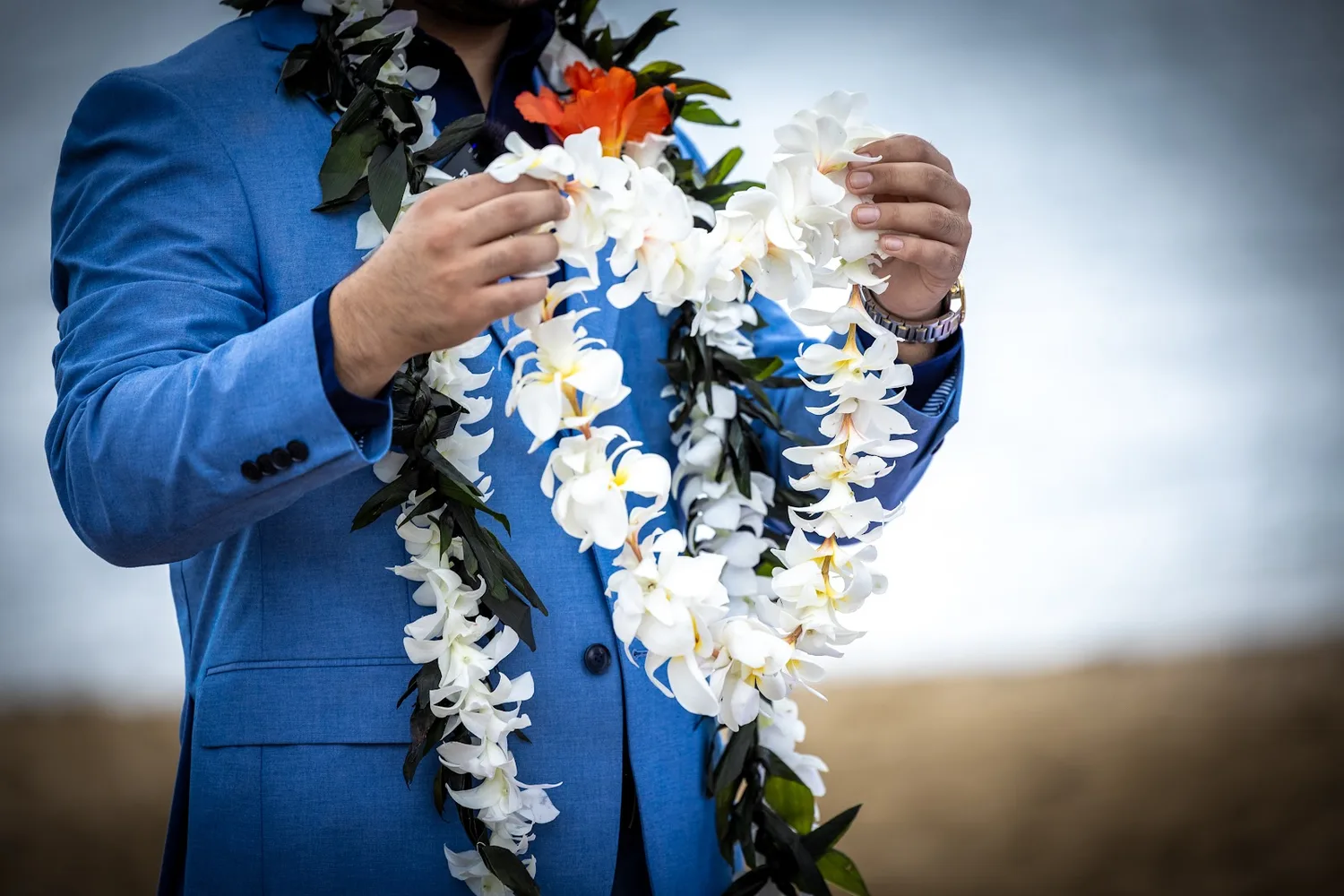
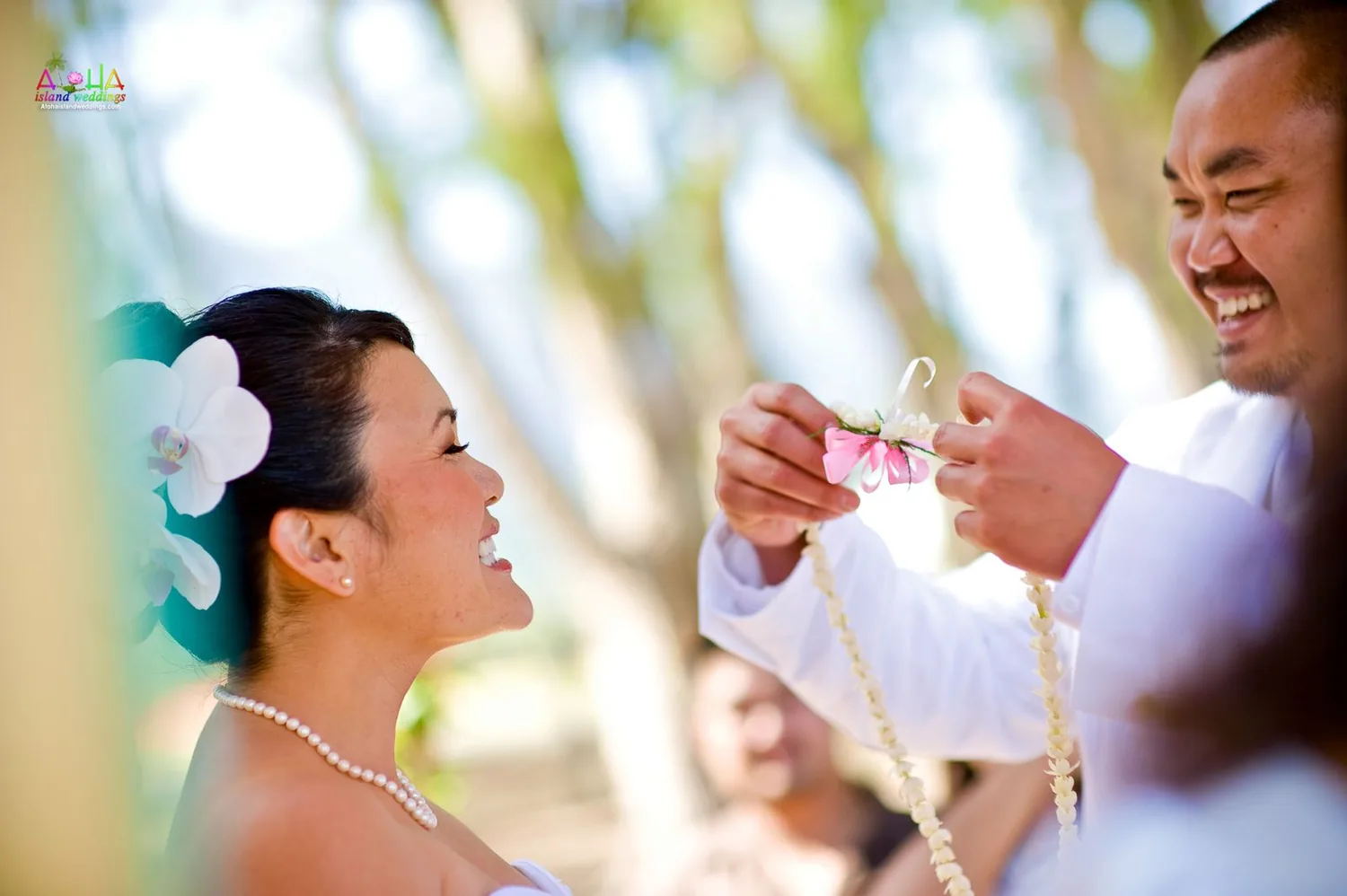
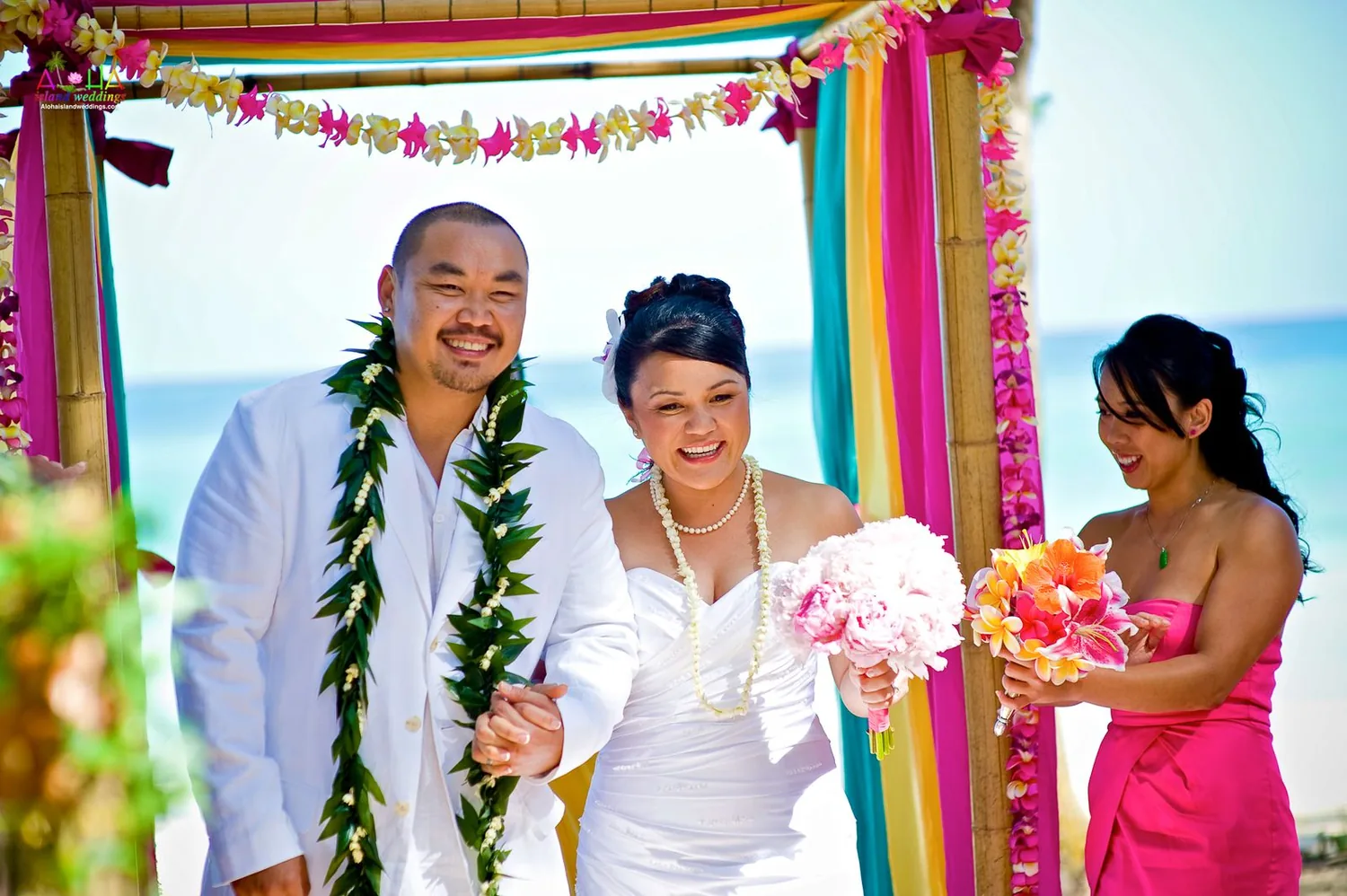
Giving someone a lei shows how much you love and care for them, and the lei exchange is one of the most beloved Hawaiian traditions. You may give a kiss or a hug when you present a lei, or a handshake to the fathers, and the bride always presents her lei to the groom first.
In old Hawaii, a woman chose her man by leaving a maile lei at his doorstep, showing him and everyone that this wahine wanted his hand in marriage. Today the tradition lives on in the lei exchange, often right after the bride’s father gives her away. The minister or best man holds the groom’s maile lei for the bride, and the maid of honor holds the bride’s lei for the groom.
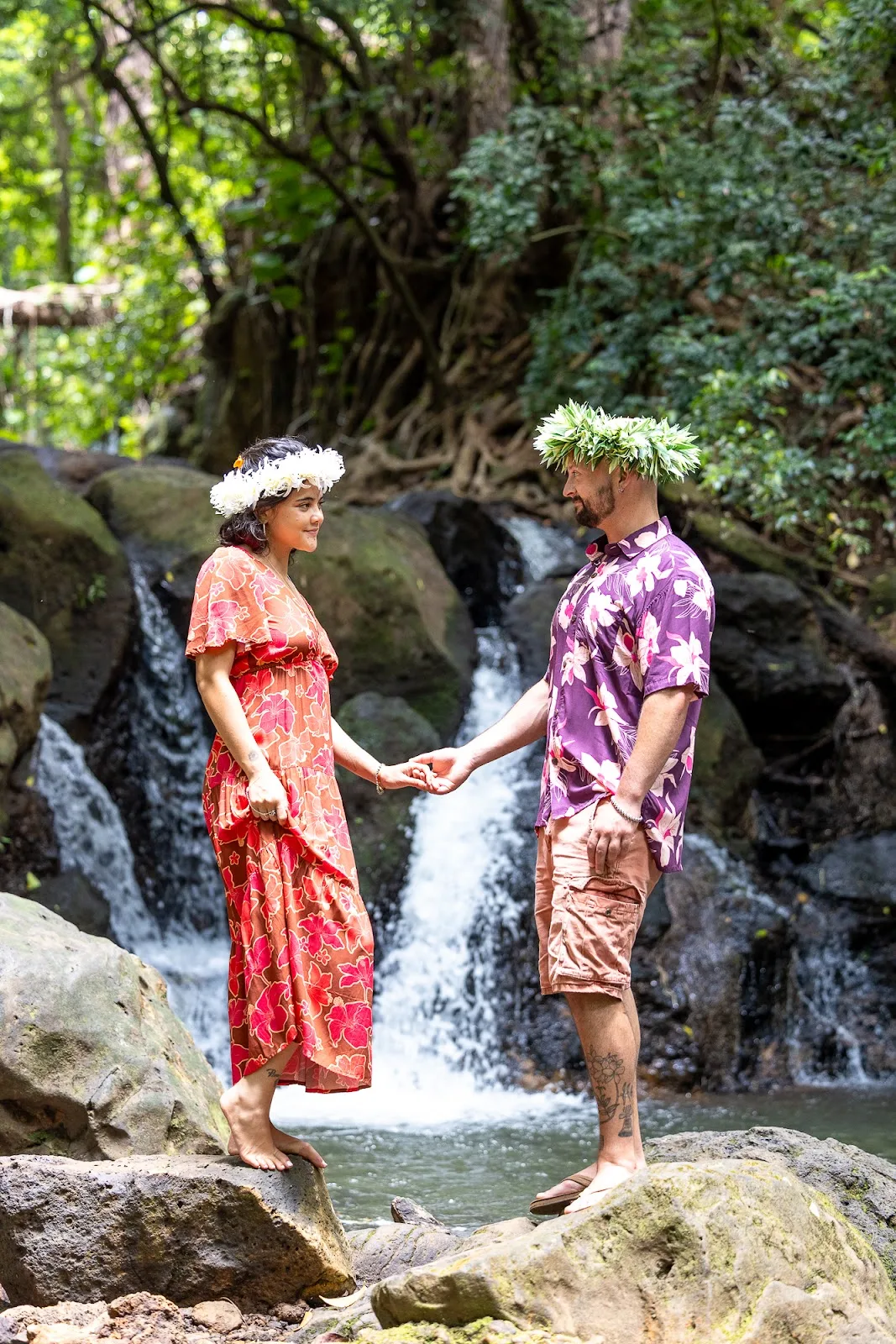
Grooms traditionally wear a ti leaf or maile lei, sometimes woven with tuberose or orchids for color. Brides often wear pink and white pikake, white ginger, white orchids or white rosebuds. See our Hawaiian flower leis.
Tap any photo to see it full size.
Step four
Leis for the Parents
Fathers traditionally receive a kukui nut and ti leaf lei, and mothers a fragrant white ginger or pikake lei, often in the colors of the wedding. There are a few lovely ways to include them:
- Before the ring exchange: the groom’s parents come forward and place a lei on their son, then the bride’s parents place a lei on their daughter, offer their blessing and return to their seats.
- At the start of the ceremony: the groom’s parents give a lei to the bride and the bride’s parents give a lei to the groom, a beautiful way to welcome their child’s new partner and join the two families.
- From the couple: the bride and groom give leis to their parents and in-laws, a sign of respect for both families.
Step five
The Sand Ceremony
In Hawaii the sand ceremony is a symbol of two becoming one, a union that can never be parted. The bride and groom each pour a different color of sand into one vessel, and children or parents can add their own colors too. See our Hawaiian sand ceremony.
Step six
Prayer, Vows, Rings & the Pronouncement
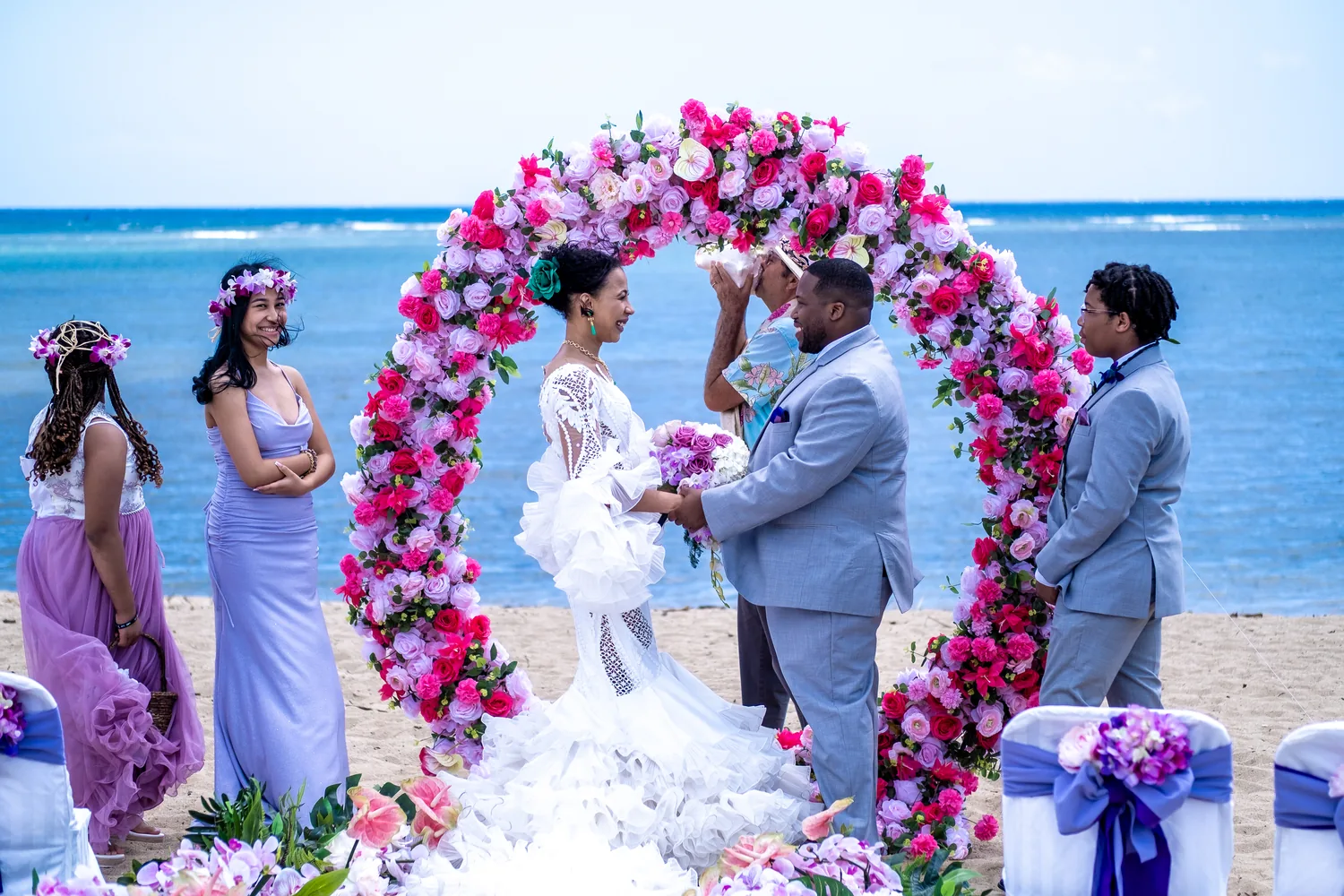
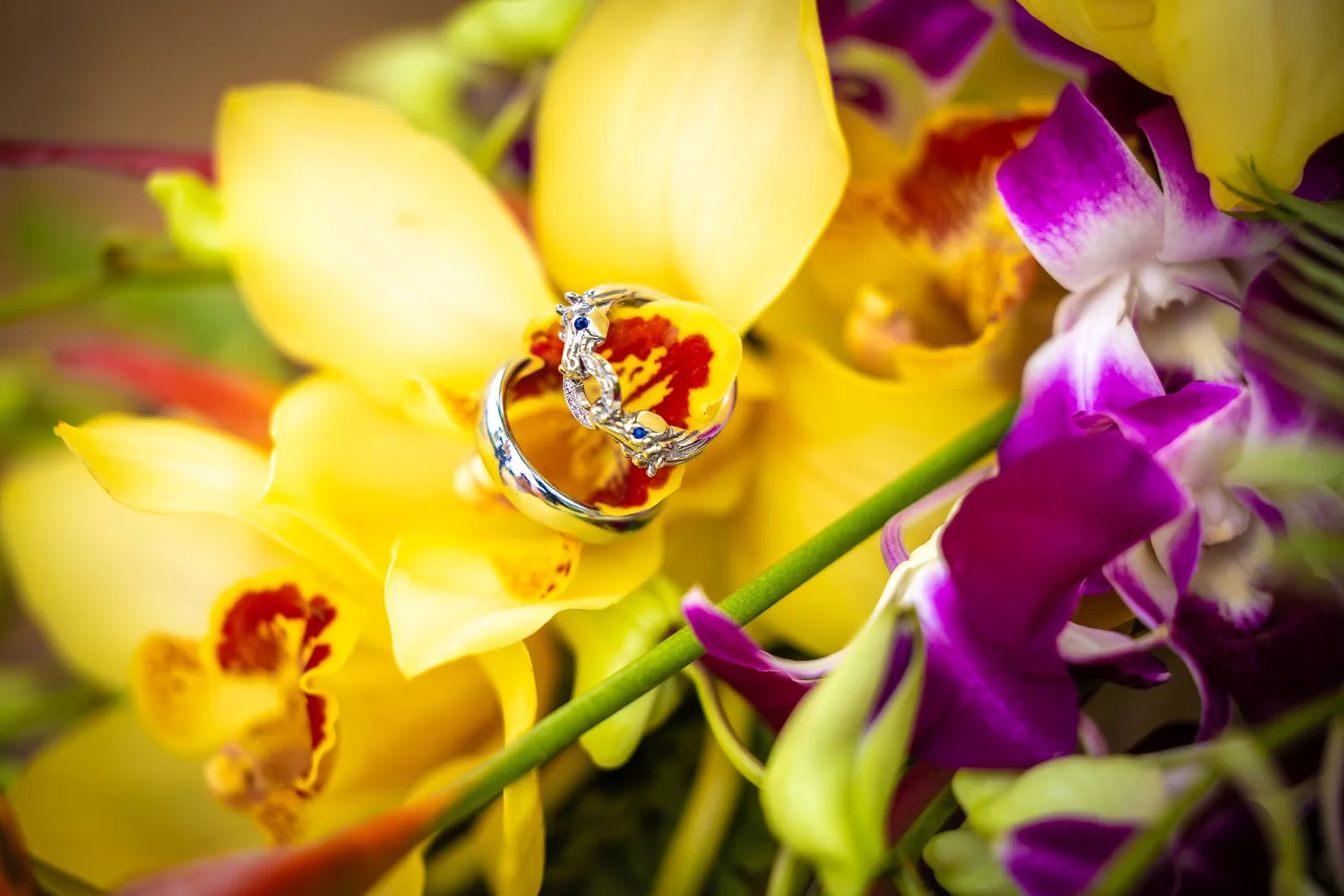
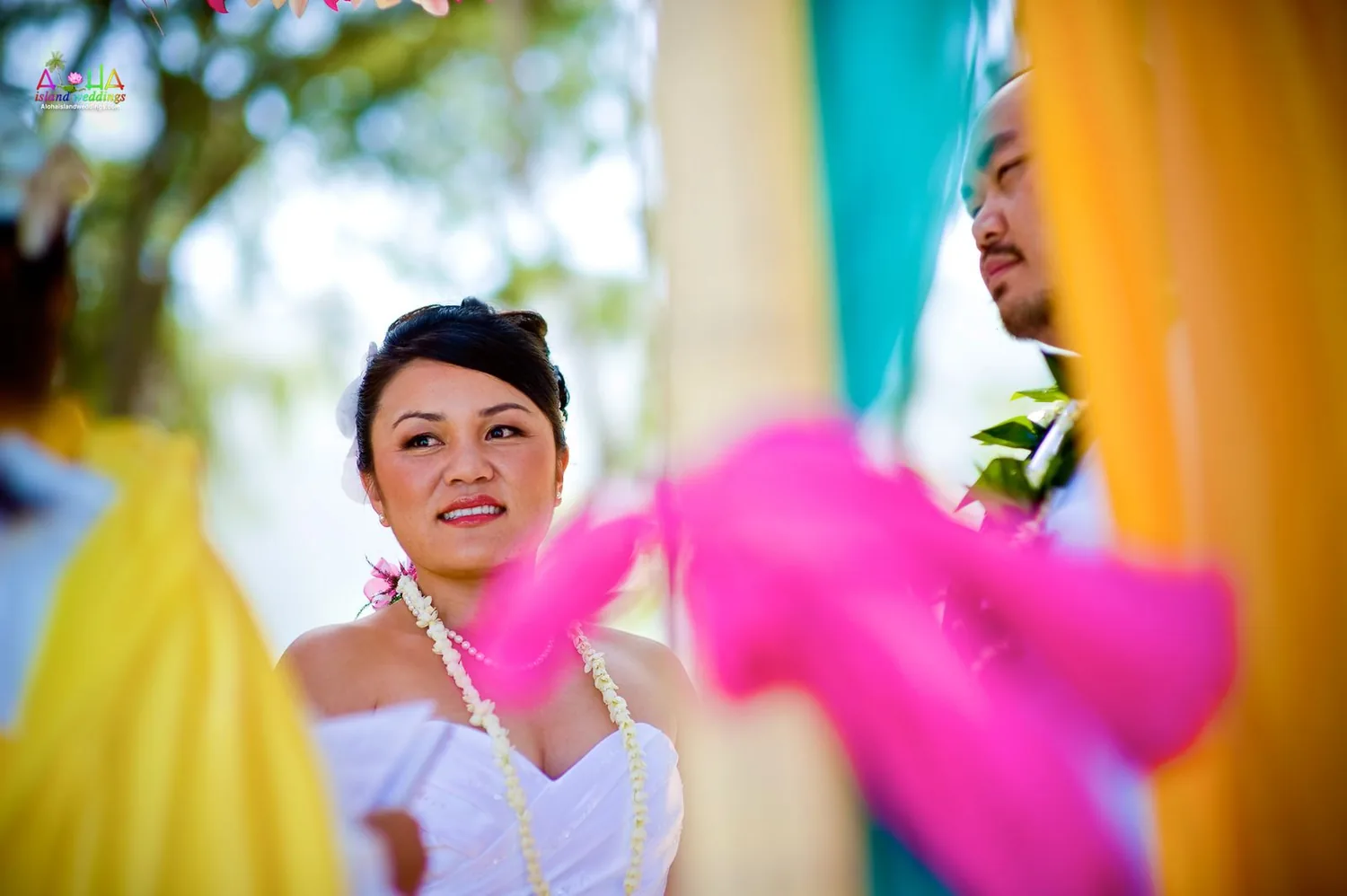
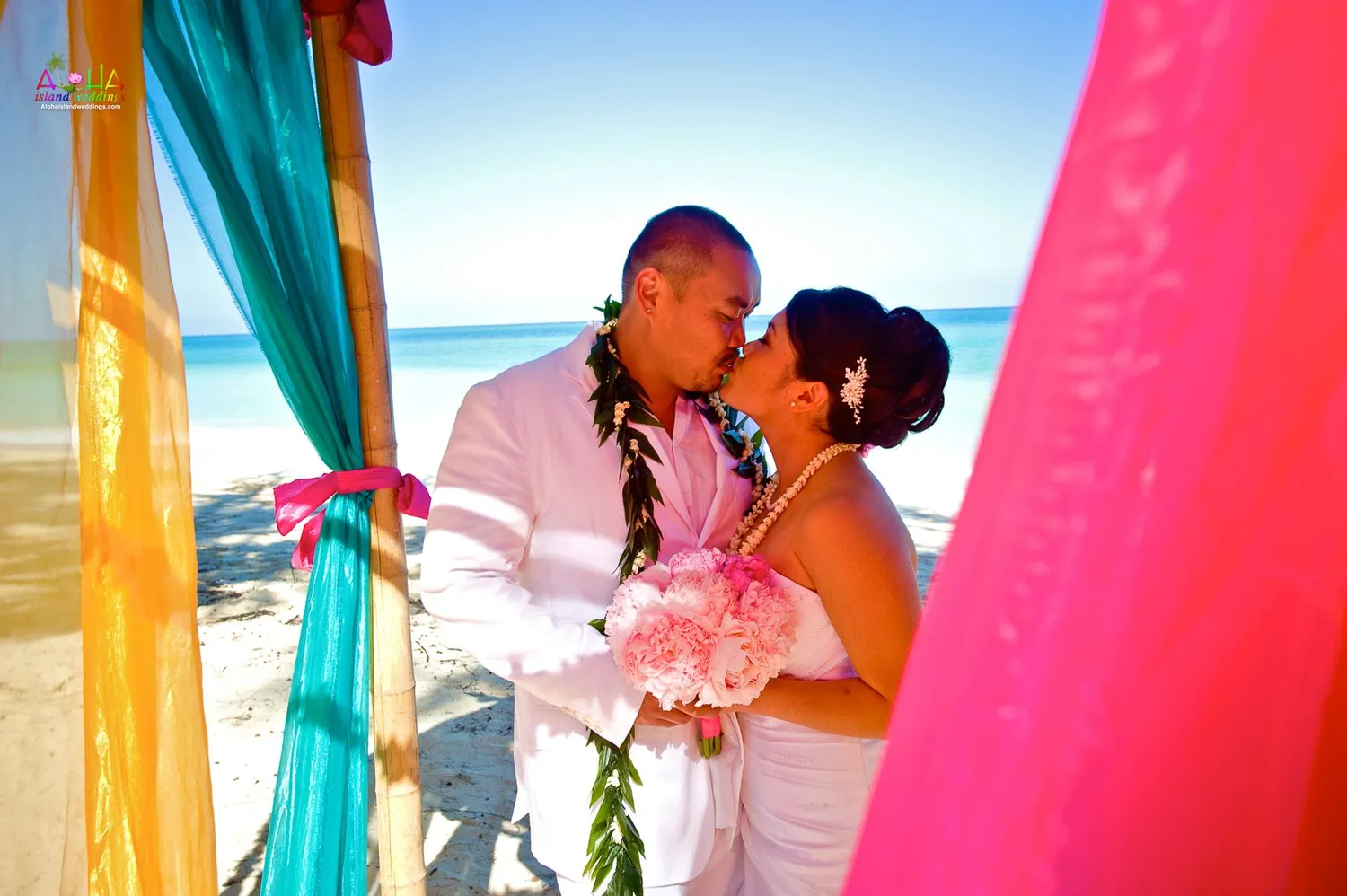
The Kahu offers a prayer and readings, then guides you through the exchange of vows and the exchange of rings, followed by another prayer. Finally you are presented as husband and wife, often with a shower of love as your guests throw rose petals. For sample words, see our Hawaiian wedding vows, chants and blessings.
Tap any photo to see it full size.
After the ceremony
Celebrate on the Sand
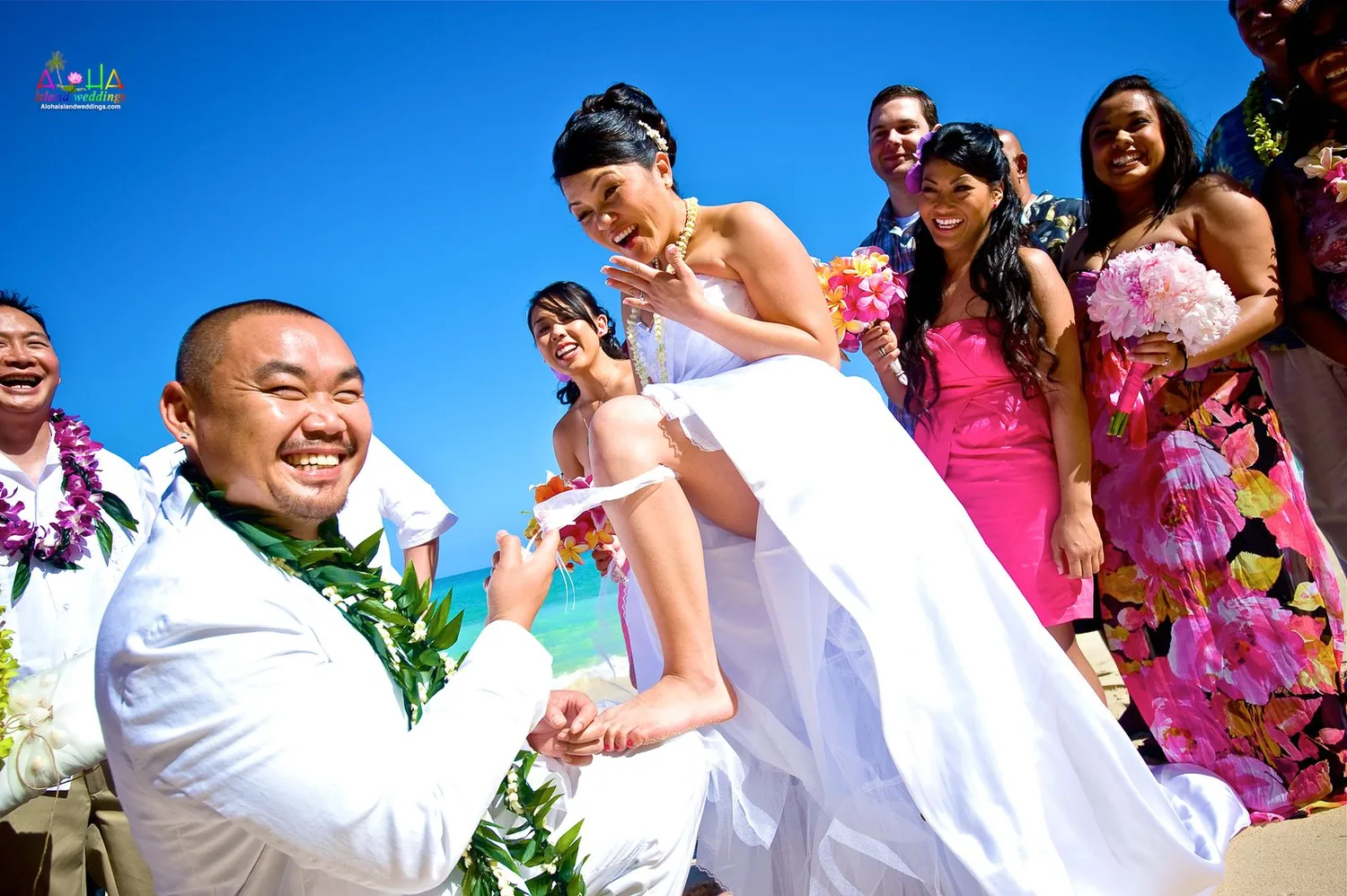
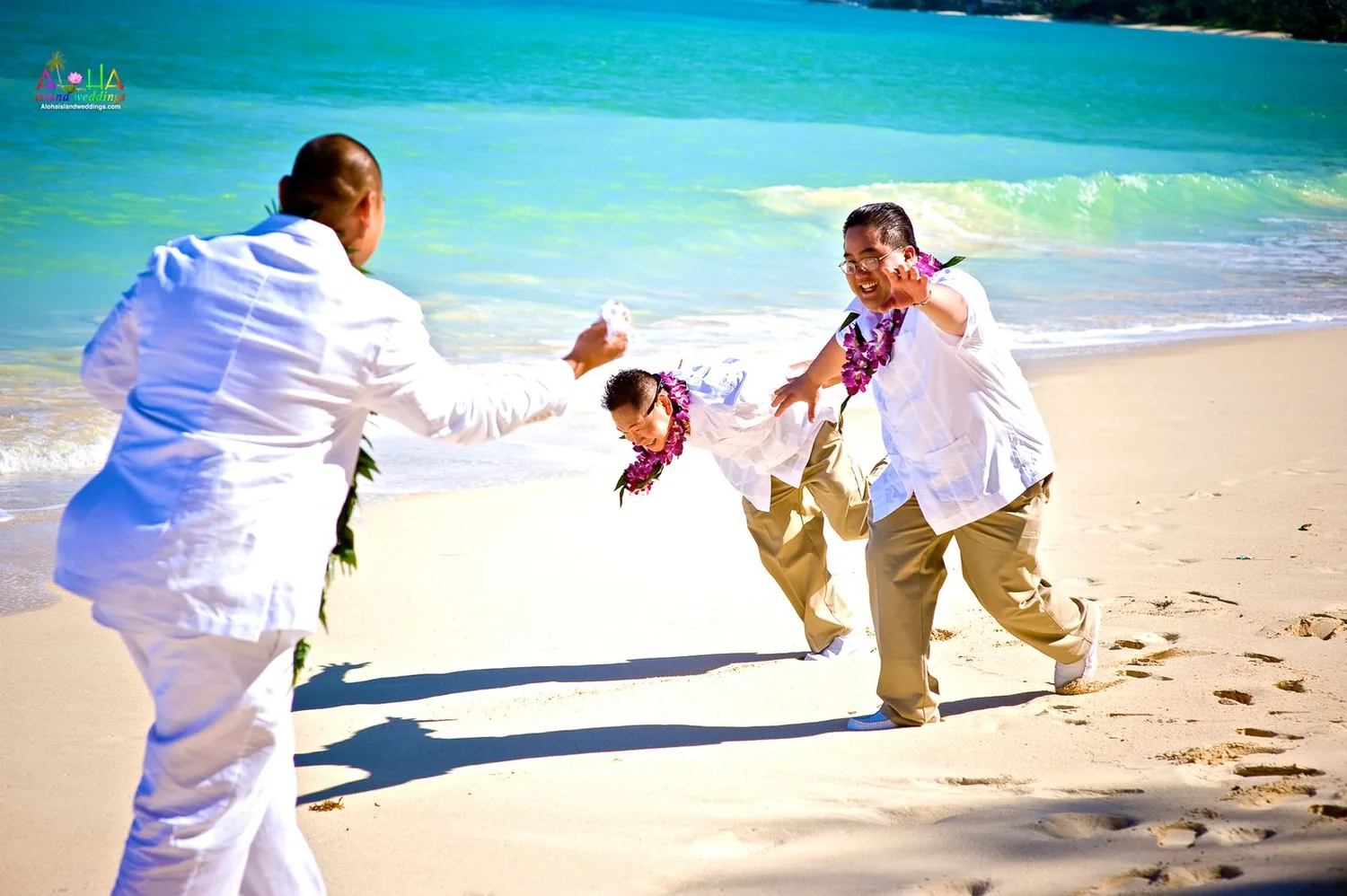
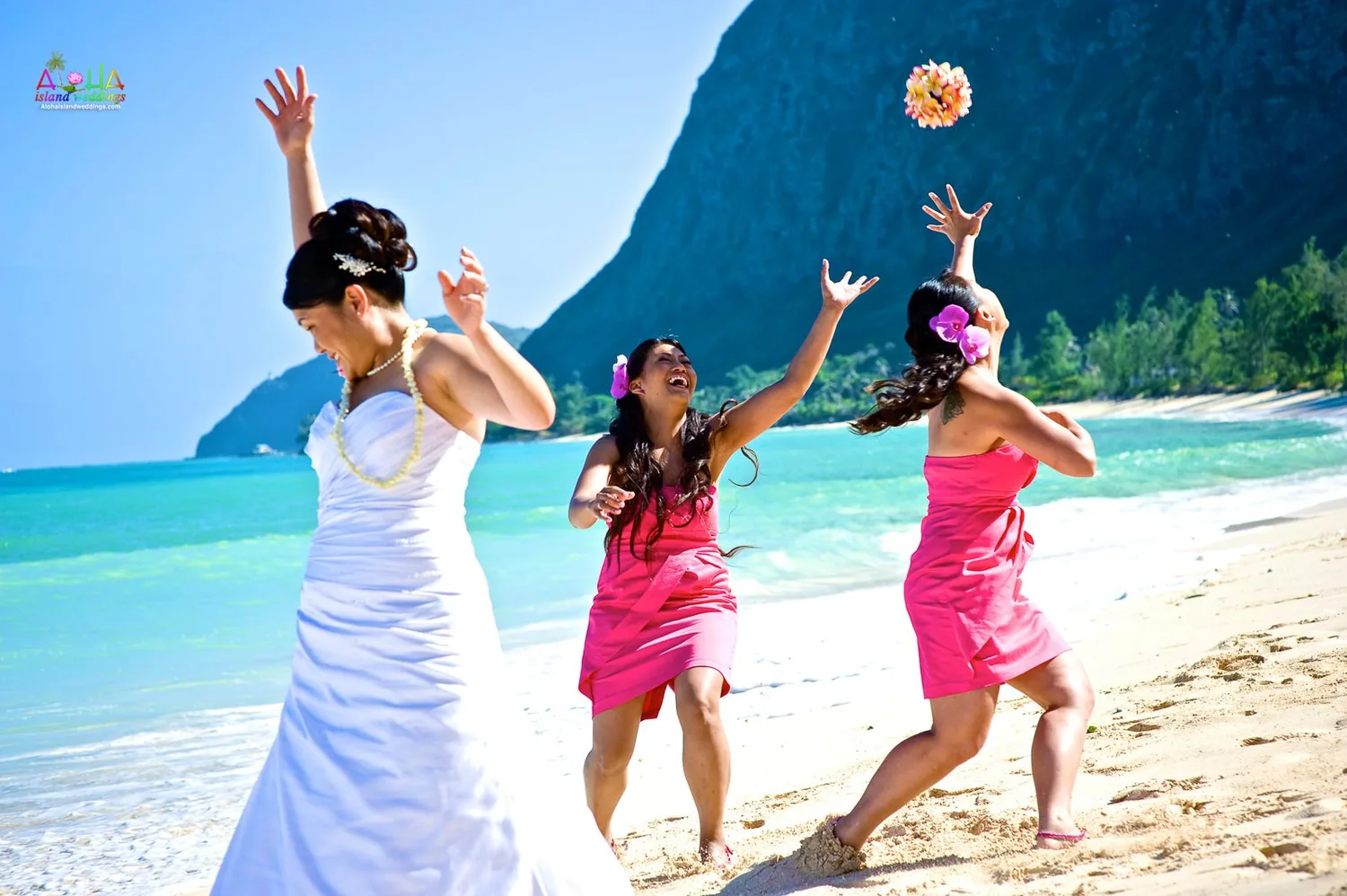
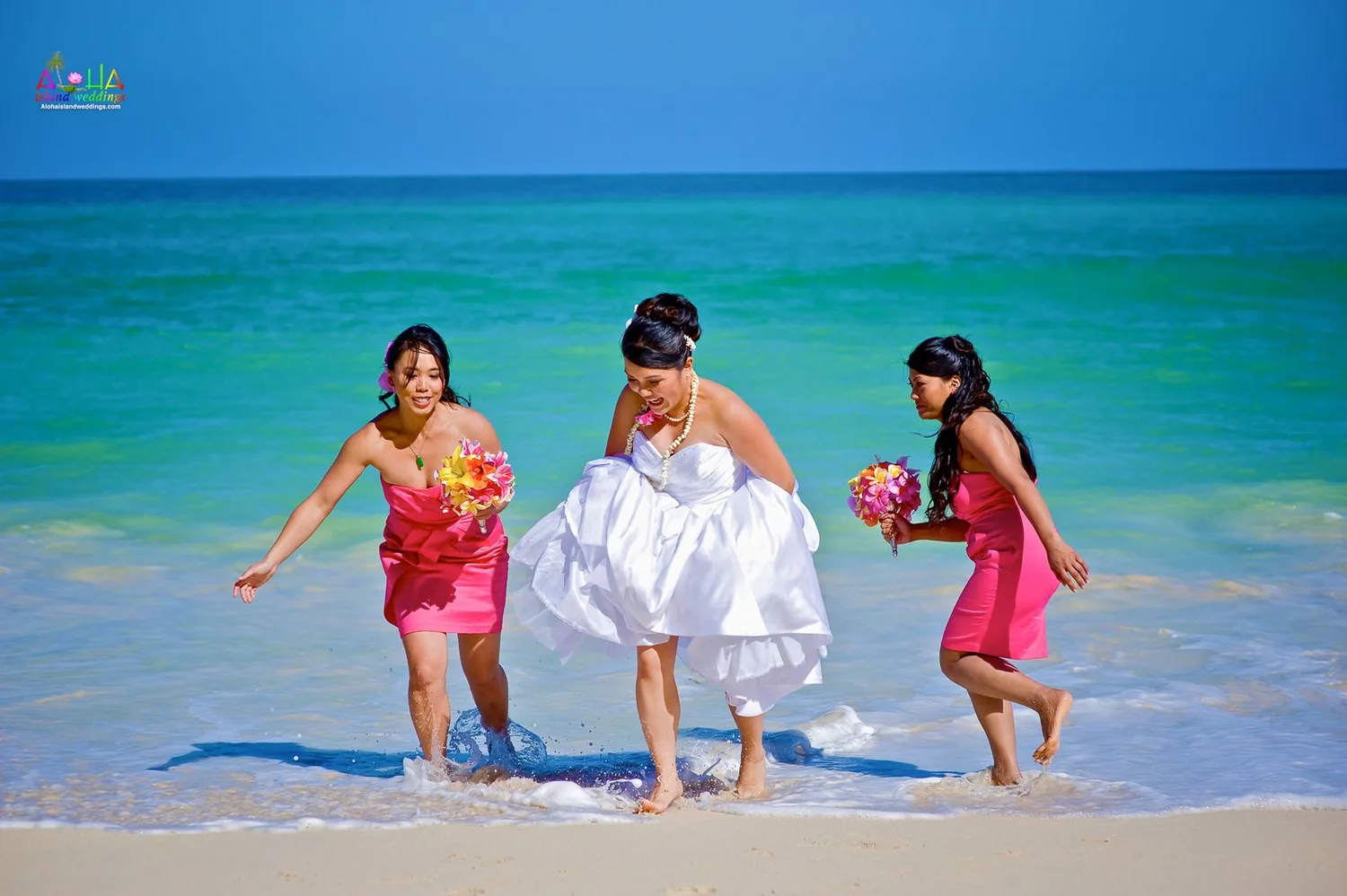
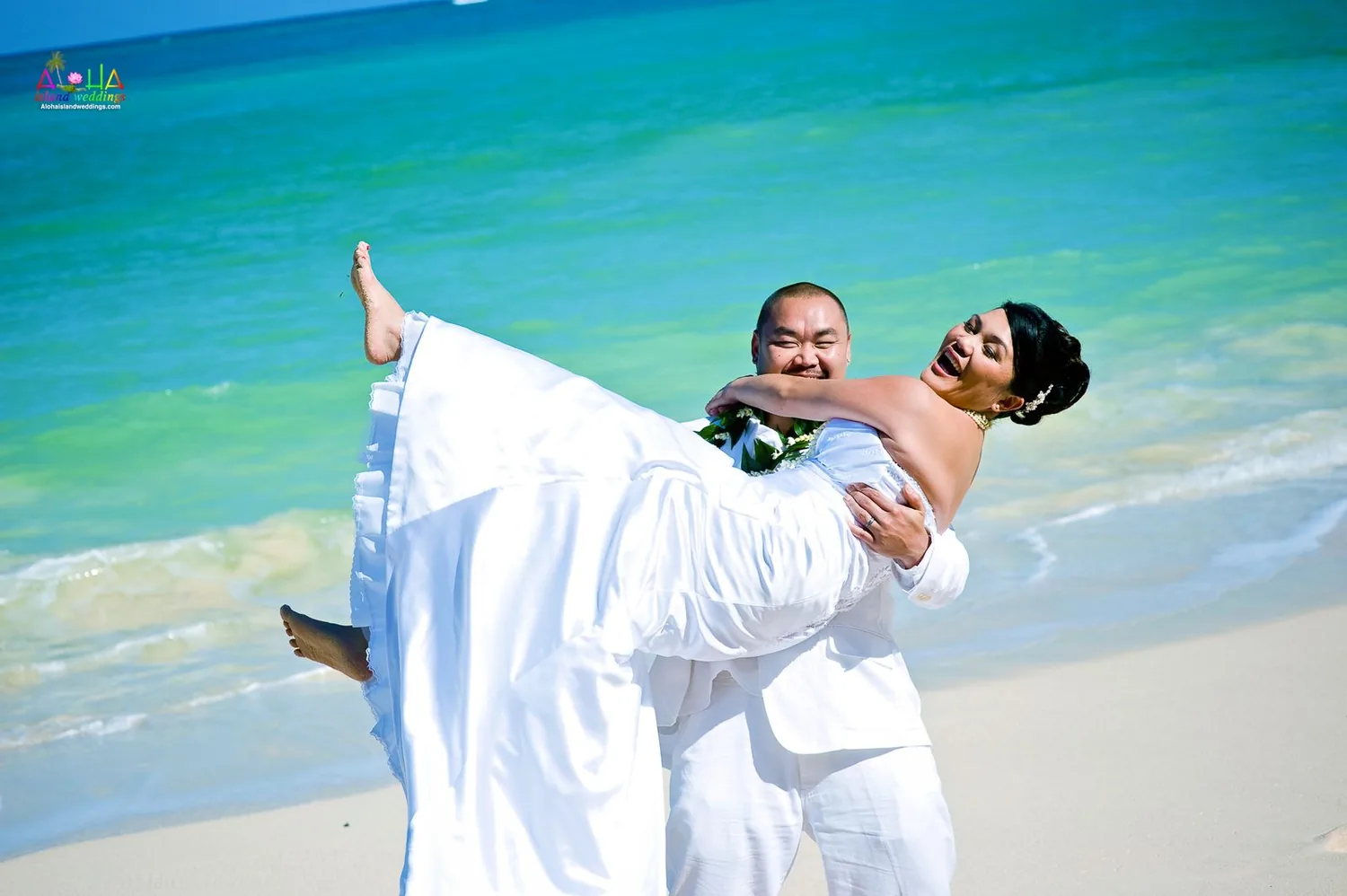
Once the vows are said, the fun begins: the garter and the bouquet toss, the groomsmen leaping on the sand, and the bride and her bridesmaids running into the waves in their dresses.
Tap any photo to see it full size.
Your own heritage
Blending Your Family Traditions
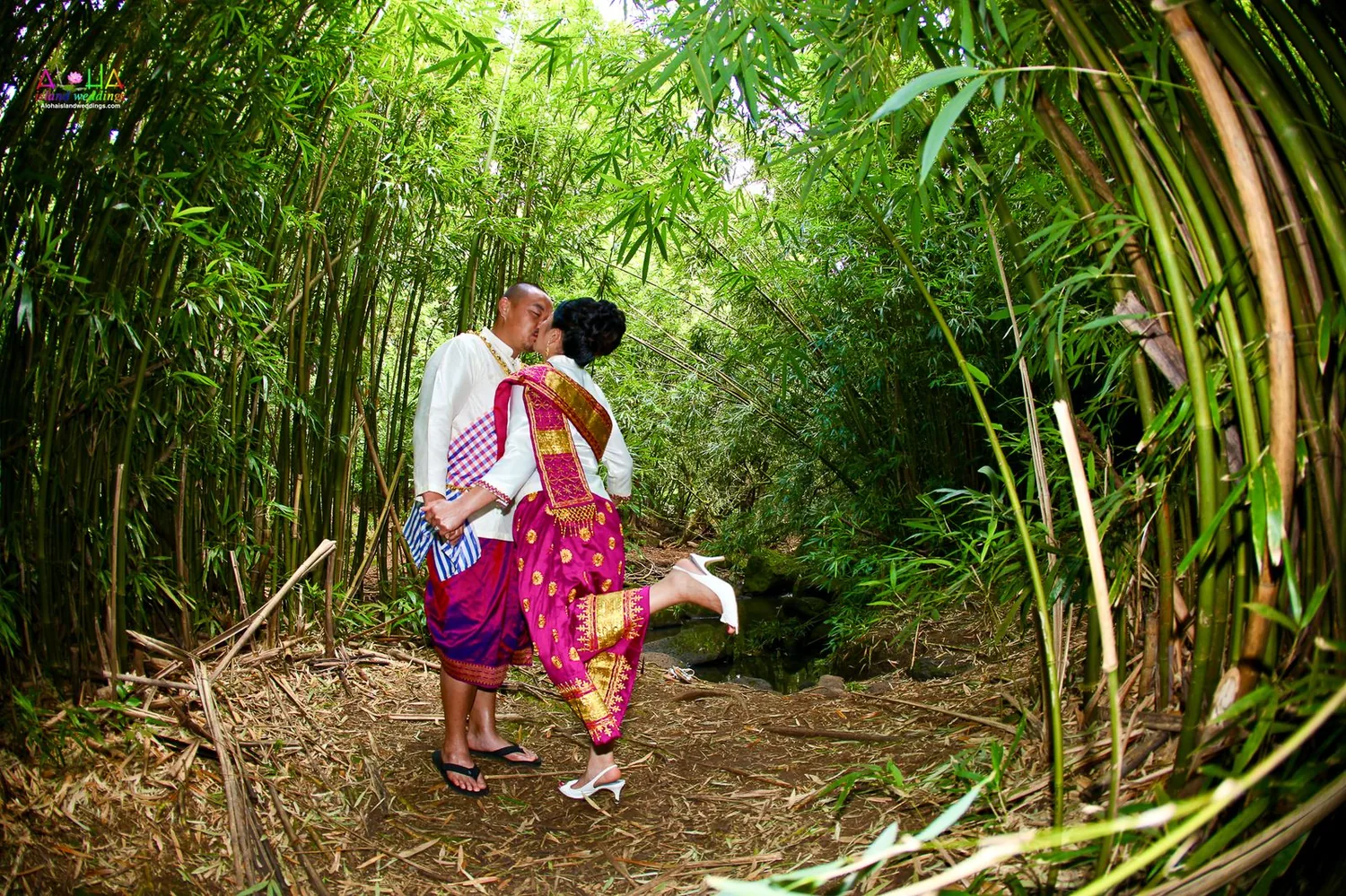
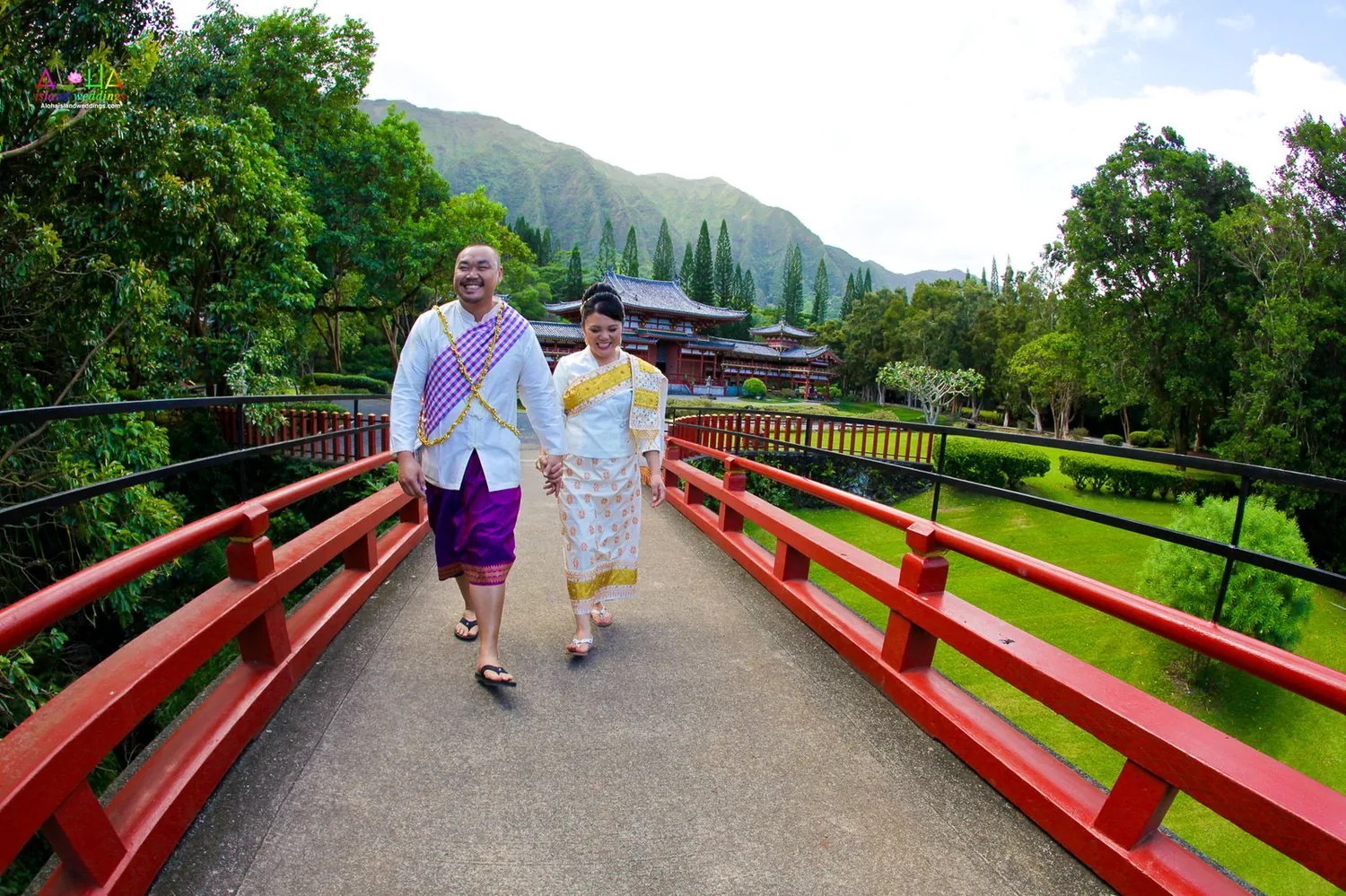
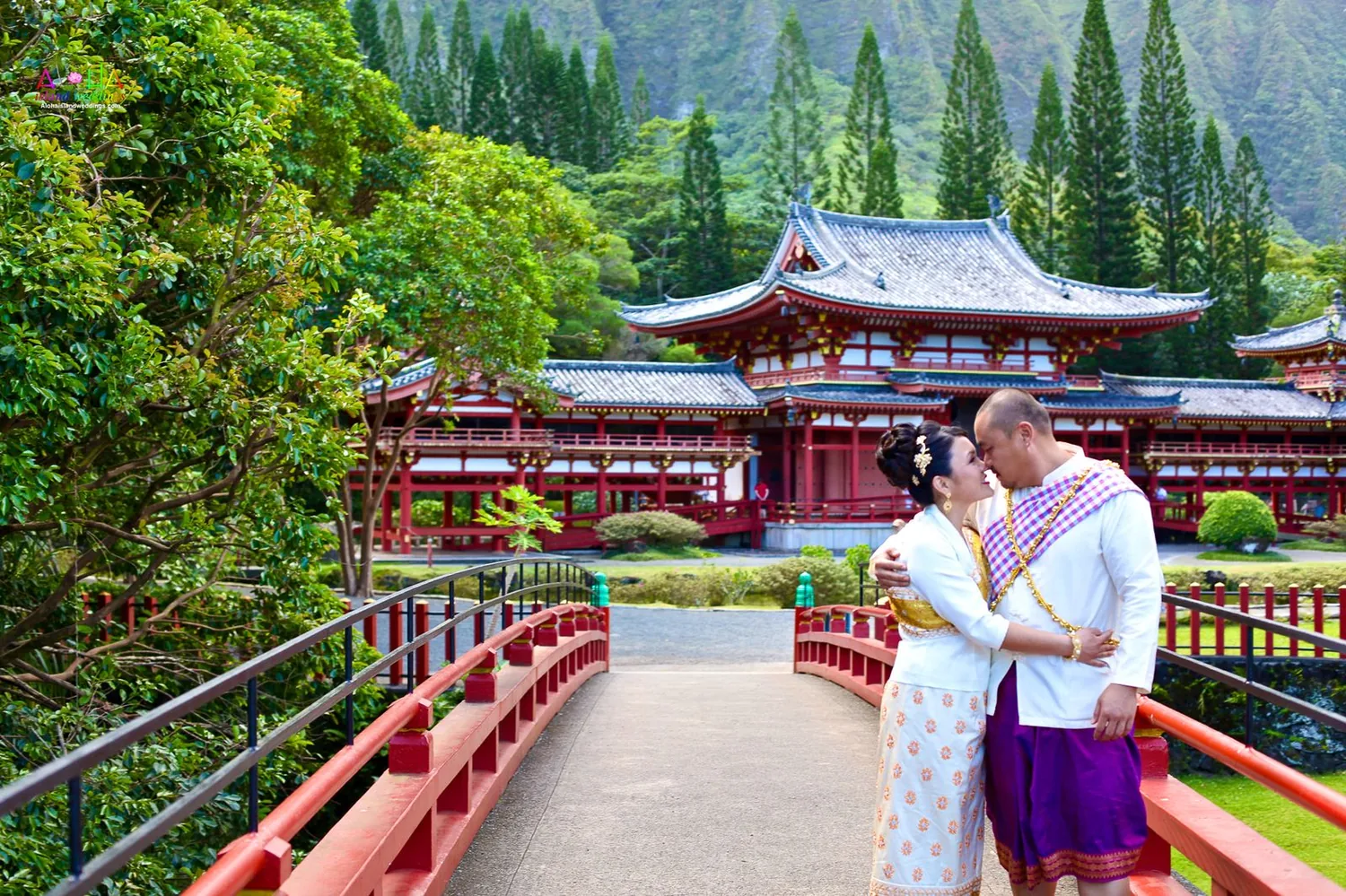
Many couples blend Hawaiian traditions with their own family heritage. After this beach ceremony, the couple changed into traditional silk wedding attire for photos in a bamboo forest and on the red bridge of the Byodo-In Temple, in the Valley of the Temples on Oahu’s windward side, with the Koʻolau mountains rising behind them.
Tap any photo to see it full size.
Your Kahu
Who Leads a Traditional Hawaiian Ceremony
Our Kahu and ministers lead every one of these traditions, from the oli chant and the conch shell to the lei ceremony and the blessing of the rings. Every one of our ministers is licensed by the State of Hawaii, and ministers are $300 to $550.
Hawaiian Wedding Tradition Questions
What happens in a traditional Hawaiian wedding ceremony?
Hawaiian music welcomes the guests, the Kahu walks the groom in with a chant, the mothers are honored and seated, and the conch shell announces the bride. Then come the lei exchange, often a sand ceremony, prayer and readings, the vows, the rings and the pronouncement, with a shower of petals to finish.
Why is the conch shell blown at a Hawaiian wedding?
The pū, or conch shell, is blown by the Kahu to call the land, air, earth and sea to witness the wedding, and to announce the arrival of the bride. See our conch shell ceremony.
What leis do the bride and groom wear?
The groom traditionally wears a maile or ti leaf lei, sometimes woven with tuberose or orchids. The bride often wears pikake, white ginger, white orchids or white rosebuds. Fathers often receive a kukui nut and ti leaf lei, and mothers a fragrant white ginger or pikake lei.
Can our parents be part of the lei ceremony?
Yes. The parents can place leis on their own child before the ring exchange, or welcome their new son or daughter in law with a lei at the start of the ceremony, and the couple can give leis to their parents too.
Can we combine Hawaiian traditions with our own culture?
Yes. Many couples blend Hawaiian traditions with their own family heritage, from vows in two languages to a change into traditional wedding attire for photos after the ceremony.
Who performs a traditional Hawaiian ceremony?
A Kahu, a Hawaiian minister, or one of our ministers licensed by the State of Hawaii. Meet them on our Hawaii wedding ministers page. Ministers are $300 to $550.