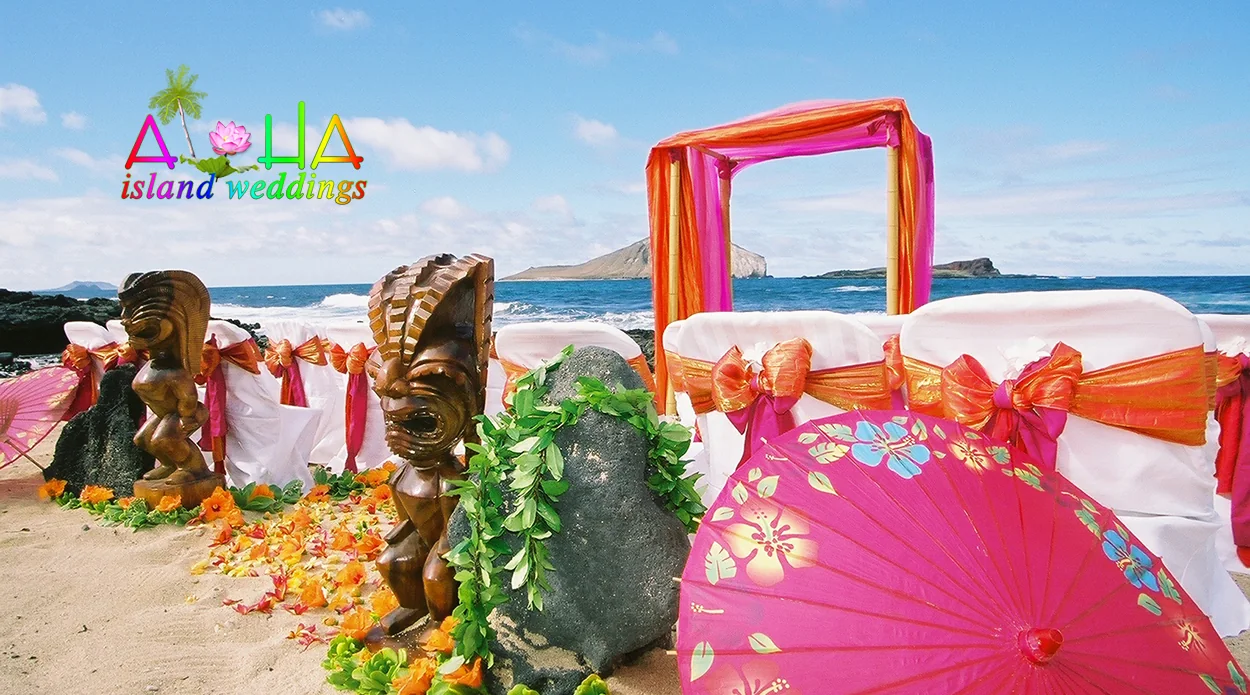
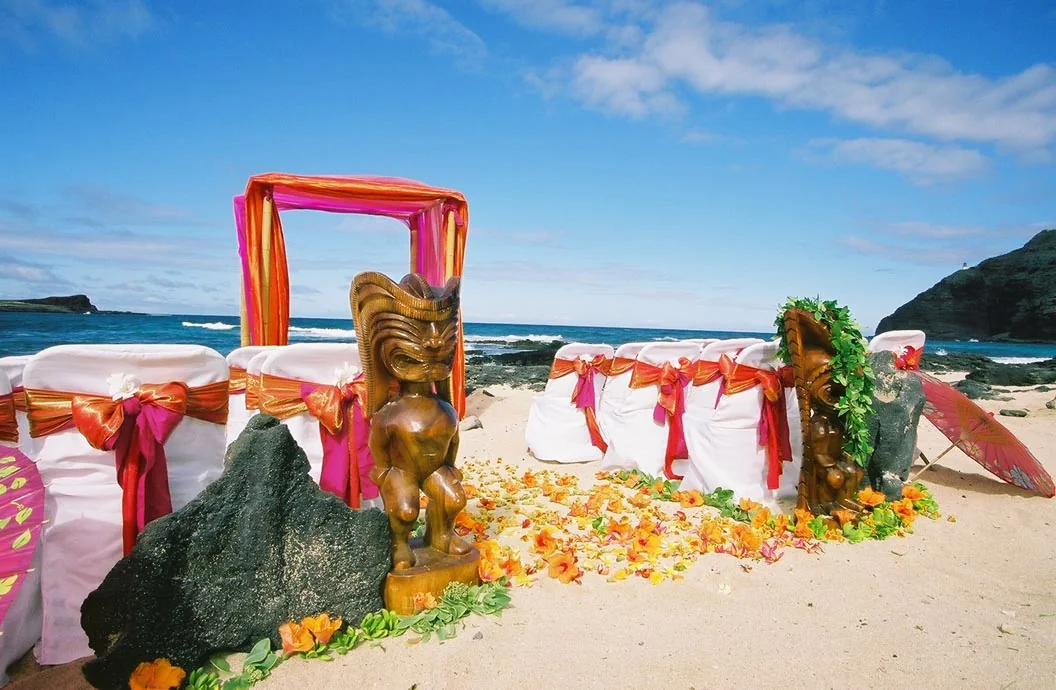
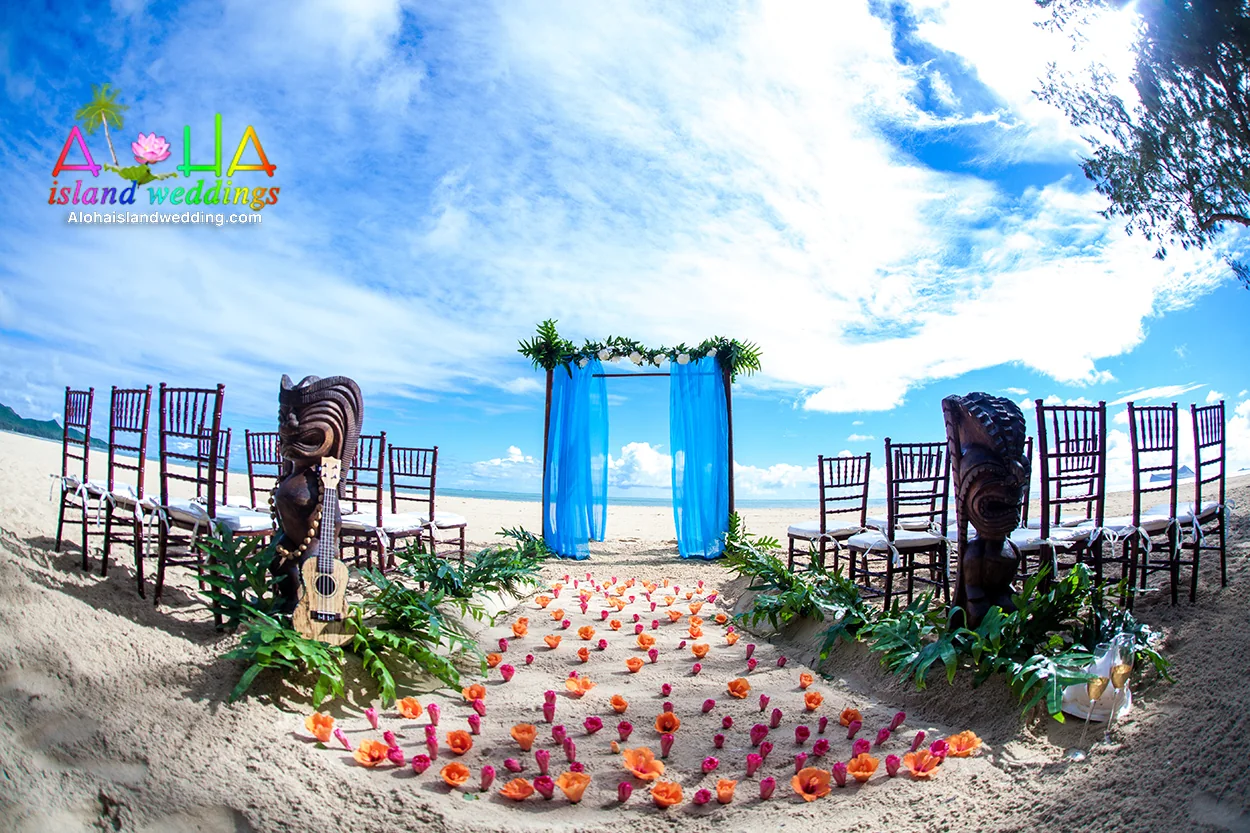
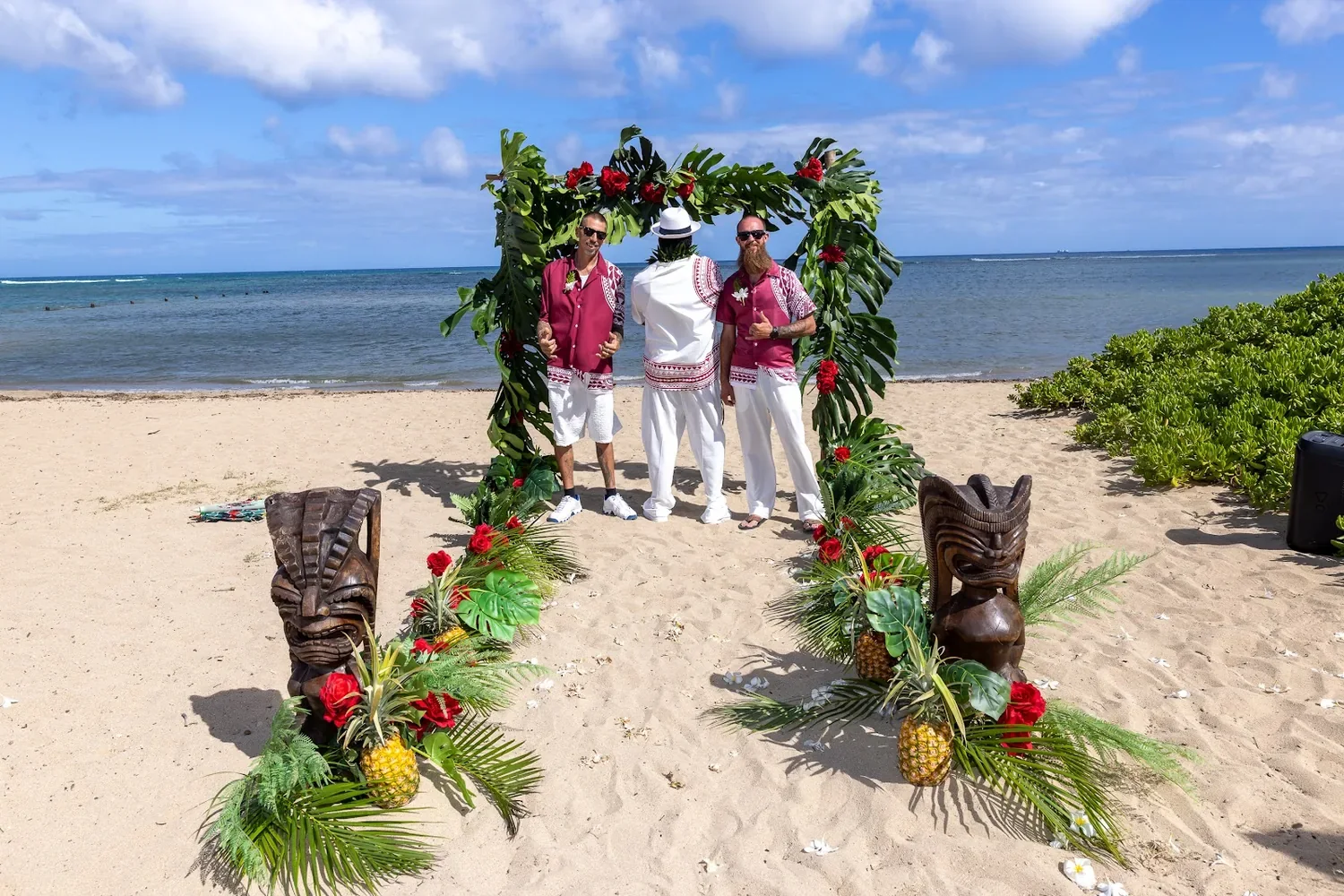
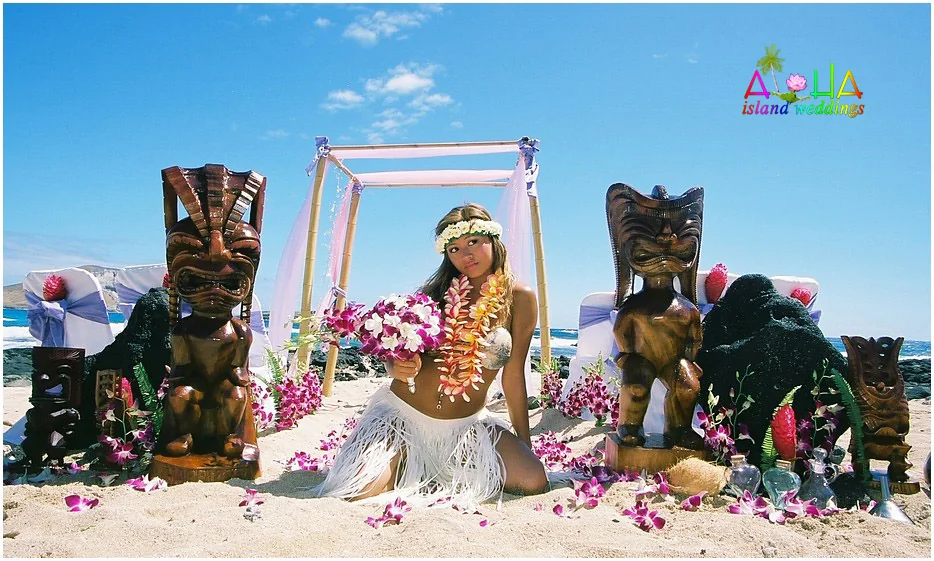
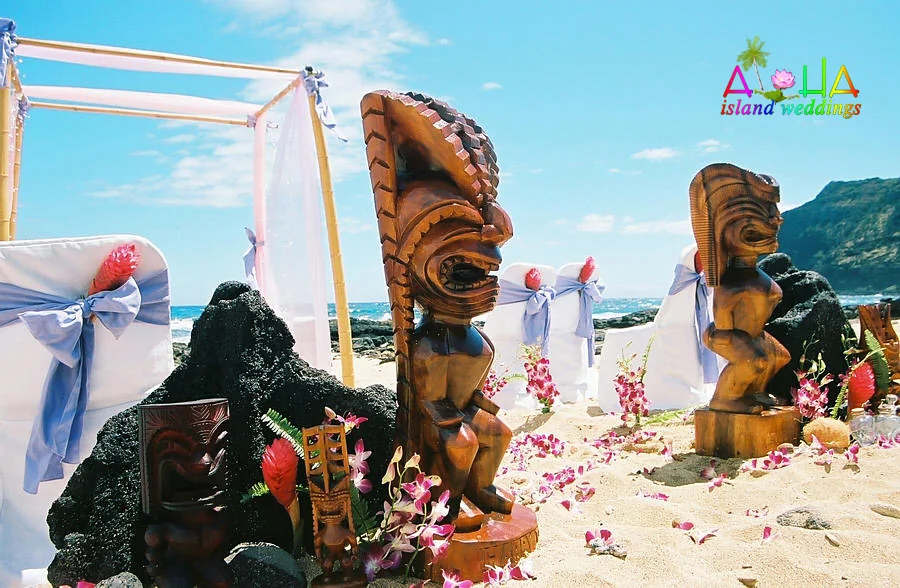
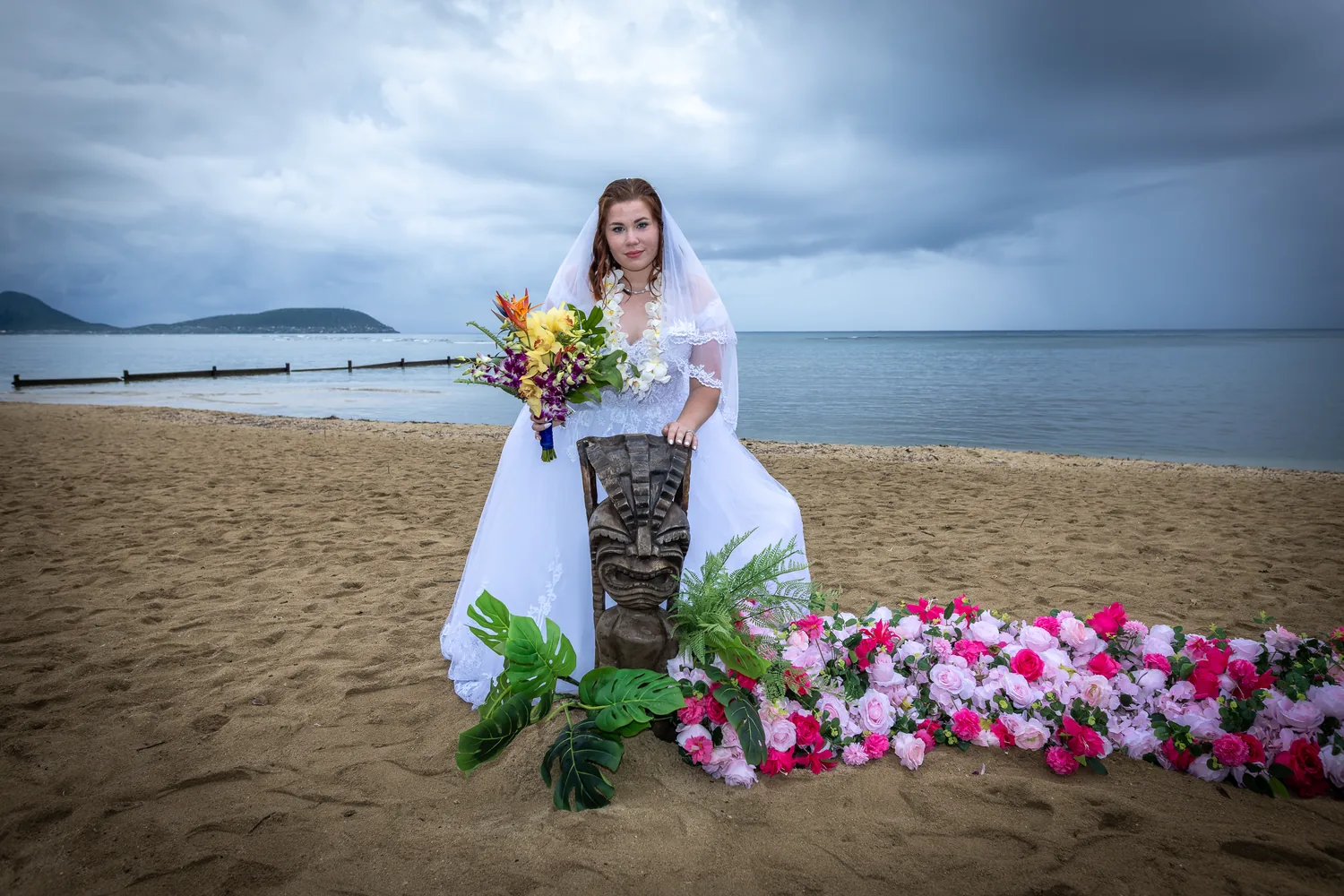
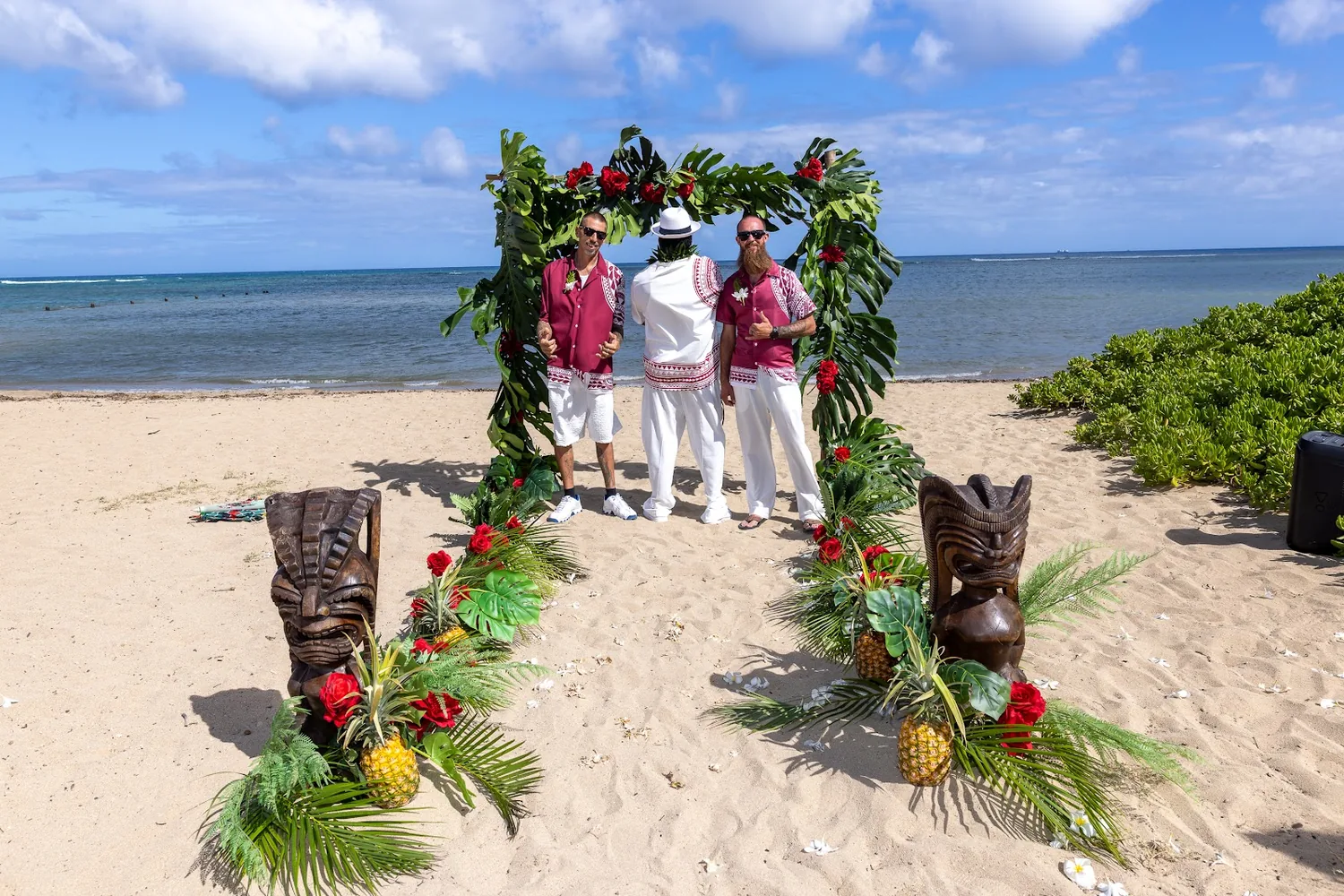
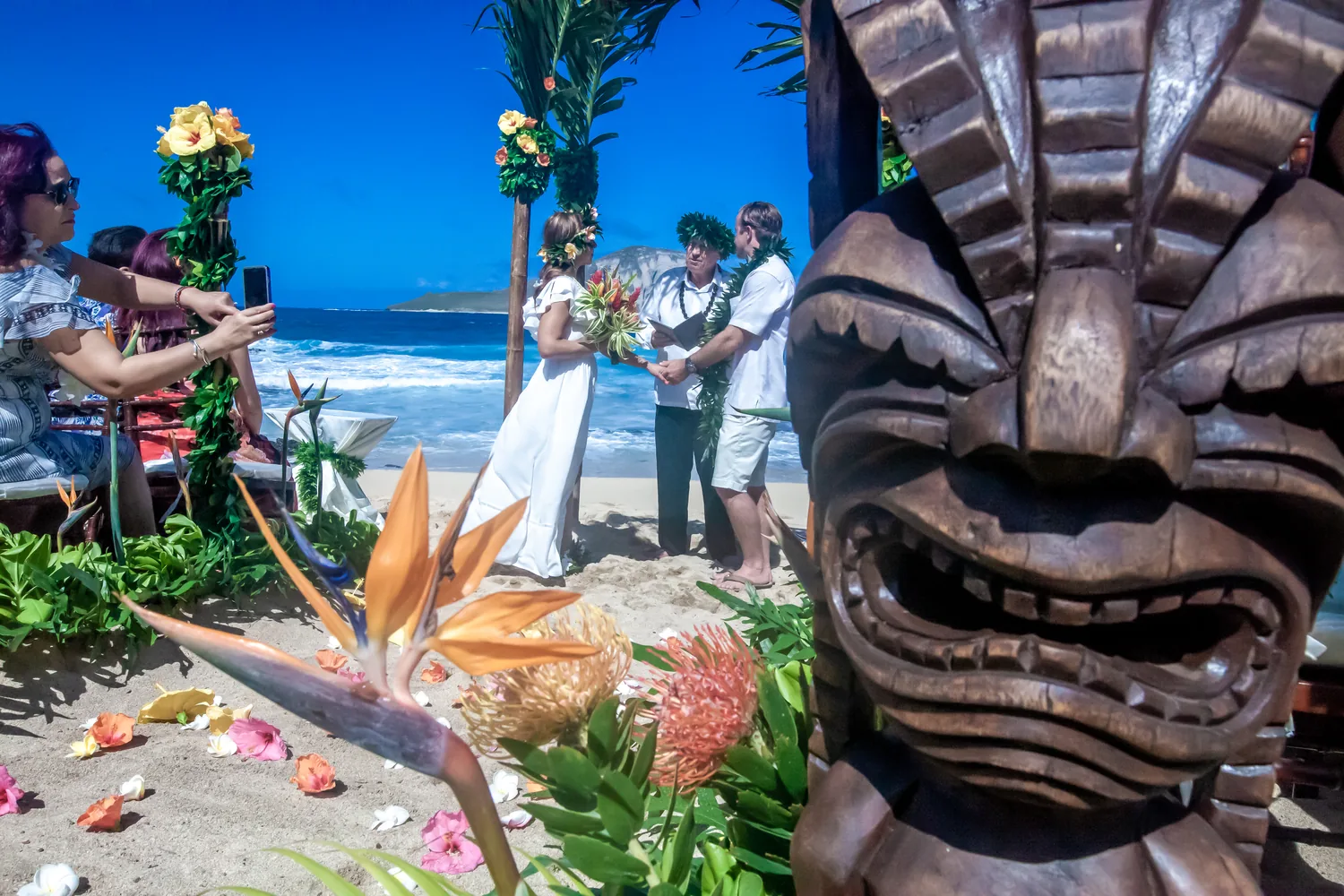
A pair of real wood tiki men, hand carved in Hawaii, can stand on either side of your arch or at the start of your aisle, a classic old Hawaii touch for your ceremony and your photos. Our pair are Kū and Lono, two of the great gods of Hawaii.
Tiki men $225 · a pair, real wood, carved in Hawaii
Order Tiki Men All Wedding Extras
History
What Is a Tiki?
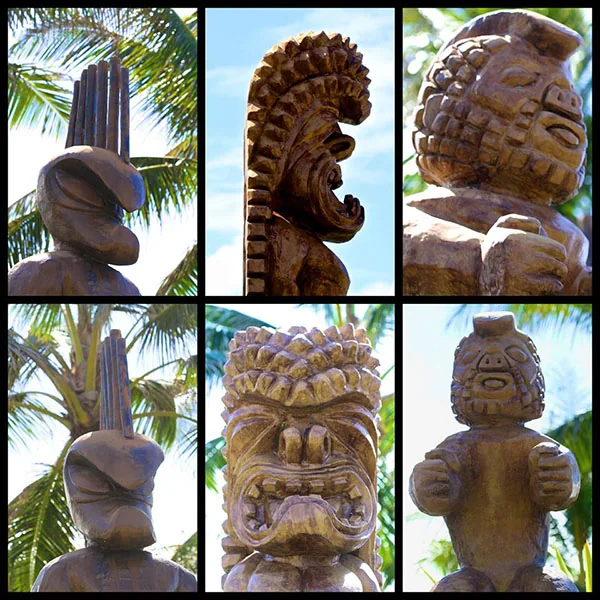
In Hawaiian, a carved figure like our tiki men is called a kiʻi, a word that means “image.” In old Hawaii a kiʻi was a sacred image that could hold the presence of a god called into it, and once a god had been called into it, the image kept some of that mana, or spiritual power.
Kiʻi were made from natural materials: wood, stone and even feathers. Feathered images, like the war god Kūkāʻilimoku, were among the most important of all. In the Kumulipo, the Hawaiian chant of creation, Kiʻi is also the name of the first man, born alongside the gods Kāne and Kanaloa.
Tiki is the same word in other Polynesian languages. In Māori stories from New Zealand, Tiki is the first man, and the word came to mean the carved human figures found across Polynesia, often standing at the edge of sacred places.
Our tiki men
Kū & Lono at Your Wedding
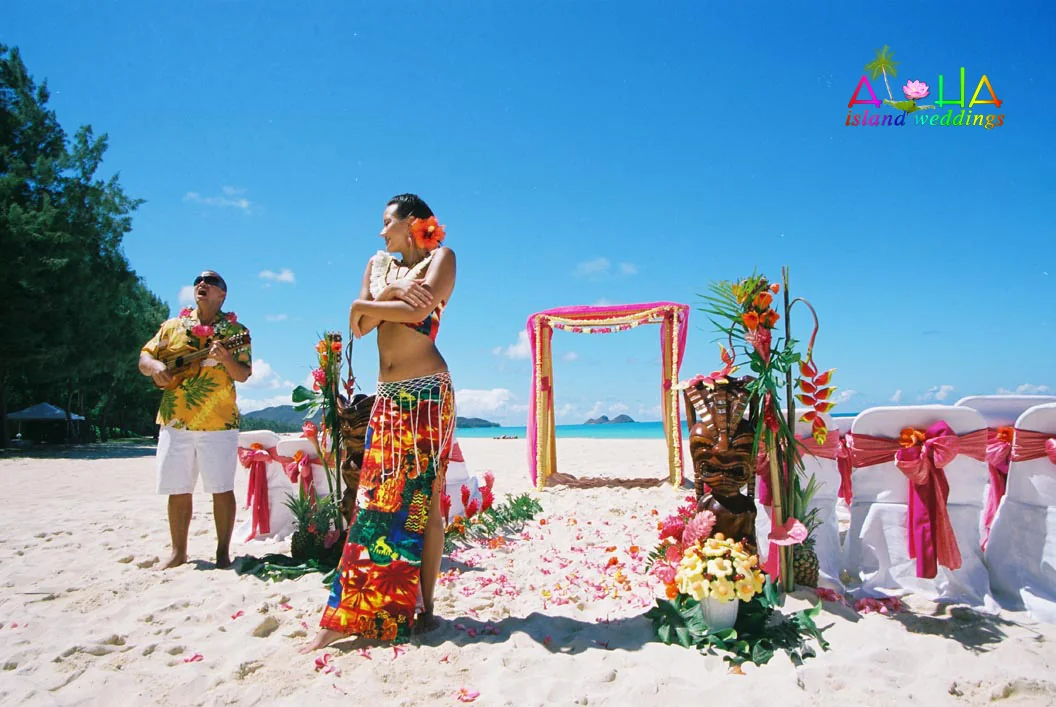
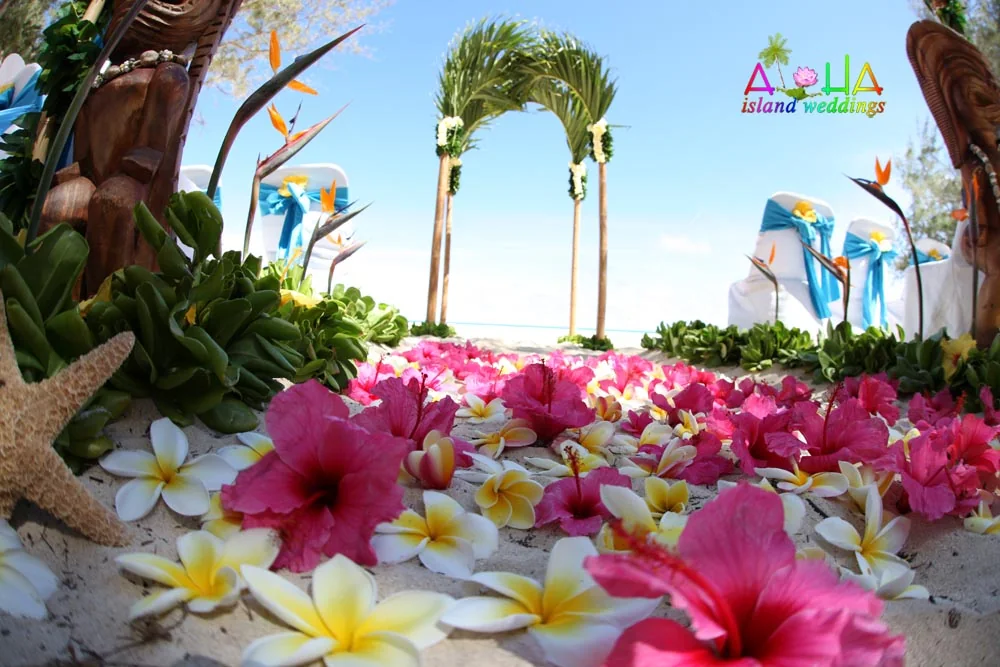
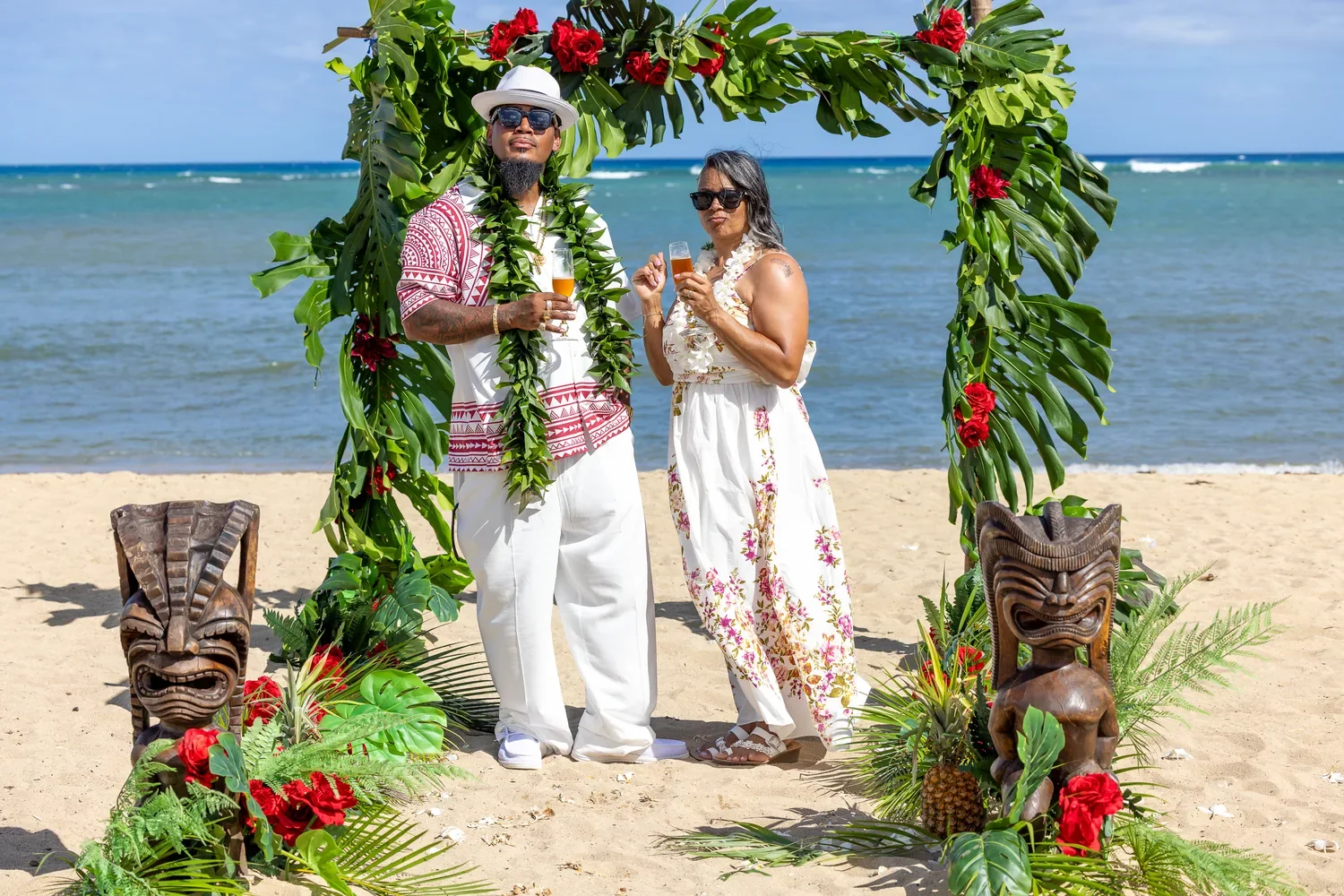
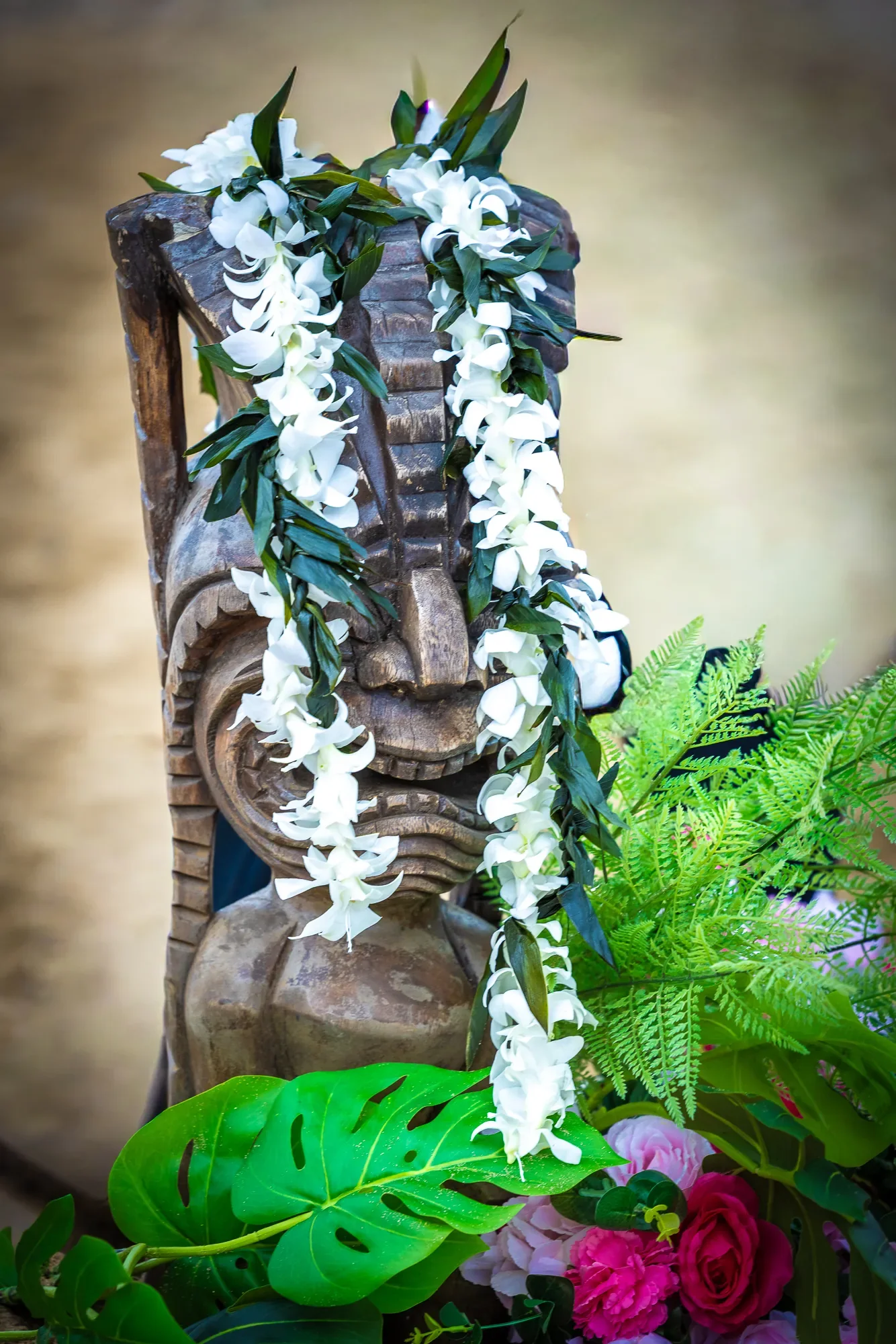
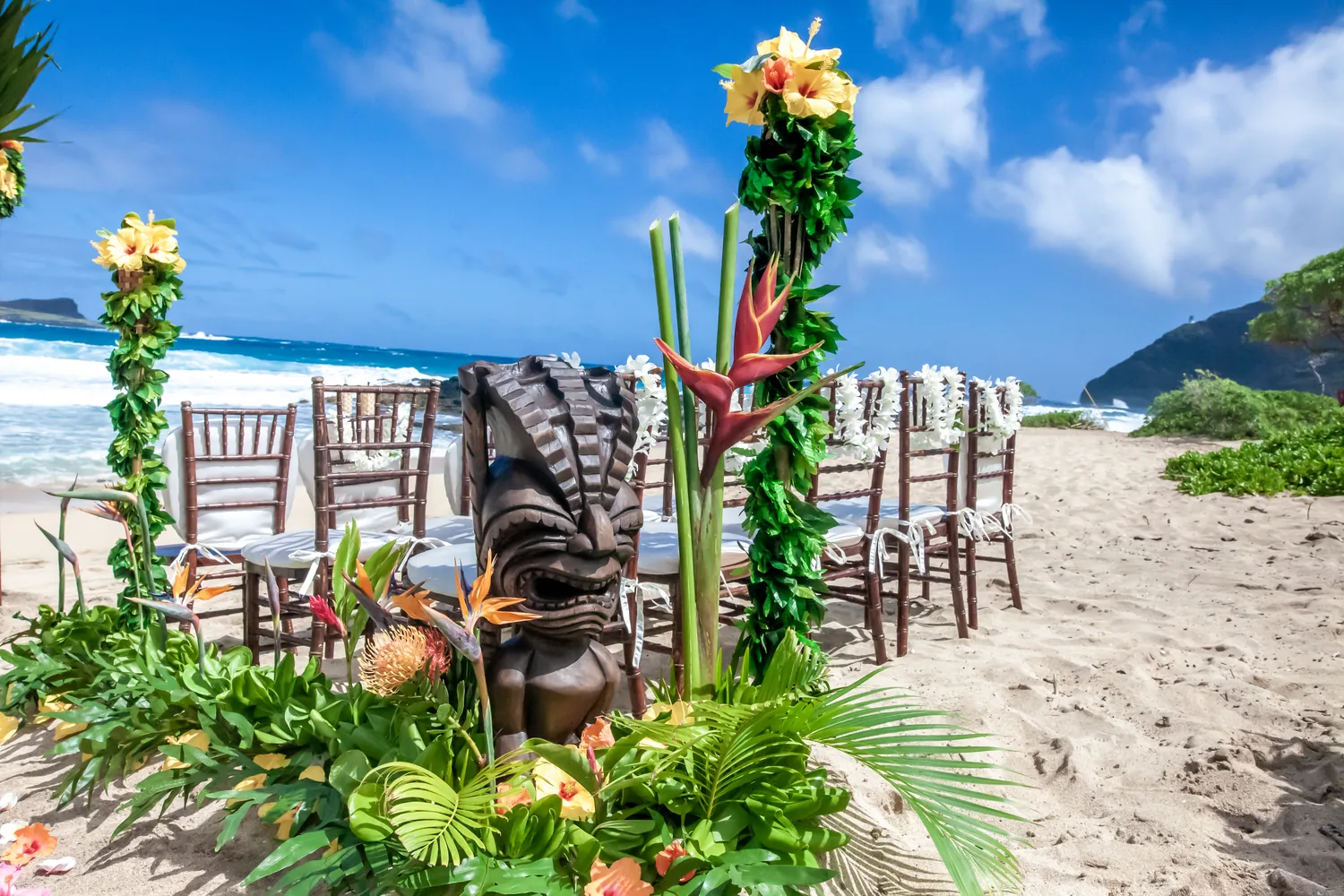
Our tiki men are real wood, hand carved in Hawaii: solid, heavy statues about three and a half feet tall, and a favorite part of our beach setups. Our pair are Kū and Lono, two of the great gods of Hawaii. In Hawaiian, these carved figures are called kiʻi, images of the gods and ancestors, and in old Hawaii they stood guard at temples and sacred places. Placed on either side of your arch or at the start of your aisle, a pair of tiki men welcomes your guests and watches over your ceremony.
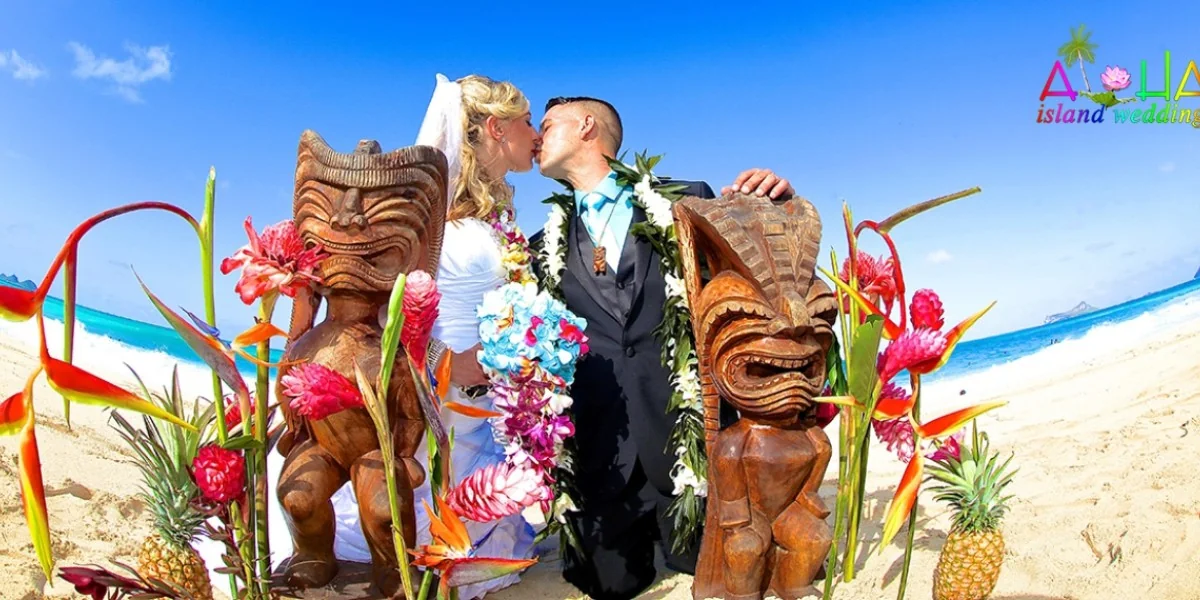
Many tikis honor the four great gods of Hawaii: Kū, god of strength and protection; Lono, god of rain, peace and abundance; Kāne, god of life, sunlight and fresh water; and Kanaloa, god of the ocean. Surrounded by red ginger, heliconia, bird of paradise and pineapples, they bring an old Hawaii feeling to your photos.
Kū, God of Strength & Protection
Kū is one of the four great gods of ancient Hawaii. His name means “to stand” or “upright,” and he is the god of strength, courage and protection. He was also honored as the god of fishing, of the forest and of canoe building, so fishermen, farmers and canoe makers all asked for his blessing.
Kū is often paired with Lono, the god of peace, rain and abundance. Together they show the balance of life: Kū ruled the long dry season, and Lono the season of rain and harvest. Carved Kū figures are known for their strong, wide stance and fierce open mouth, there to guard and protect.
At a wedding, a Kū tiki stands as a guardian over the two of you, a wish for a strong marriage that stands firm and protects your family through every season.
Lono, God of Peace, Rain & Abundance
Lono is the god of rain, farming, fertility and peace. He brought the winter rains that made the land green, so the crops would grow and there would be plenty of food for everyone.
Each year Hawaiians honored Lono during the Makahiki, a season of about four months that began when the Pleiades rose in the evening sky. War was set aside, people offered the first of the harvest, and villages gathered for games, sports, hula, feasting and thanks. Lono was also linked with music and celebration, and his sign was a tall staff hung with white kapa cloth.
At a wedding, a Lono tiki stands for peace, love and abundance, a wish for a home filled with harmony, good harvests and joy. Paired with Kū, the two bring balance: strength and protection on one side, peace and plenty on the other.
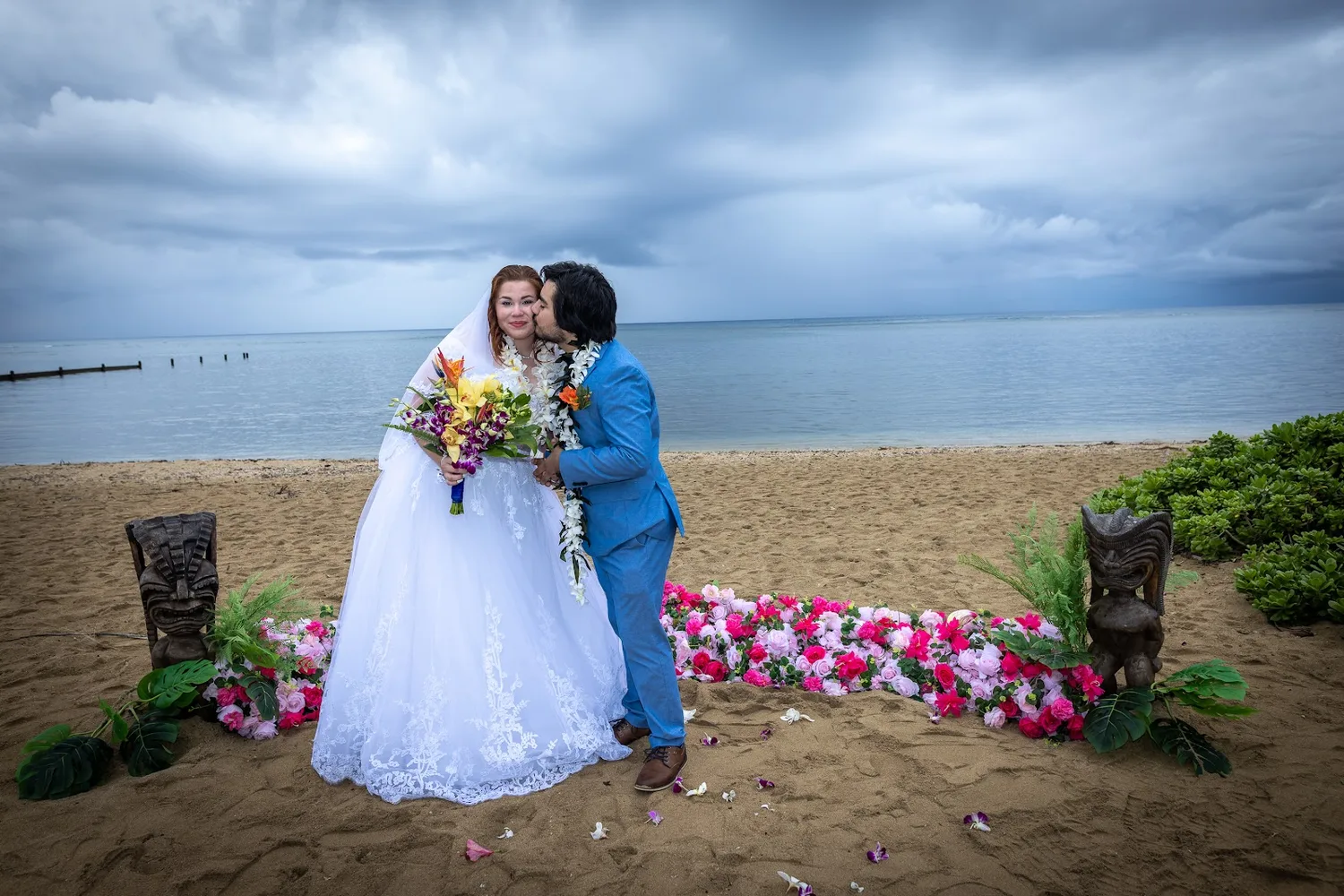
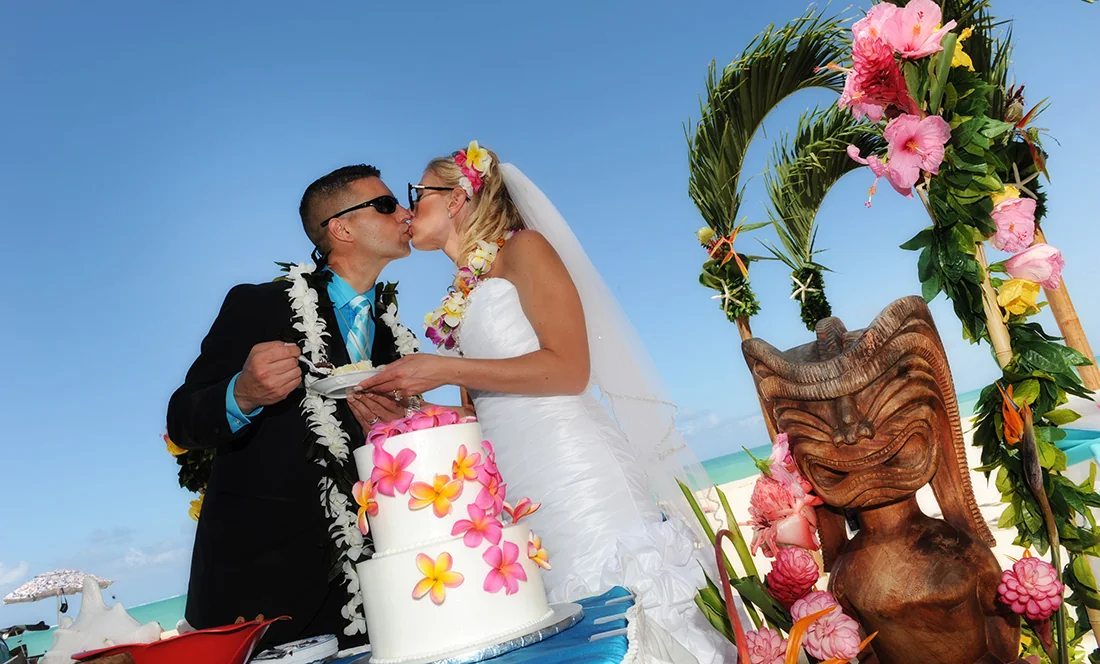
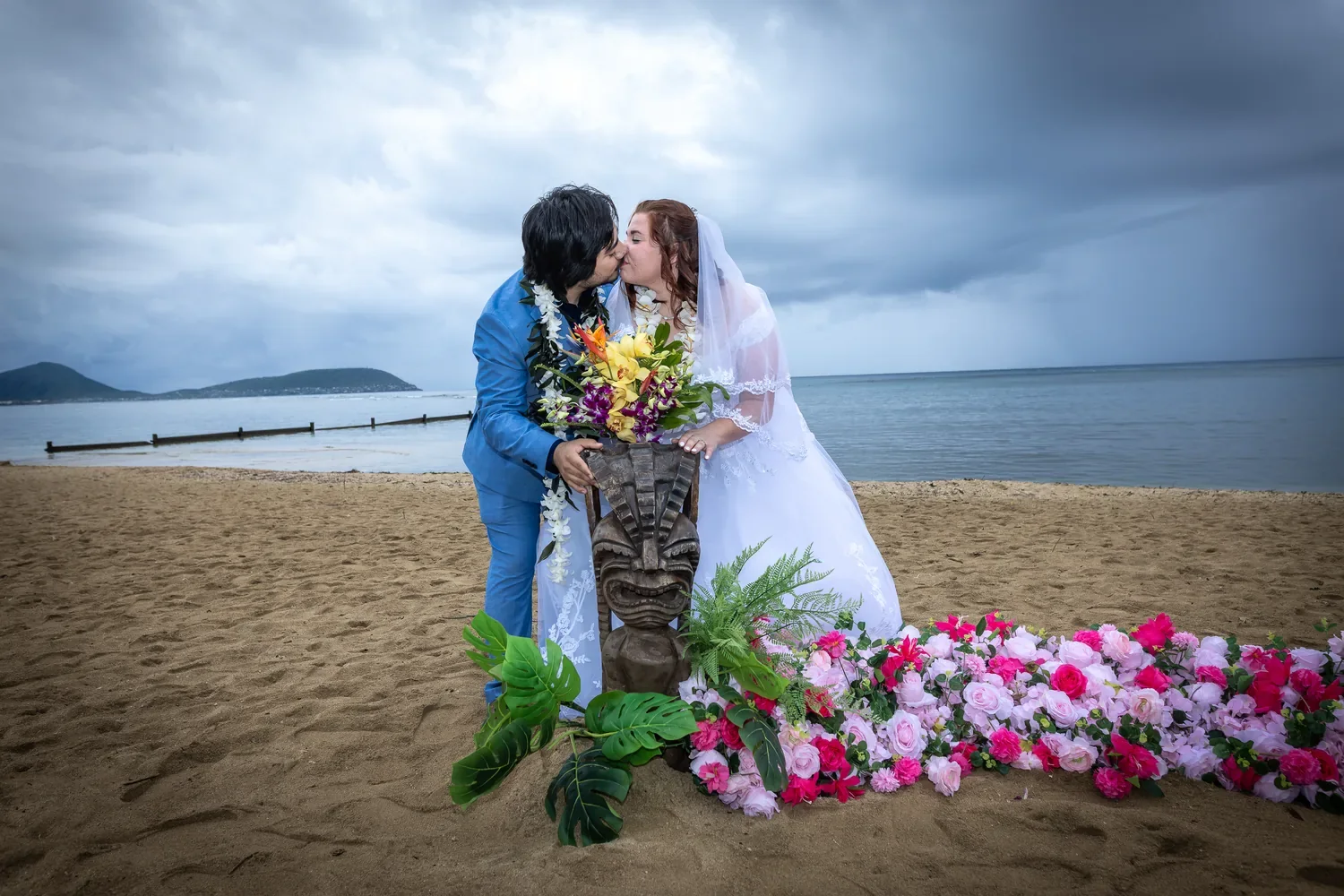
A Kiss Between the Tiki Men
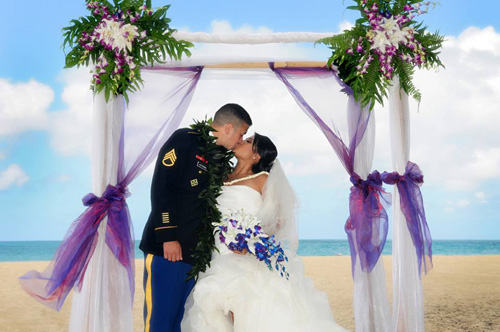
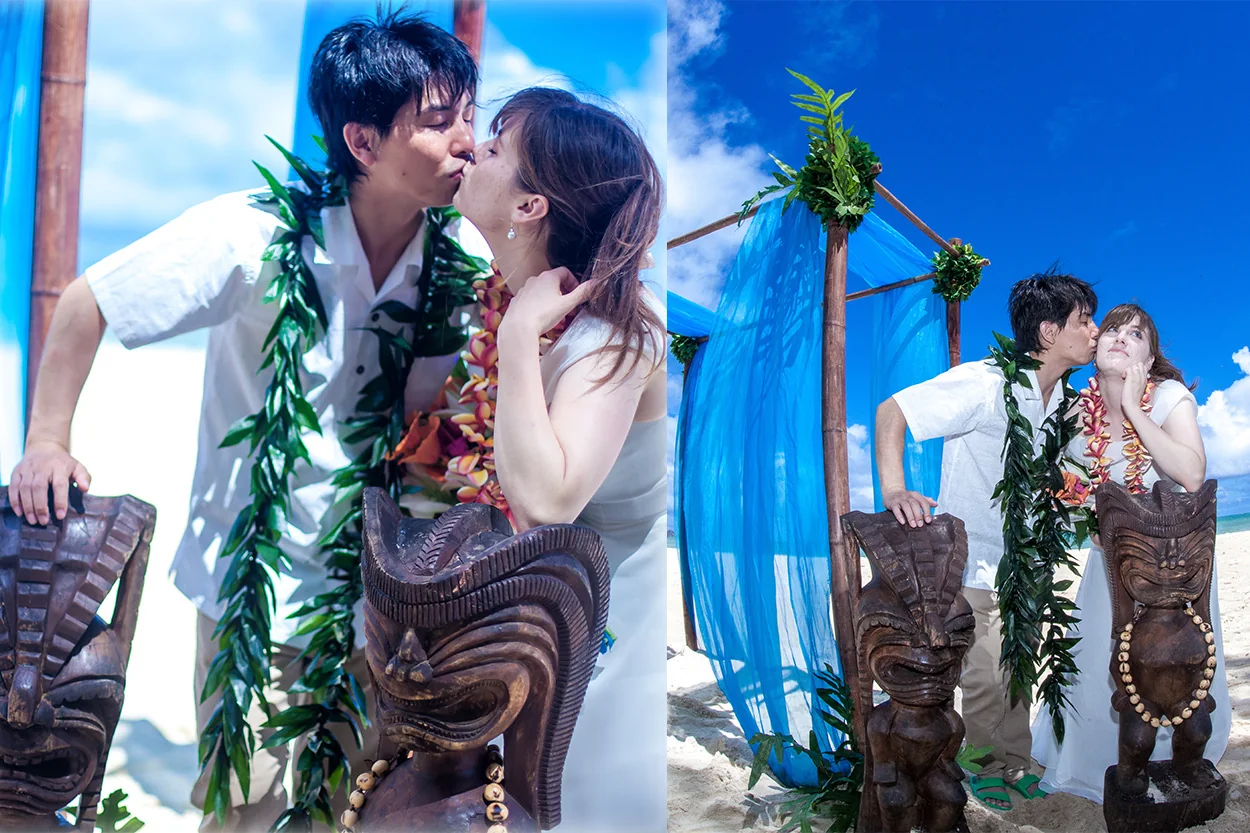
A bride and groom share a kiss between two carved tiki men, framed by red ginger, heliconia, bird of paradise and pineapples, with the turquoise water and white sand behind them.
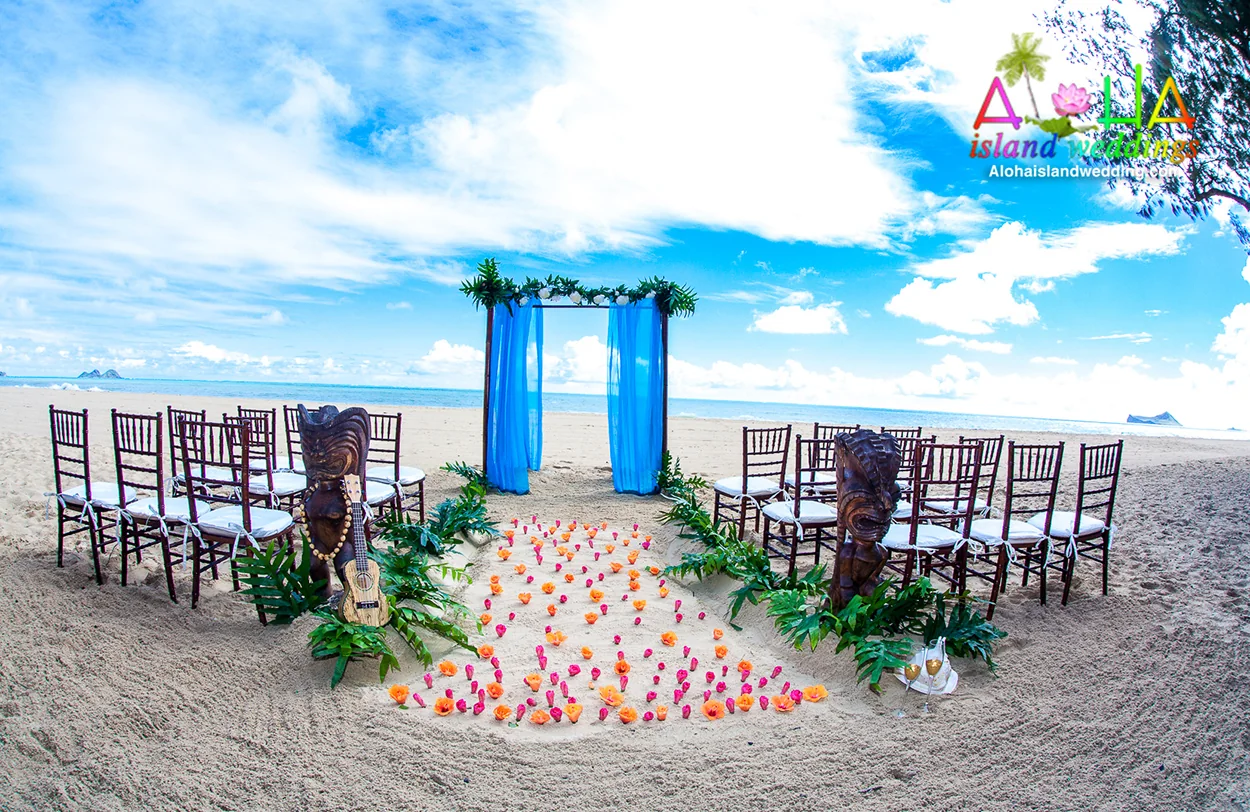
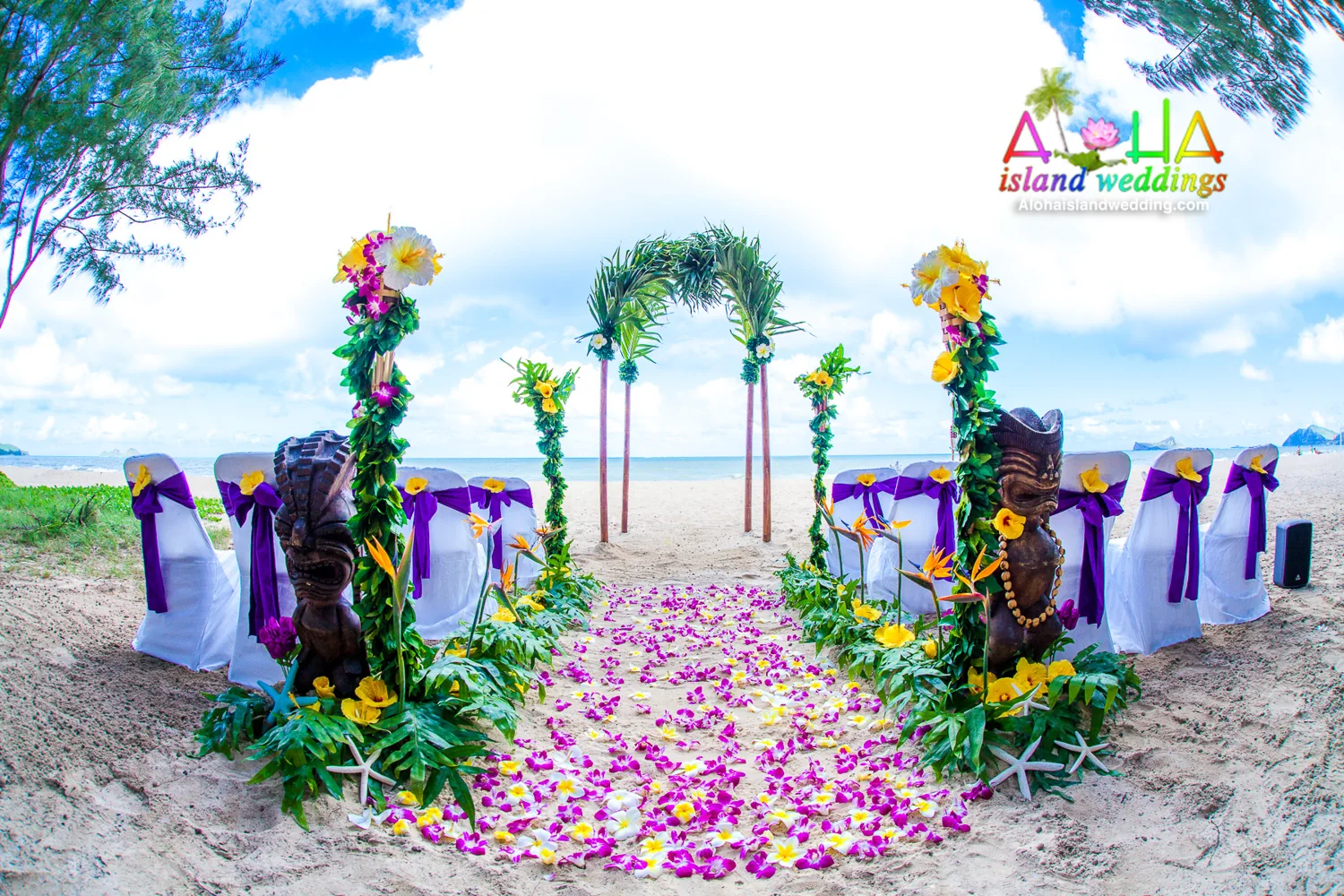
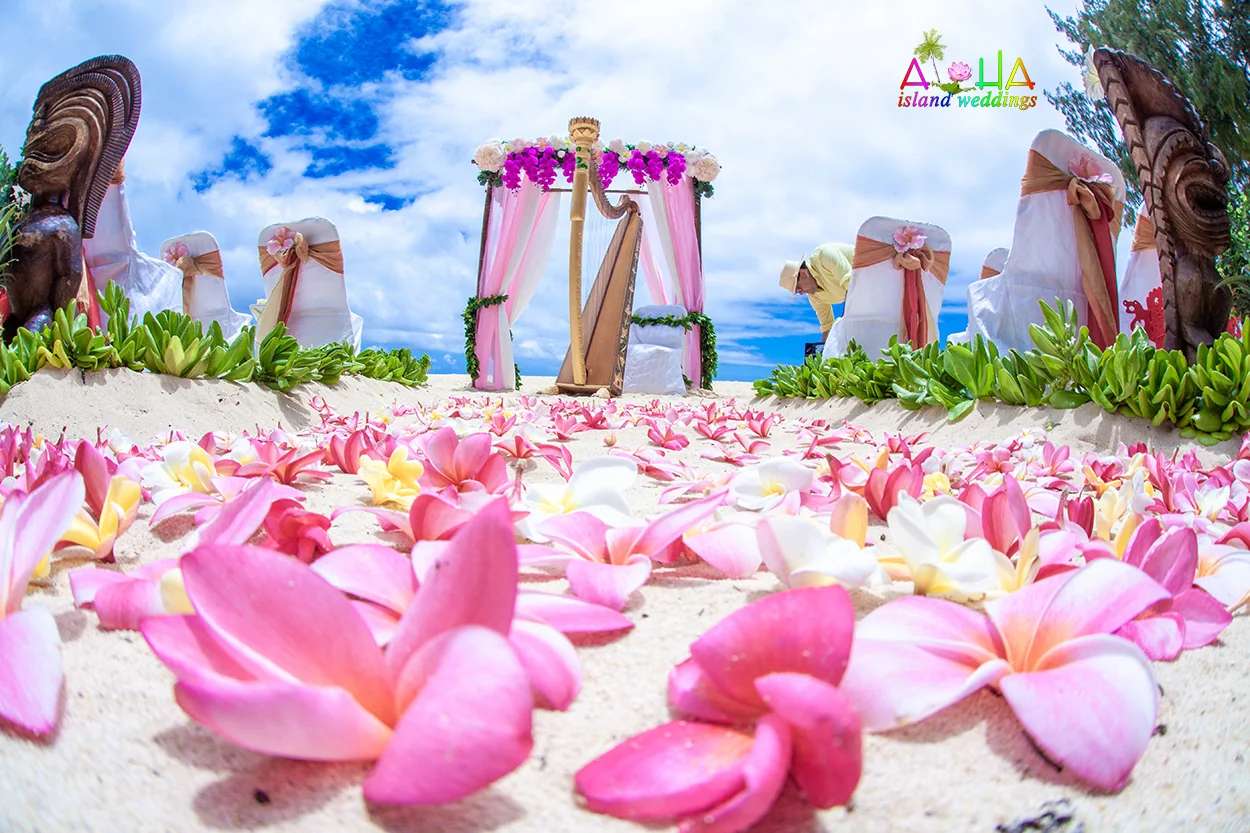
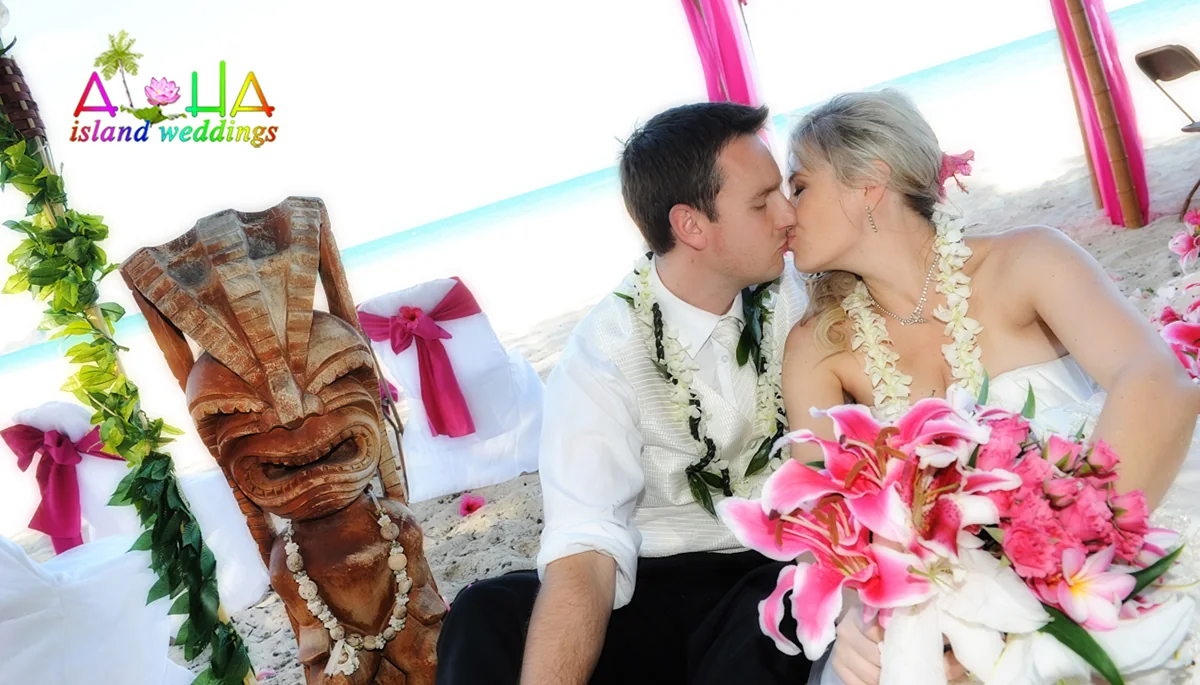
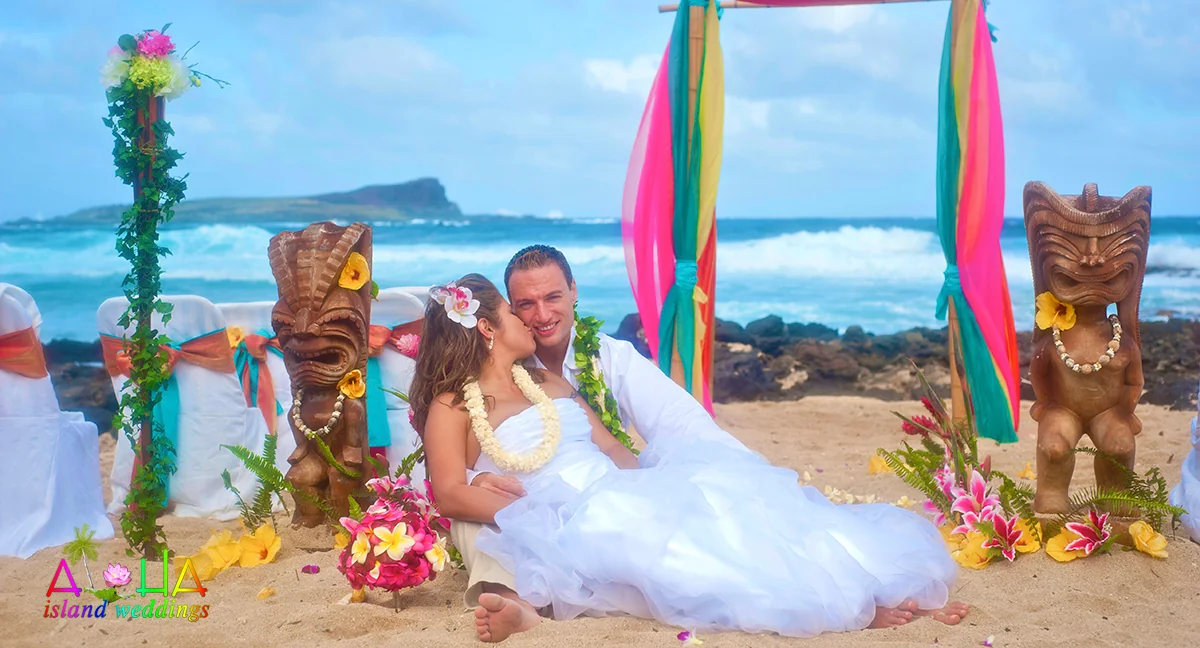
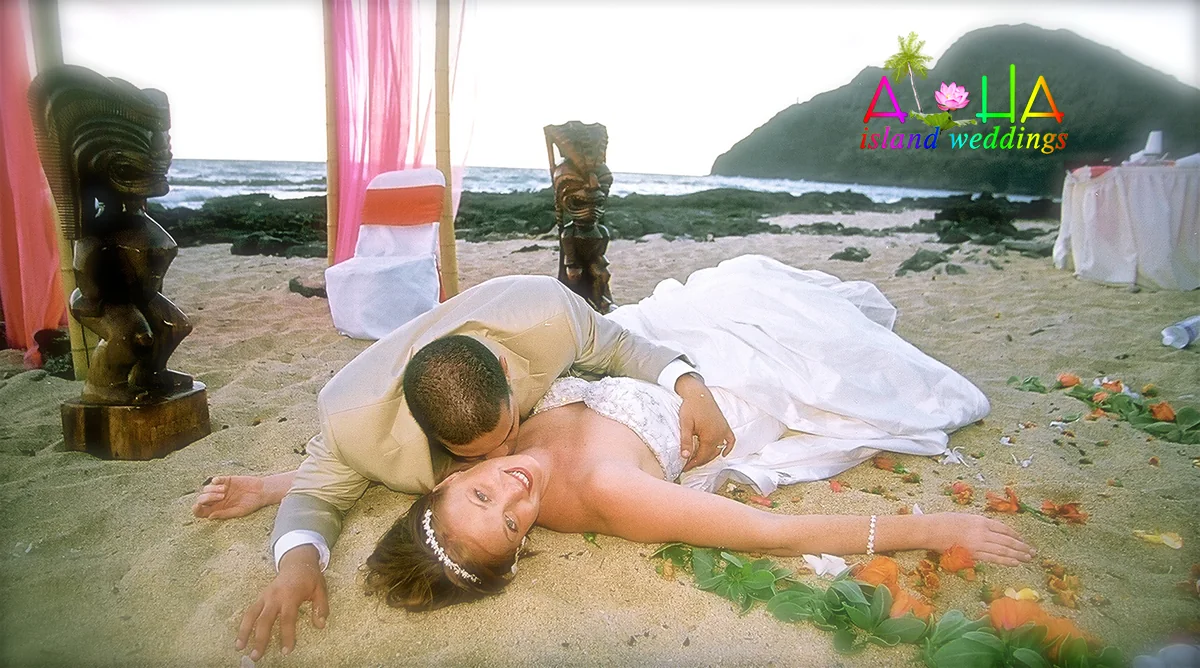
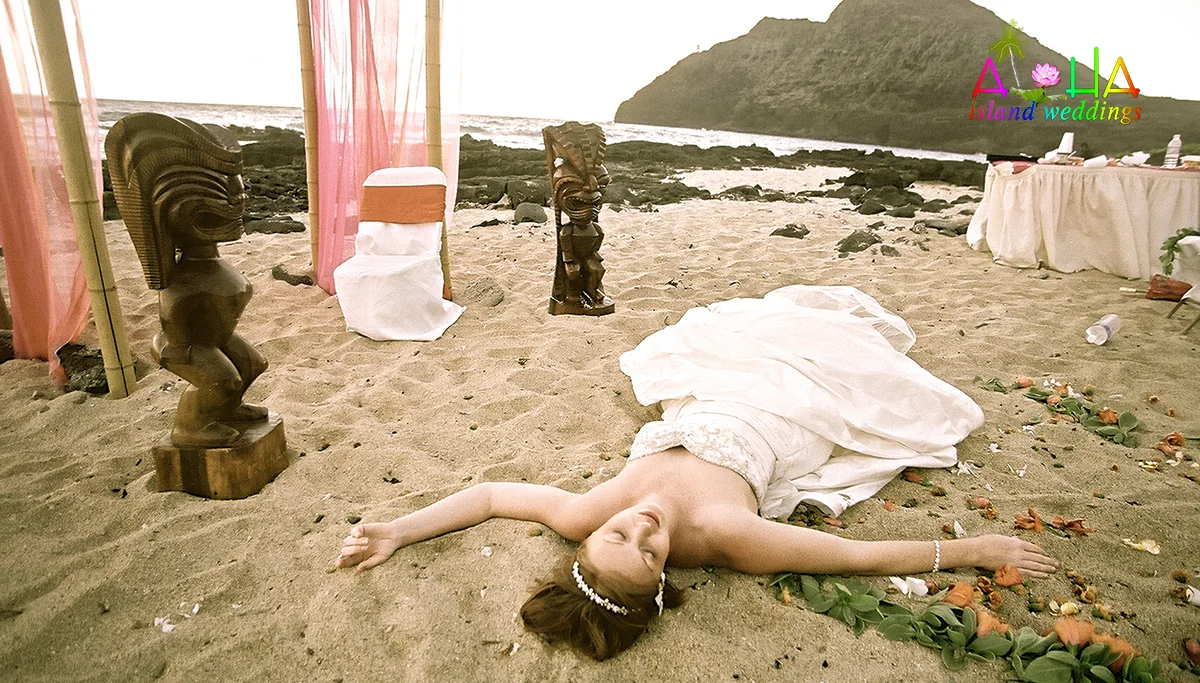
Tap any photo to see it full size.
See tiki men at real weddings:
The four great gods
Kāne & Kanaloa
Alongside Kū and Lono, the two other great gods of Hawaii are Kāne and Kanaloa. Kāne is the god of life, sunlight and fresh water. In one Hawaiian story he made the first man, Kumuhonua, in his own shape from red earth.
Kanaloa is the god of the ocean, the deep blue water that surrounds every island. Fresh water and salt water, the land and the sea: a fitting pair to remember at a wedding on the sand by the ocean.
From Hollywood to Waikiki
The Story of Tiki Culture
Tiki also became a style all its own. In 1933, at the end of Prohibition, Don the Beachcomber opened in Hollywood, a South Seas bar of bamboo, carved tikis and rum drinks, and in 1936 Trader Vic’s followed in Oakland. Tiki bars and Polynesian restaurants spread across the mainland in the 1950s and 1960s.
Hawaii was at the heart of it. In 1956 the International Market Place opened in Waikiki with a Don the Beachcomber, Hawaiian bartender Harry Yee created the Blue Hawaii cocktail in 1957, and Hawaii became the 50th state in 1959, just as jet travel brought visitors to the islands. Tiki culture faded in the 1970s and came back in the late 1990s, and it is still loved today.
Real weddings
More Tikis at Our Weddings
Tap any photo to see it full size.
History sources: Wikipedia articles Kiʻi, Tiki and Tiki culture (checked November 2026).
Tiki Men Questions
How much are tiki men for a Hawaii wedding?
A pair of our real wood tiki men is $225. They can be added to any of our beach wedding packages, vow renewals and proposals on Oahu.
How big are the tiki men?
Our tiki men are solid, heavy statues about three and a half feet tall, hand carved in Hawaii from real wood.
Who are the tiki men?
Our pair are Kū, god of strength and protection, and Lono, god of rain, peace and abundance, two of the four great gods of Hawaii. Together they stand for a strong marriage and a home full of peace and plenty.
What does tiki mean?
In Hawaiian the carved figures are called kiʻi, which means image. A kiʻi was believed to be able to hold the presence of a god called into it. Tiki is the same word in other Polynesian languages, and in Māori stories Tiki is the first man.
Can we have tiki men and tiki torches together?
Yes. Tiki men look wonderful with our tiki torches, flower aisles and arches. See our tiki torch unity ceremony and wedding extras.