This article is about the hibiscus in Hawaii, both the native species and the garden hibiscus. For other tropical flowers of the islands, see our tropical wedding flowers.
It opens with the morning sun and is gone by evening, a single day of silk and color. Perhaps that is why Hawaii loves the hibiscus so: it teaches us to wear today’s flower, and to wear it well.
Hibiscus (pronounced hy-BISS-kus) is a large genus of flowering plants in the mallow family, Malvaceae, with hundreds of species of shrubs, small trees and herbs in warm regions around the world.[6] Its flowers are big, showy and trumpet shaped, with five petals and a long central column that carries the stamens and pistil.
In Hawaii the hibiscus has a special place. The islands are home to several native species found nowhere else, including the yellow maʻo hau hele, the official state flower,[1] and they are filled with thousands of colorful garden hibiscus brought from other lands and bred in the islands. In Hawaiian the hibiscus is called aloalo.
Description and biology
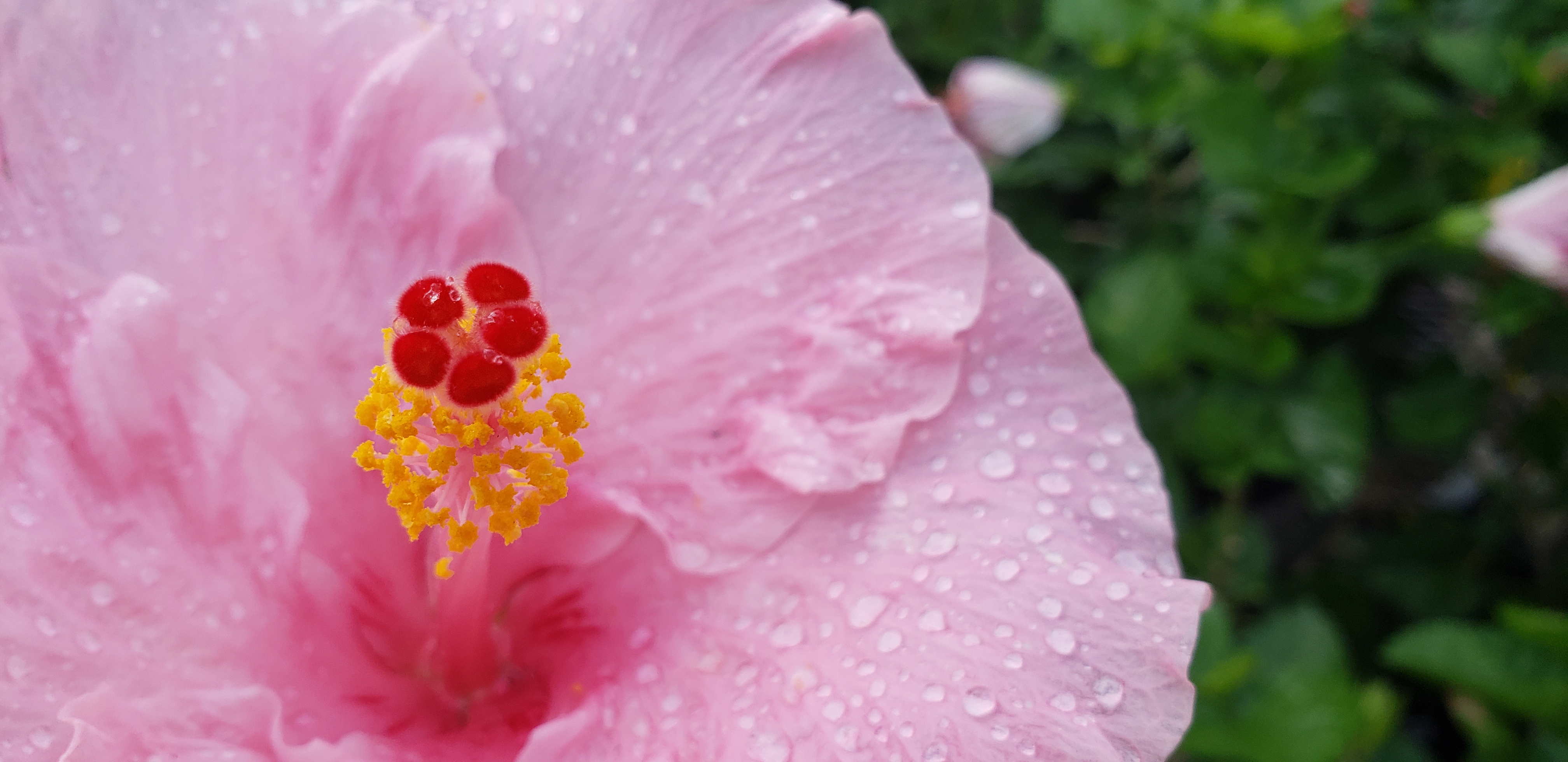
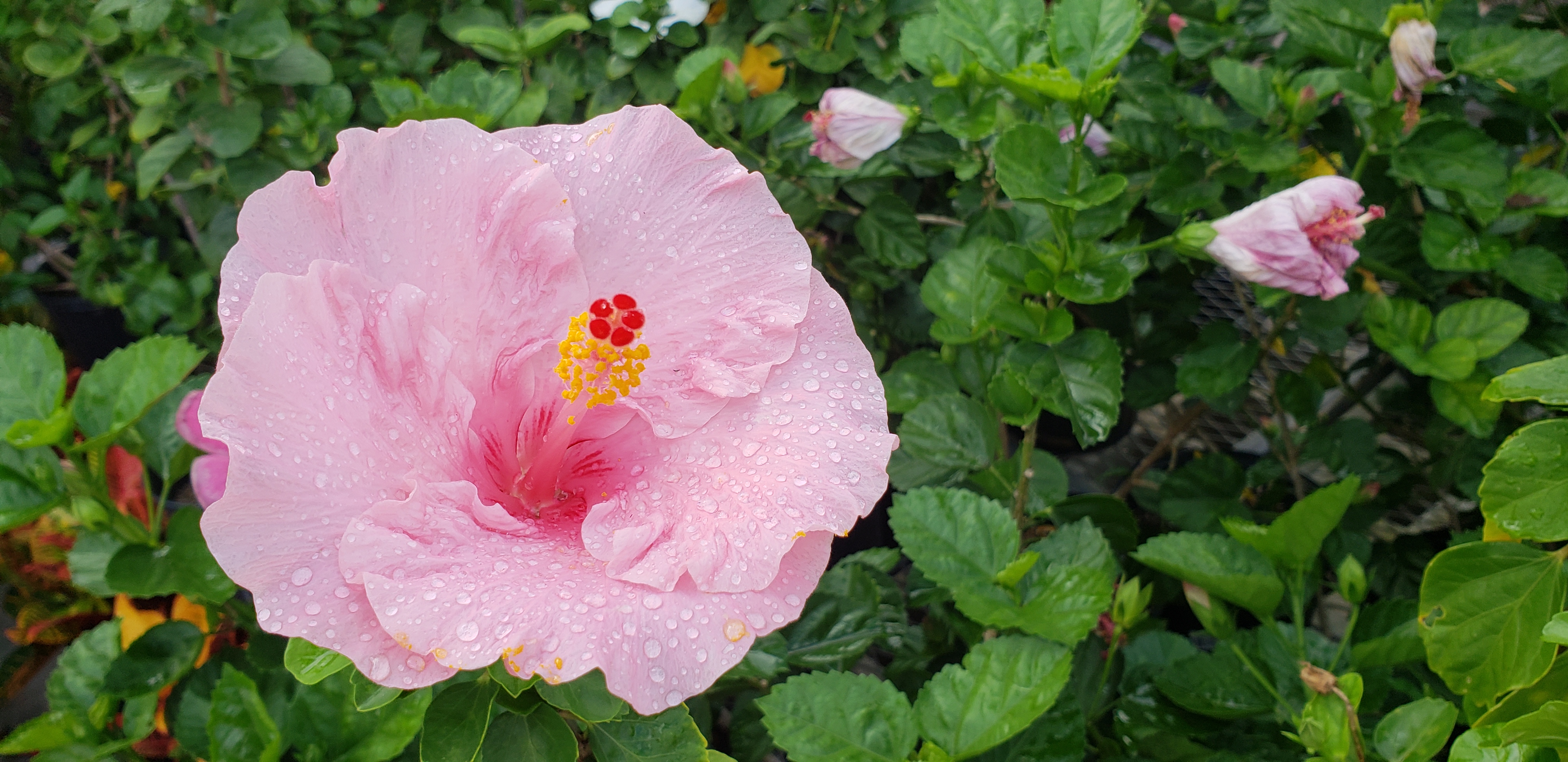
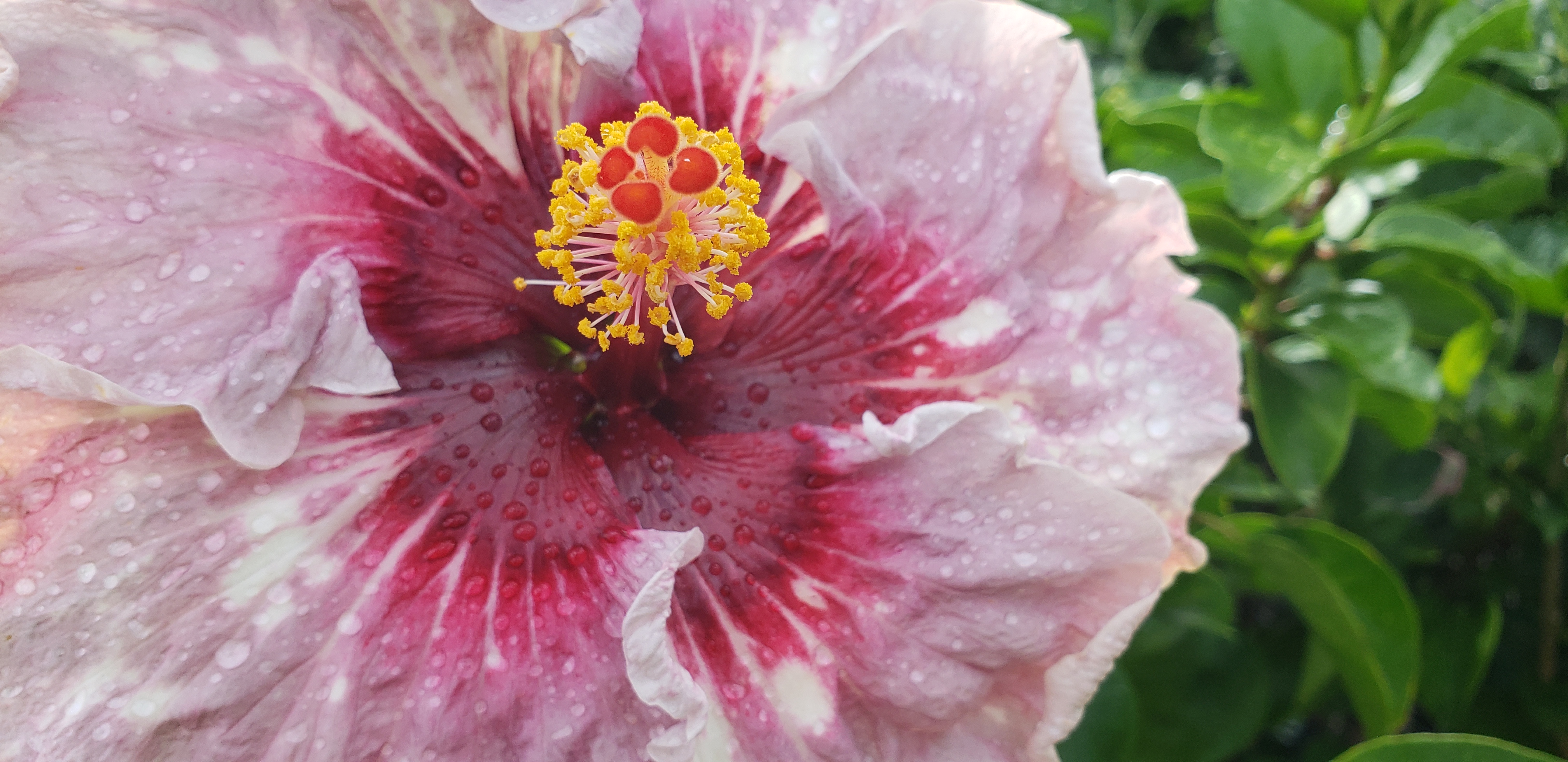
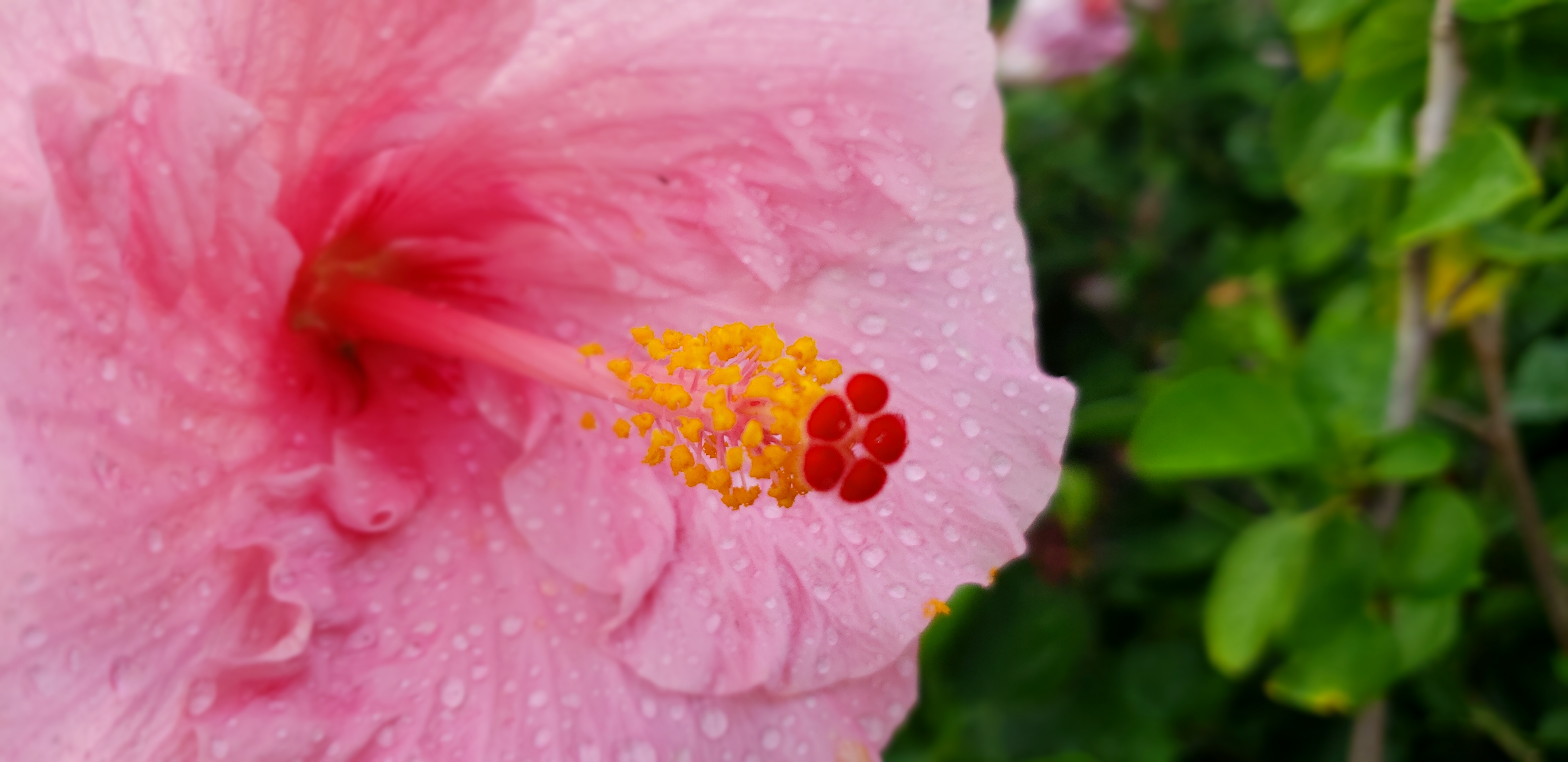
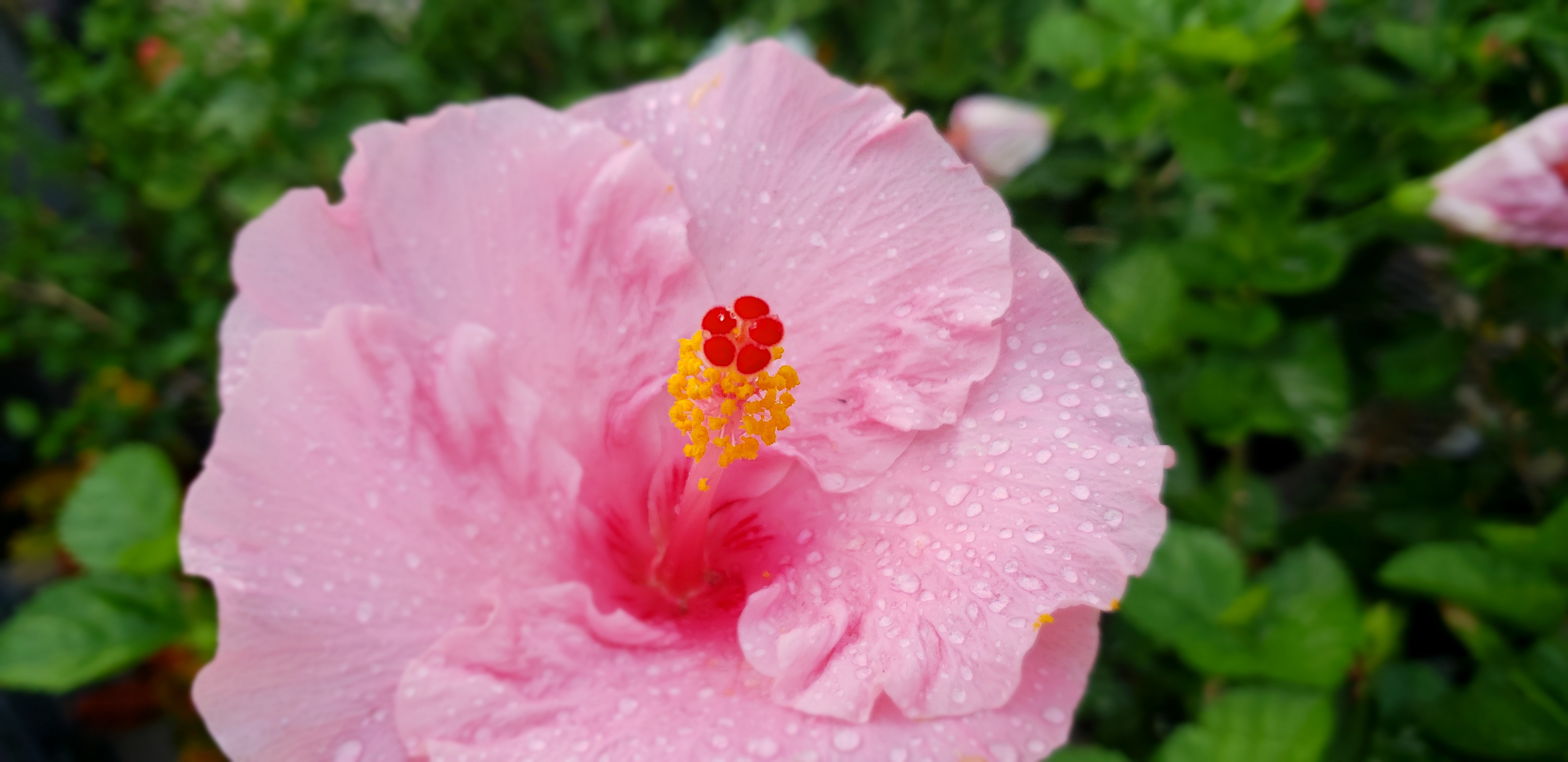
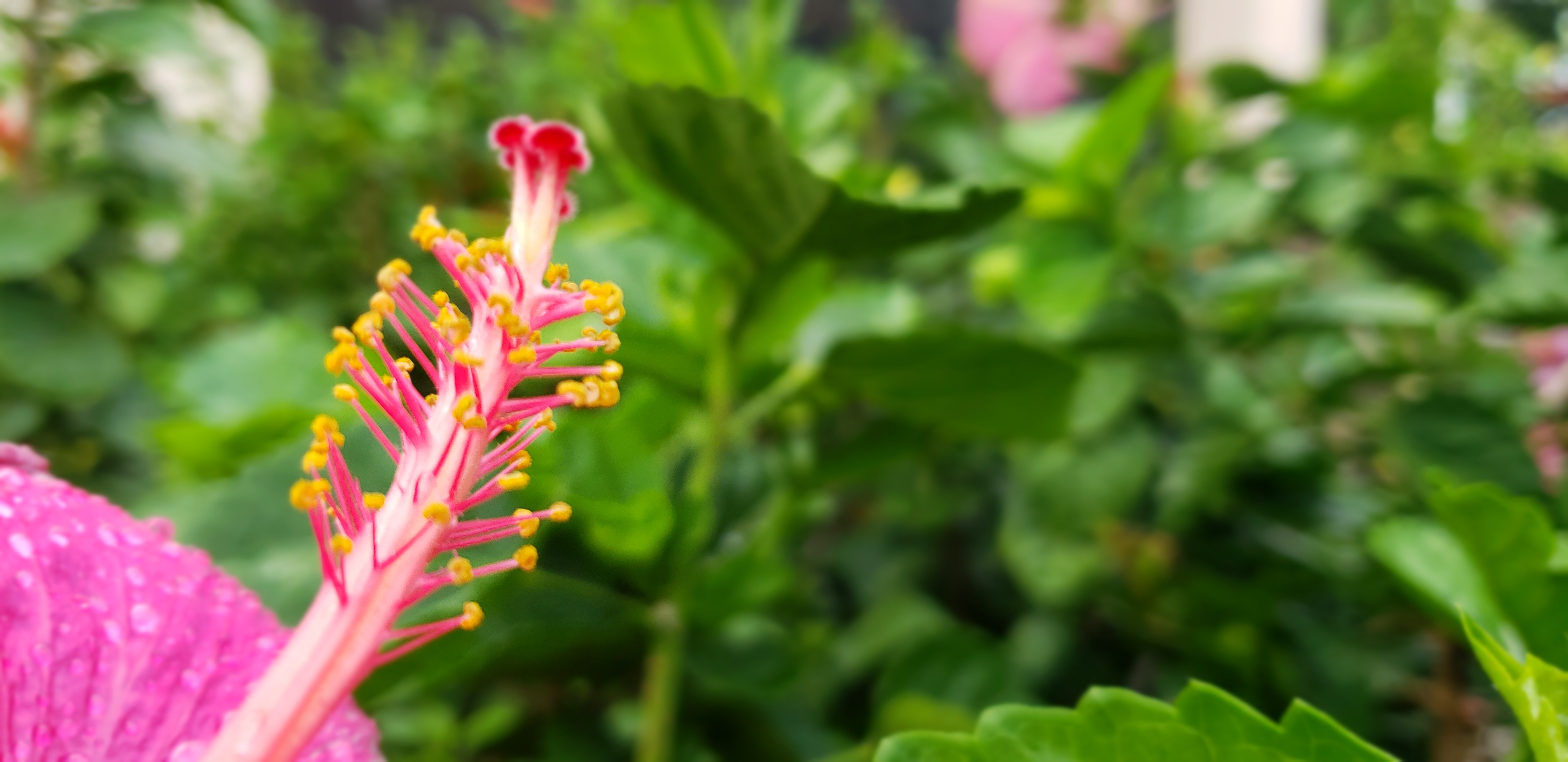
Hibiscus flowers have five broad, silky petals around a long staminal column, a slender tube covered with pollen bearing stamens and tipped with the five lobed stigma, the part that catches pollen. Leaves are usually toothed or lobed. In most garden hibiscus each flower lasts only a single day: it opens in the morning, glows through the afternoon and closes by evening, while new buds keep coming all year long in the warm islands. After pollination the flower forms a dry capsule full of seeds.
Hawaii’s state flower
The hibiscus was first named Hawaii’s flower in 1923, but no particular kind was chosen, so many people took it to mean the common red garden hibiscus.[2] In 1988 the Legislature settled the question with Act 177, approved on June 6, 1988, which named the native yellow hibiscus, maʻo hau hele (Hibiscus brackenridgei), as the official state flower.[1]
Maʻo hau hele is a shrub or small tree with bright yellow flowers, often with a deep maroon center. It grows naturally in dry forests and shrublands, and all three of its subspecies are federally listed as endangered;[3] the species was listed on November 10, 1994.[5] Today it survives in the wild in small numbers and is grown in gardens and botanical collections that help protect it.
Native Hawaiian hibiscus
Hawaii’s native hibiscus evolved in isolation over millions of years. Besides the yellow maʻo hau hele, there are the red kokiʻo ʻula (Hibiscus kokio) and the Kauaʻi red hibiscus (Hibiscus clayi), and the white kokiʻo keʻokeʻo (Hibiscus arnottianus), one of the very few hibiscus in the world with a sweet fragrance. Many are rare in the wild today and are protected and grown by botanical gardens.[4]
Another hibiscus relative, hau (Hibiscus tiliaceus), a spreading beach tree with yellow flowers that turn orange red as the day ends, was one of the most useful plants in old Hawaii: its light wood was used for the outrigger booms of canoes, and its inner bark was twisted into strong cordage.
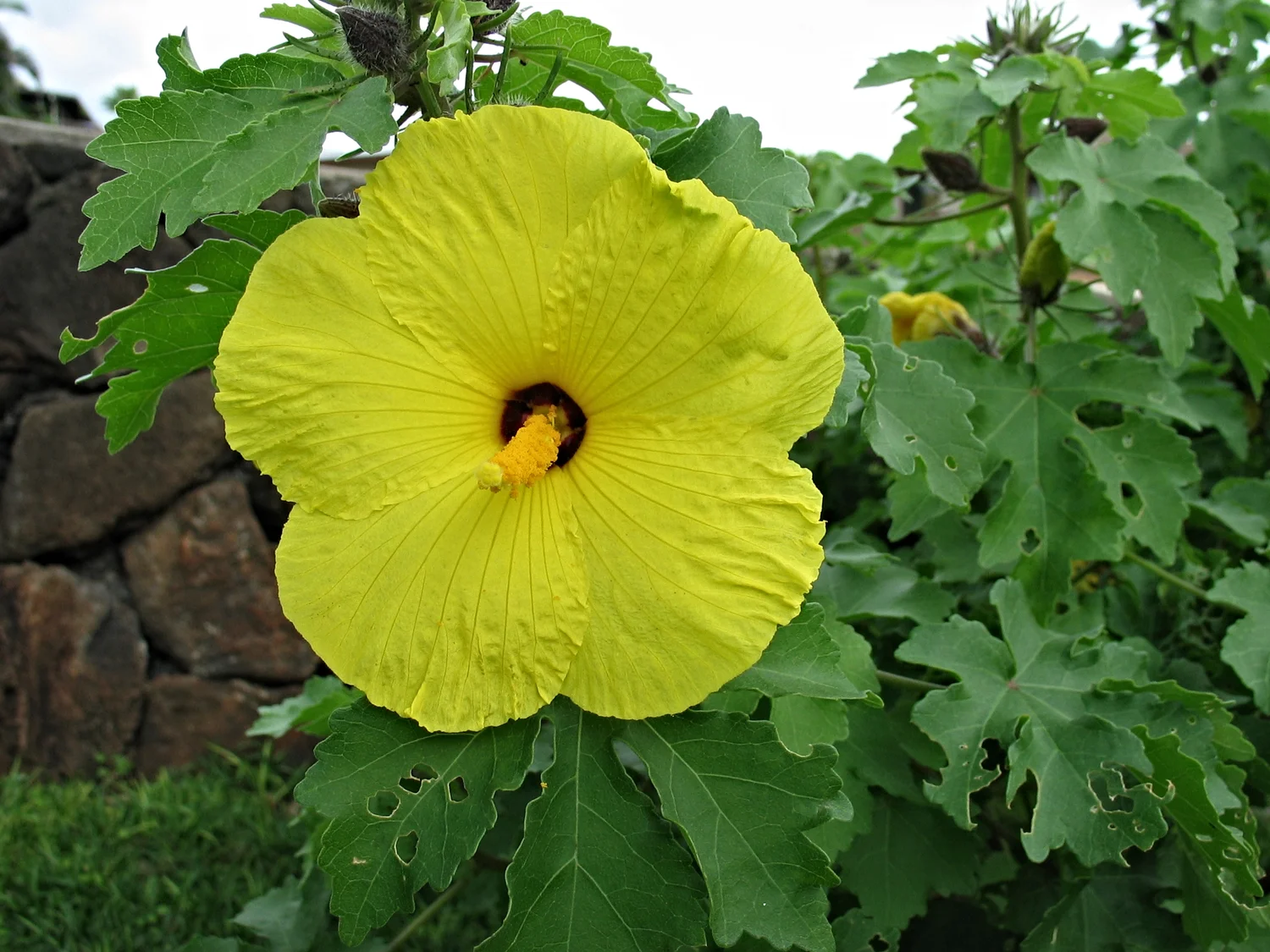
Photo: David Eickhoff, CC BY 2.0, via Wikimedia Commons
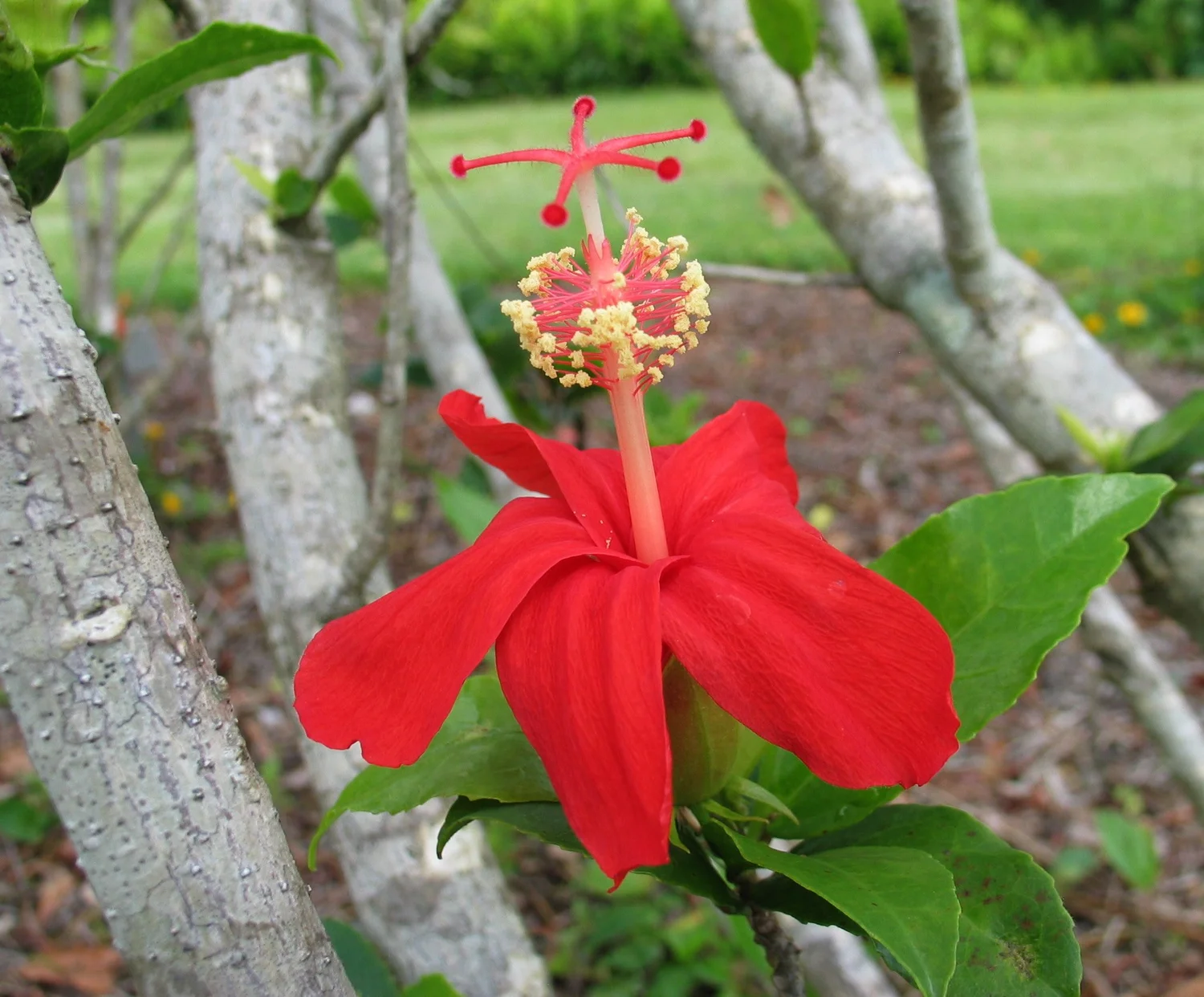
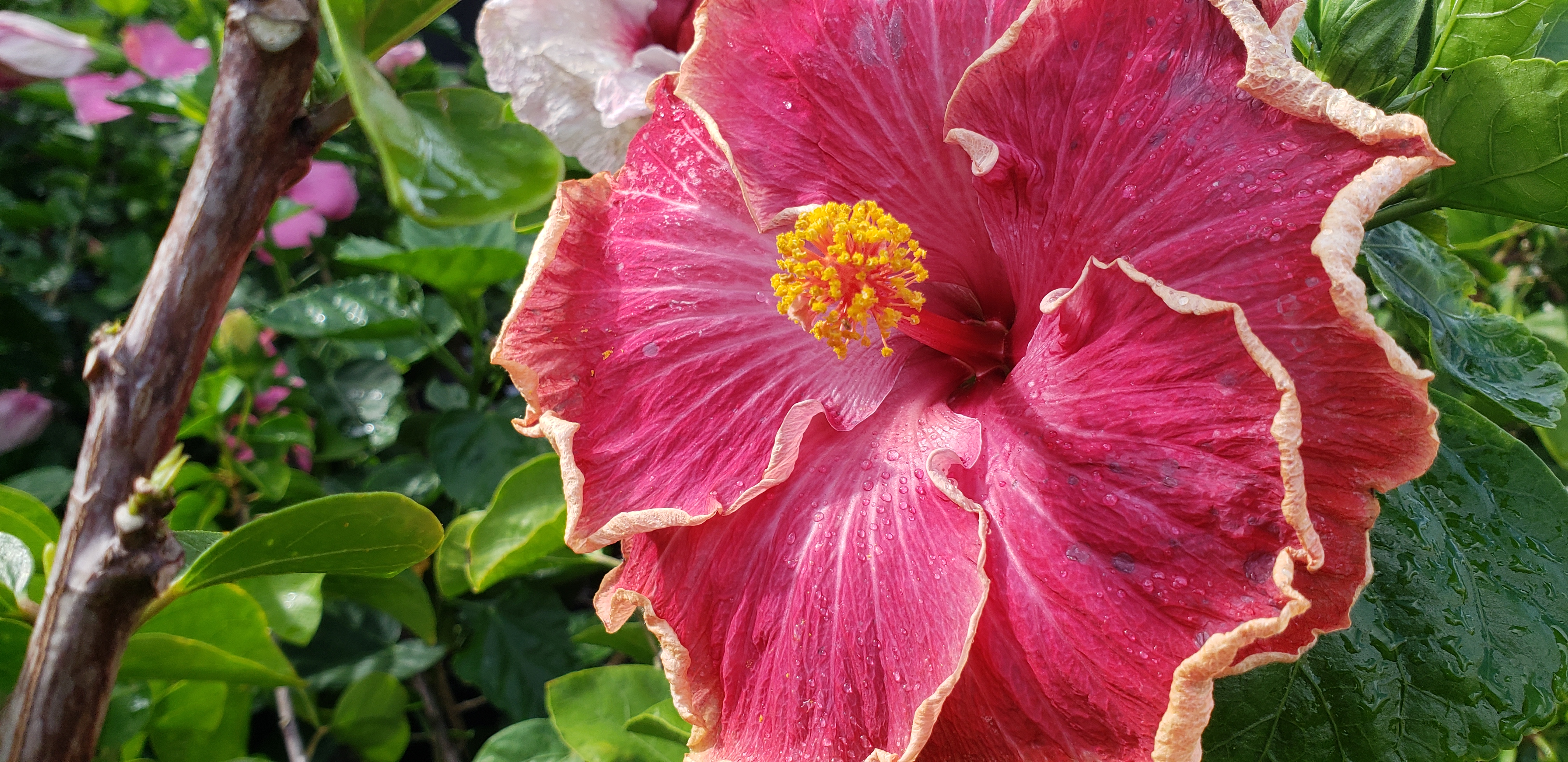
Photo: David Eickhoff, CC BY 2.0, via Wikimedia Commons
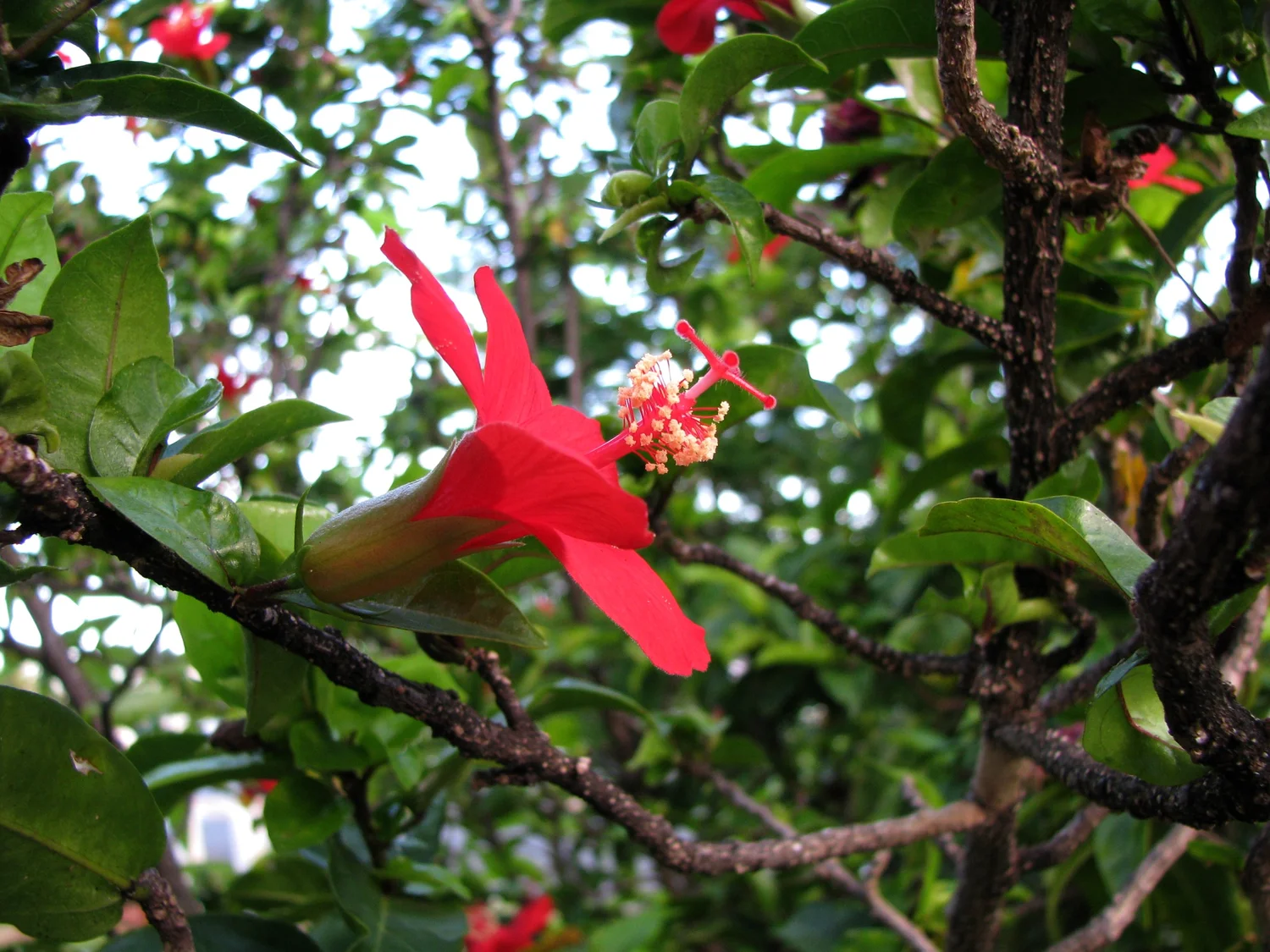
Photo: David Eickhoff, CC BY 2.0, via Wikimedia Commons
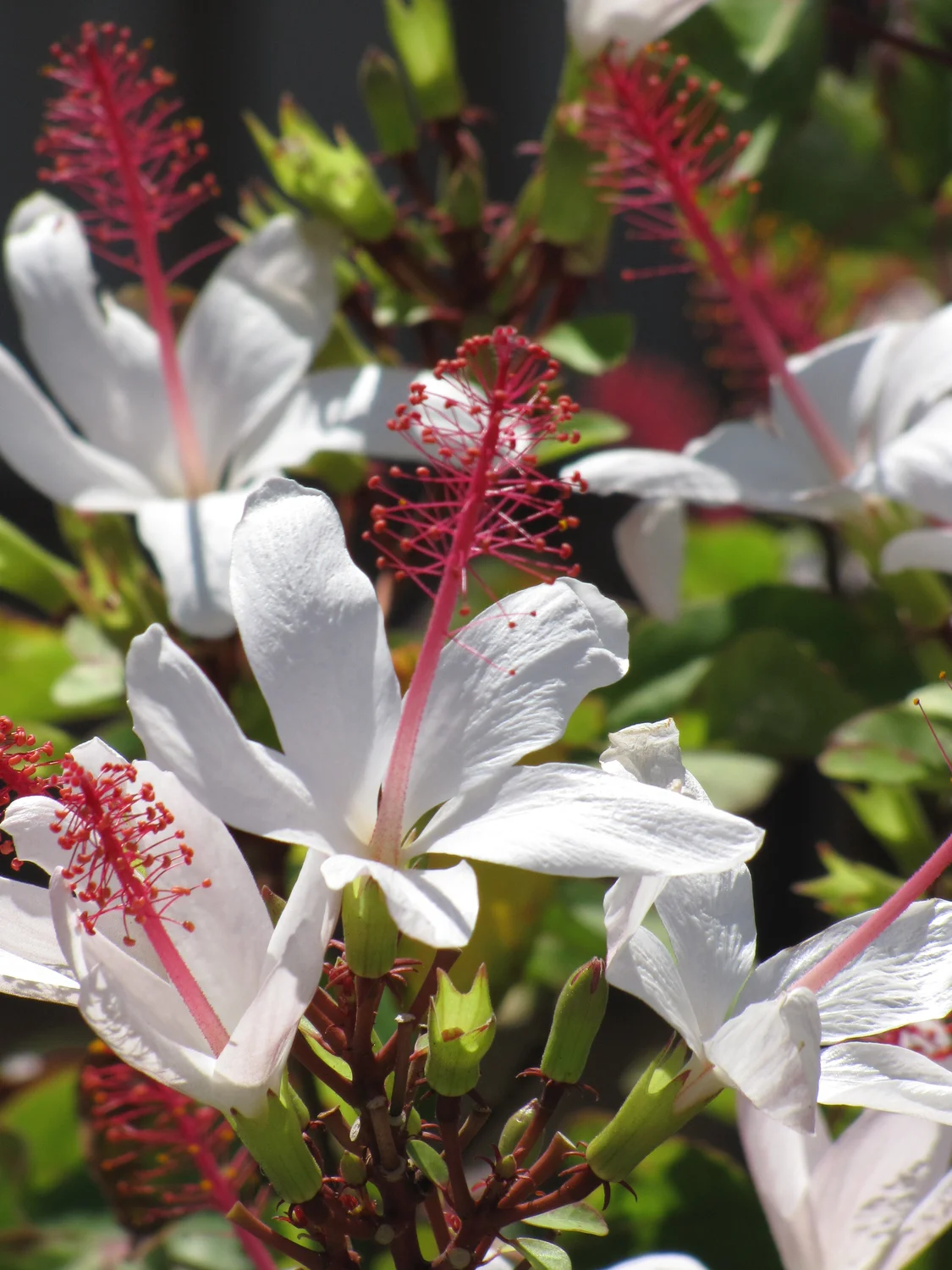
Photo: Forest and Kim Starr, CC BY 3.0 us, via Wikimedia Commons
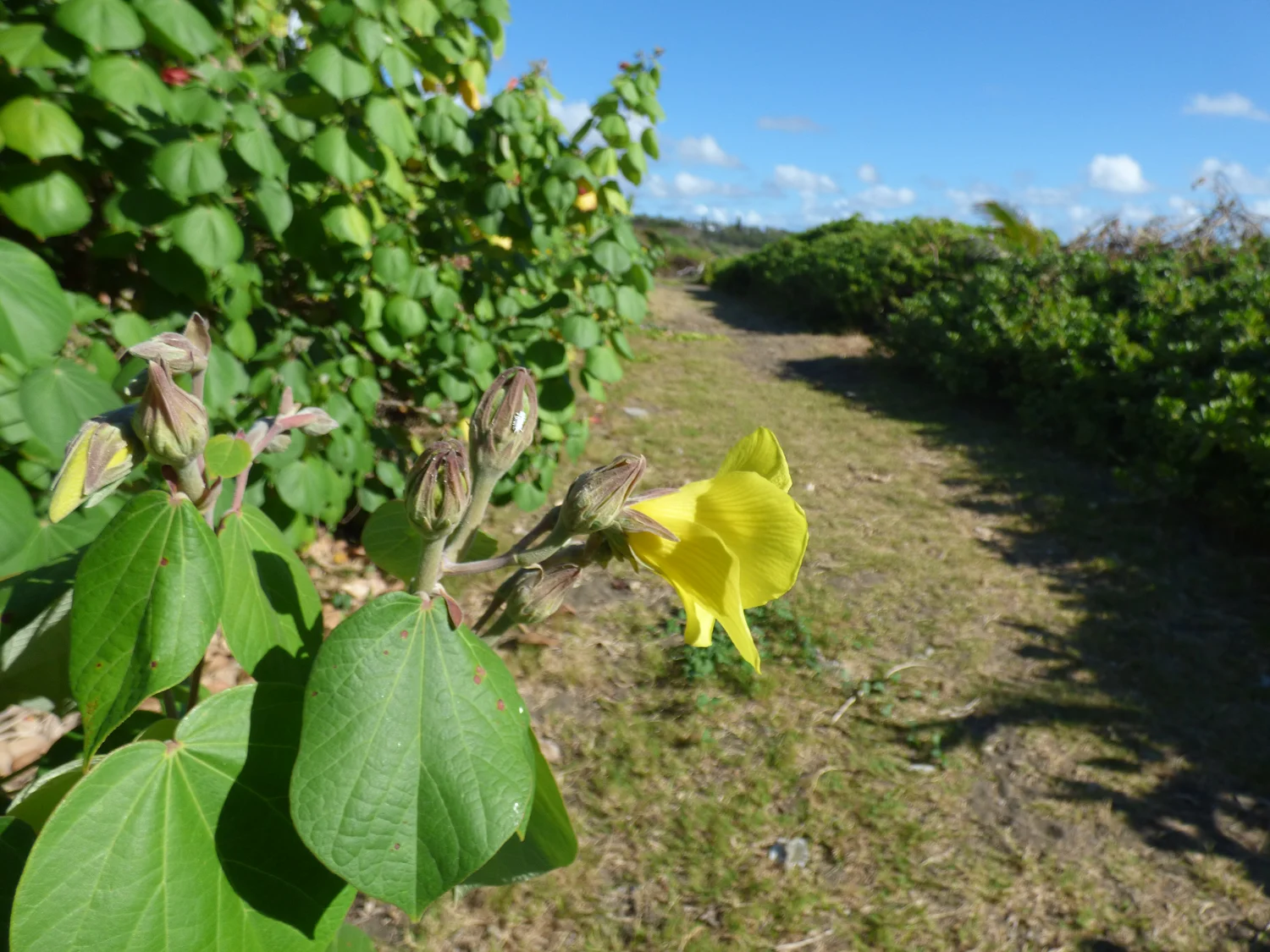
Photo: Forest and Kim Starr, CC BY 2.0, via Wikimedia Commons
The garden hibiscus
Most of the hibiscus you see in Hawaiian gardens, hotel grounds and leis are the tropical garden hibiscus, Hibiscus rosa-sinensis, and its many hybrids. This species has been grown in gardens for so long that its true wild origin is uncertain, though it is thought to come from tropical Asia; it is also the national flower of Malaysia.[7] Hawaii’s gardeners and breeders have crossed it with other species, including native Hawaiian ones, to create thousands of named varieties.
Colors, shapes and styles
Few flowers come in so many looks as the hibiscus.
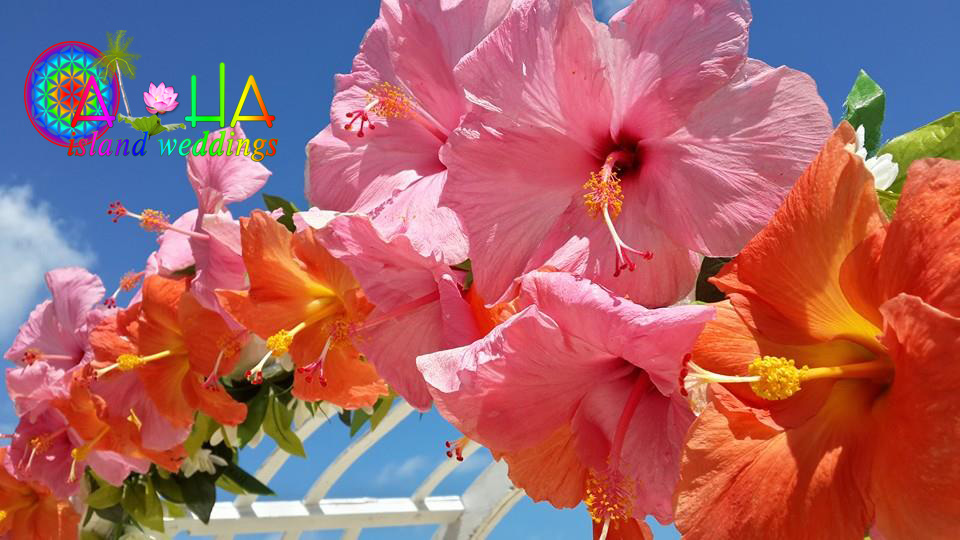
- Pink, from soft baby pink and blush to hot pink, magenta and deep rose.
- Red, the classic island hibiscus, from bright scarlet to deep wine.
- Yellow, sunny lemon to golden, the color of the state flower.
- Orange, coral and peach, warm sunset shades.
- White, pure and clean, sometimes with a red or pink eye.
- Blends, with a dark “eye” at the center, a different color on the petal edges, or colors that change from morning to evening.
Petals may be smooth and round, ruffled and wavy, or doubled into a full, peony like bloom, and flowers range from small blossoms a few inches across to dinner plate giants.
In Hawaiian culture
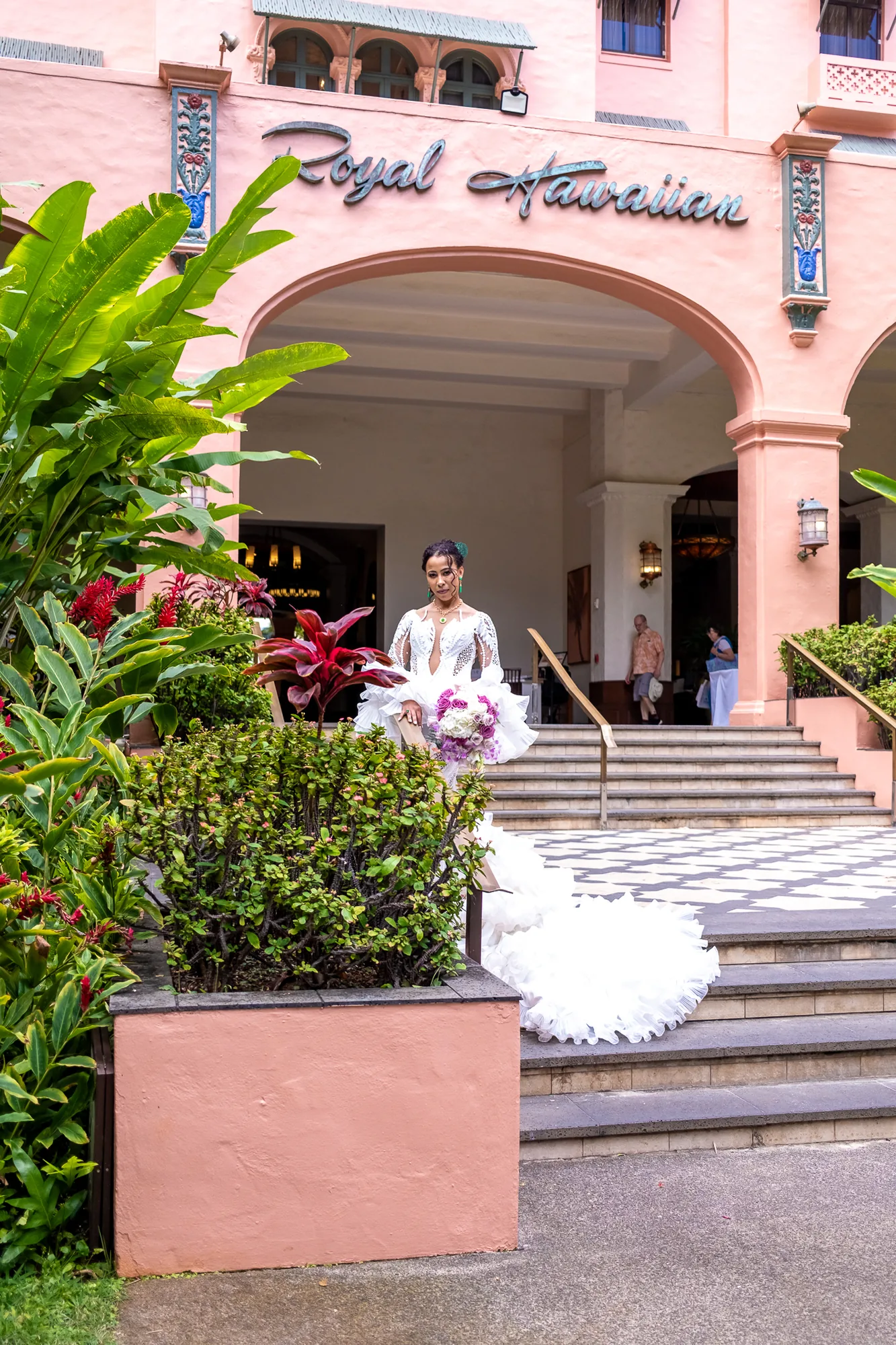
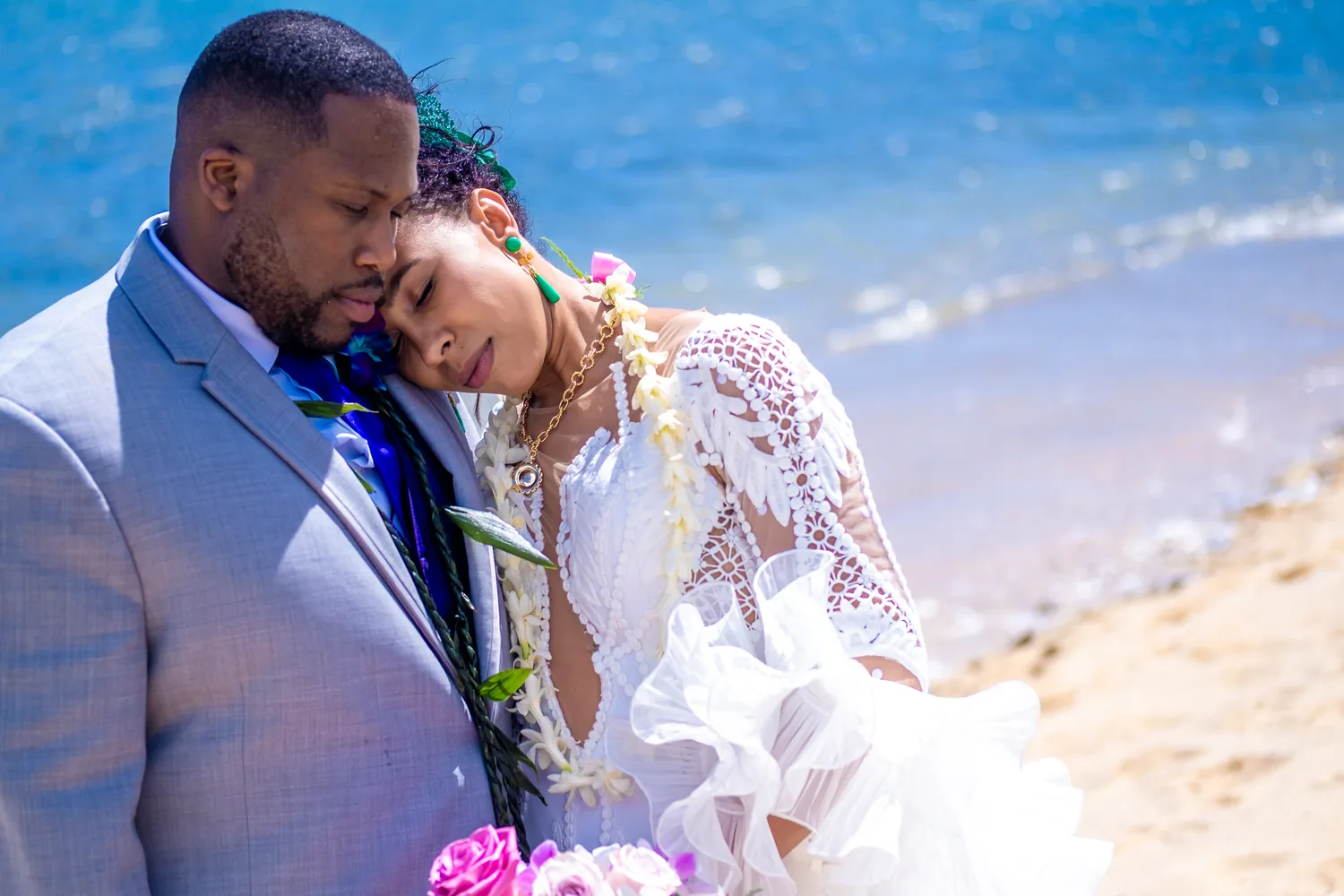
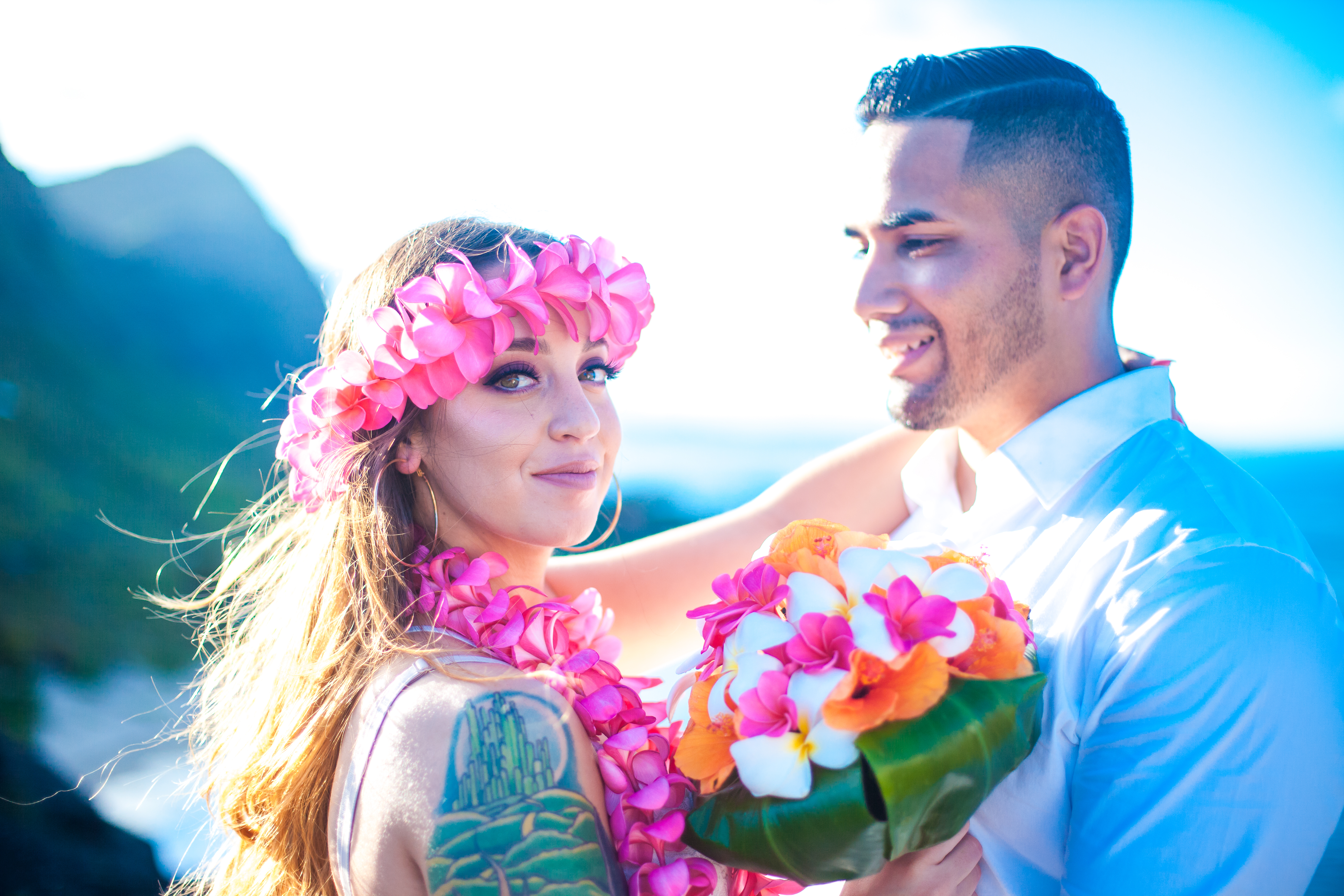
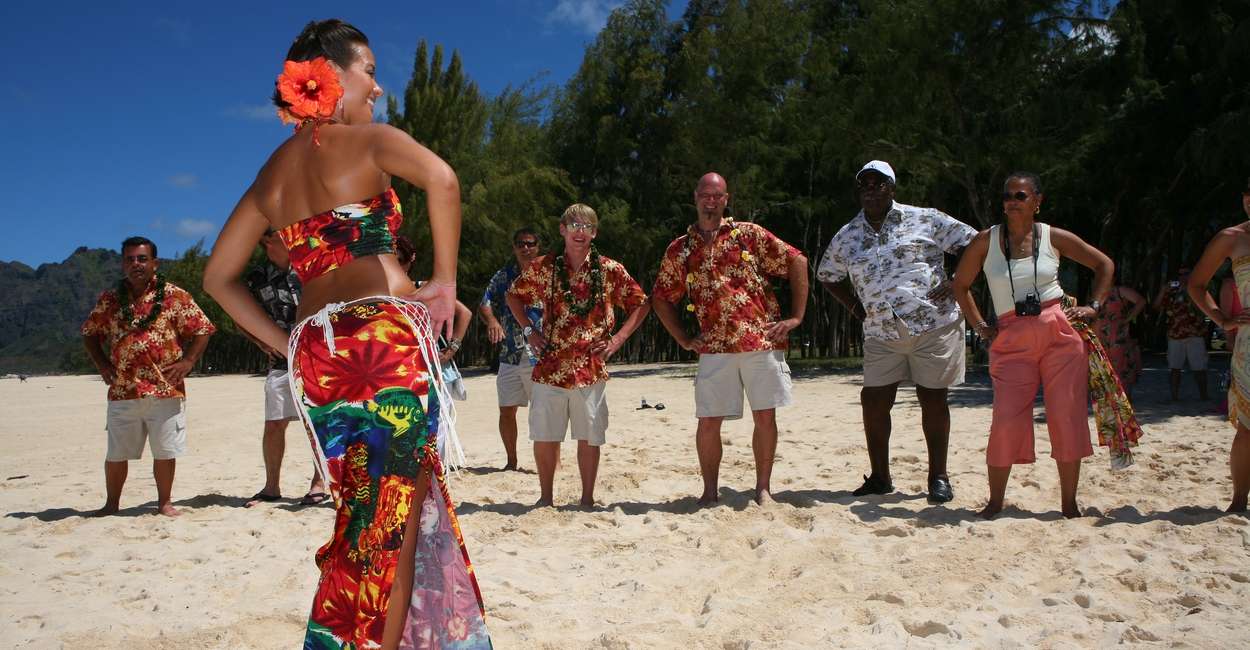
In Hawaii a flower worn behind the ear has a sweet meaning: worn over the right ear it says you are single and available, and over the left ear, closer to the heart, it says you are already taken. On a wedding day, the bride wears hers on the left. Hula dancers often wear a hibiscus in their hair, and the flower appears everywhere in island life, on aloha shirts and pareos, quilts and paintings, and on countless postcards from paradise.



Cultivation
Garden hibiscus love warm sun, regular water and well drained soil, and in Hawaii’s frost free climate they bloom all year. They are easy to grow from cuttings and are often grown as hedges. Native Hawaiian hibiscus are also becoming popular in island gardens, where planting them helps keep these rare species alive.
Use in Hawaiian weddings
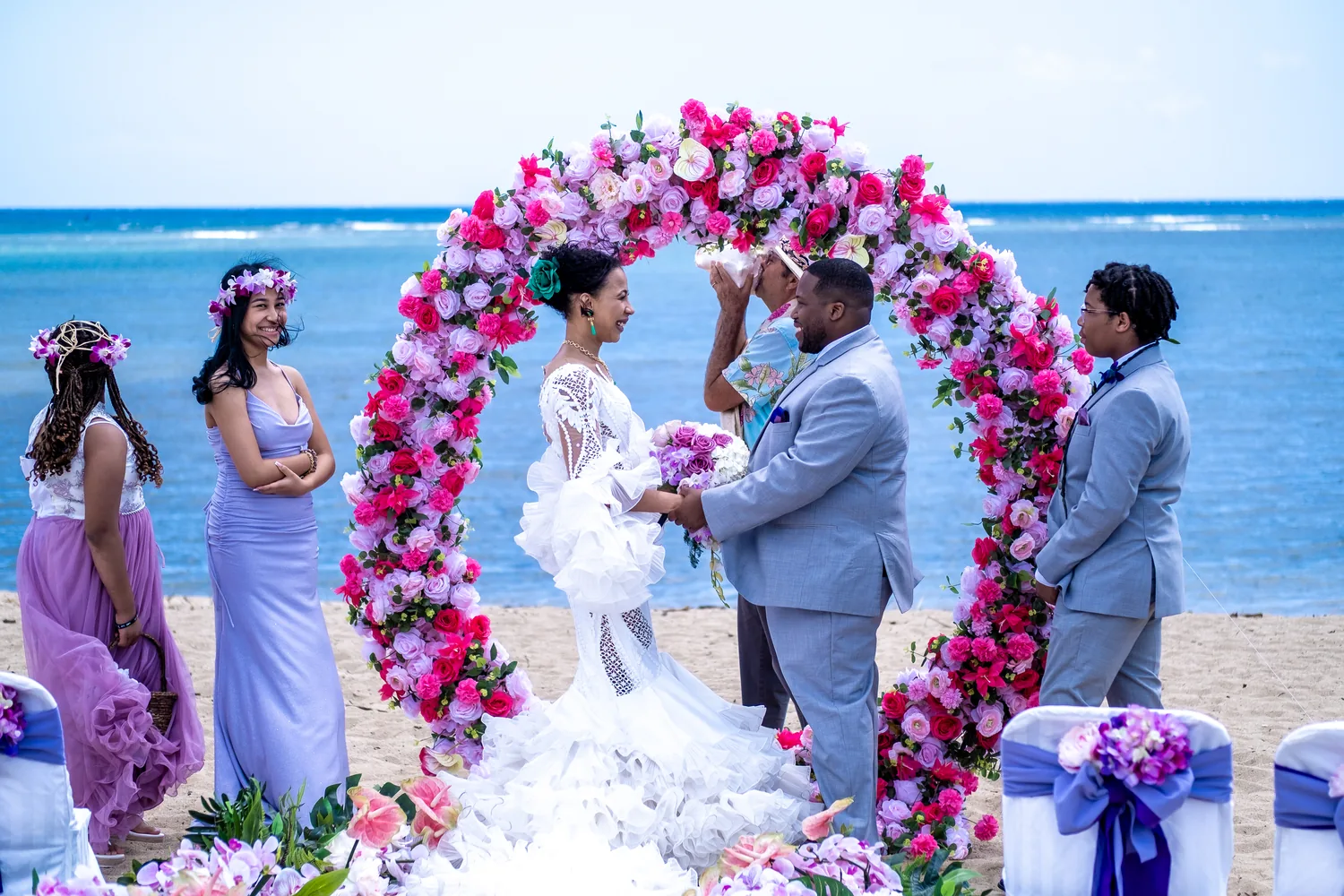
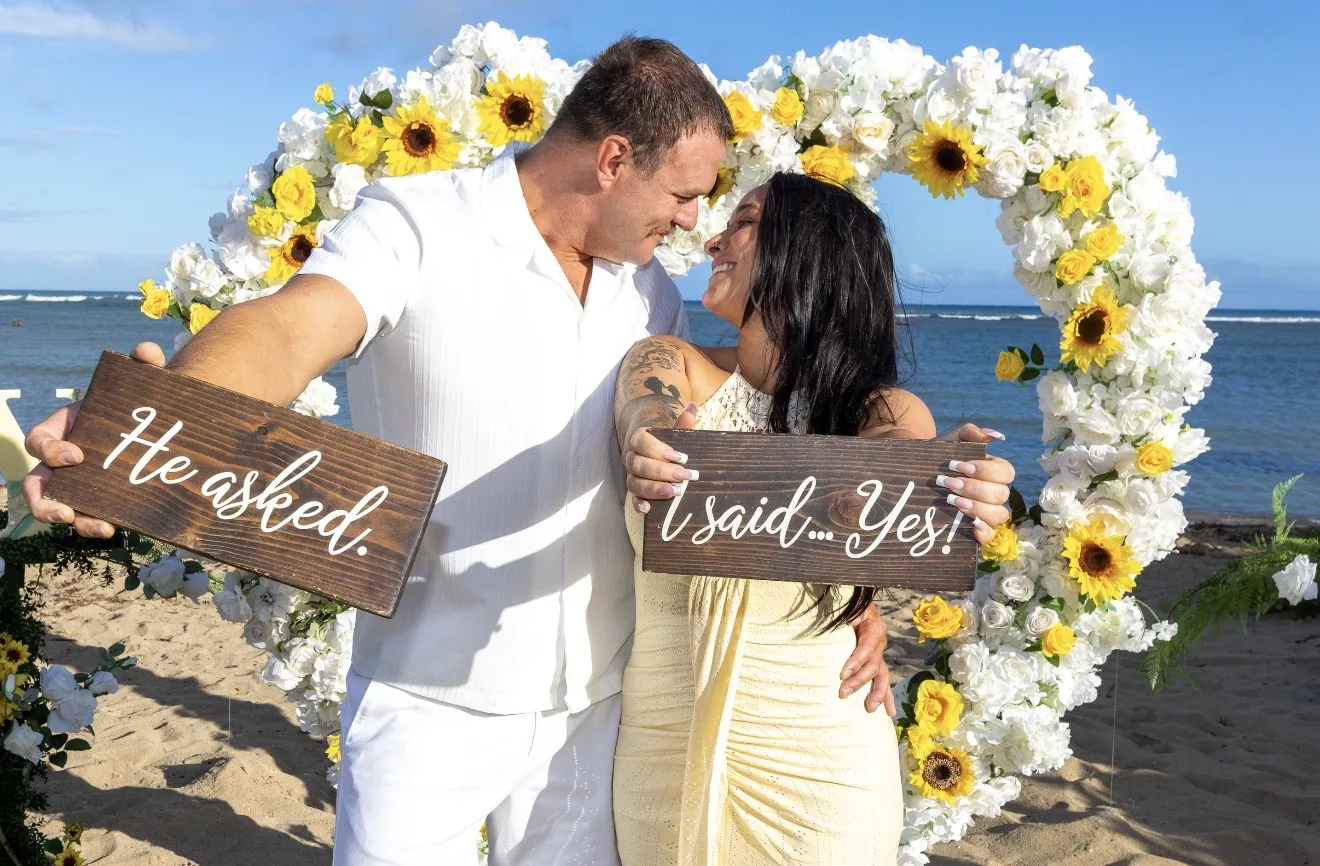
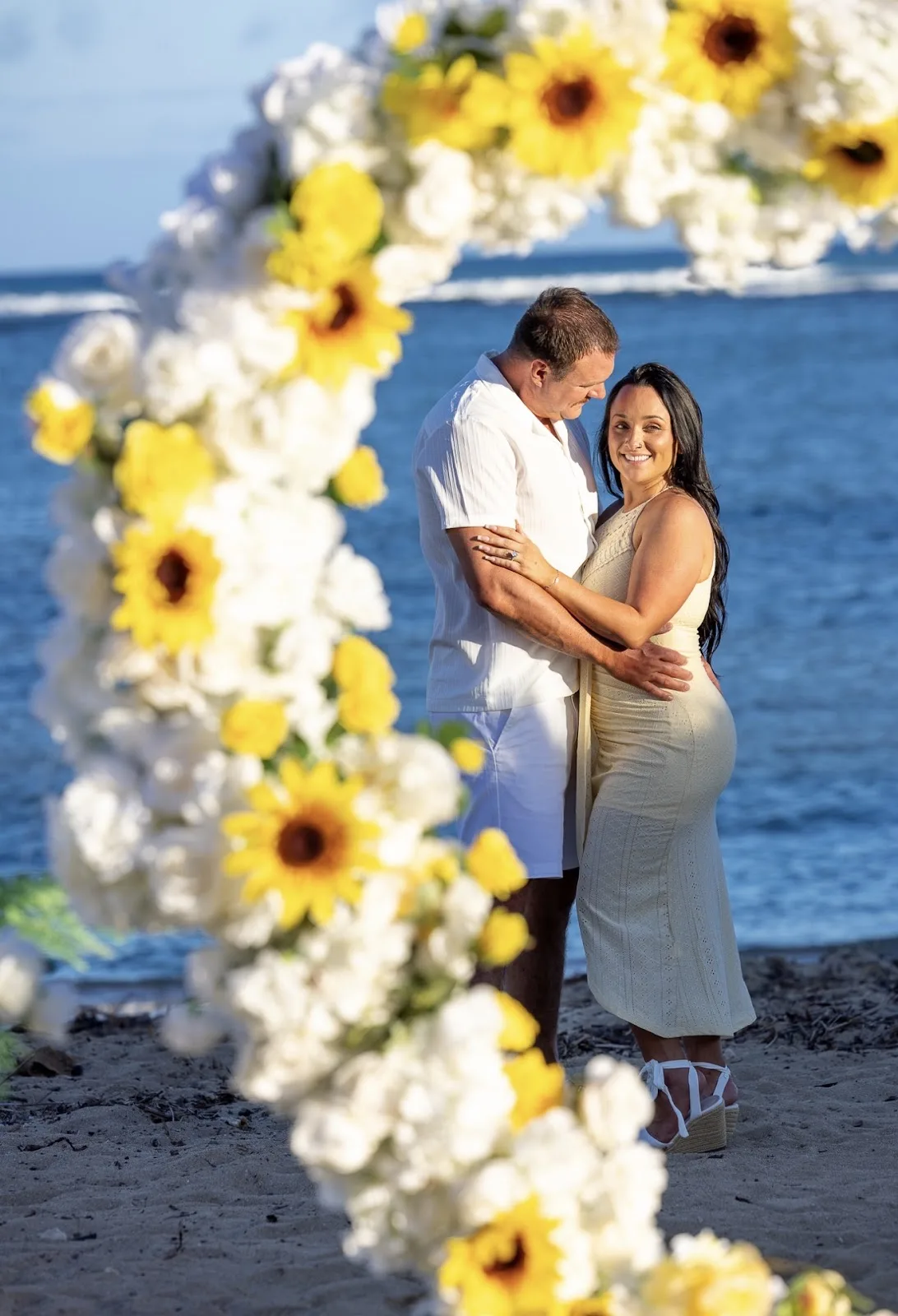
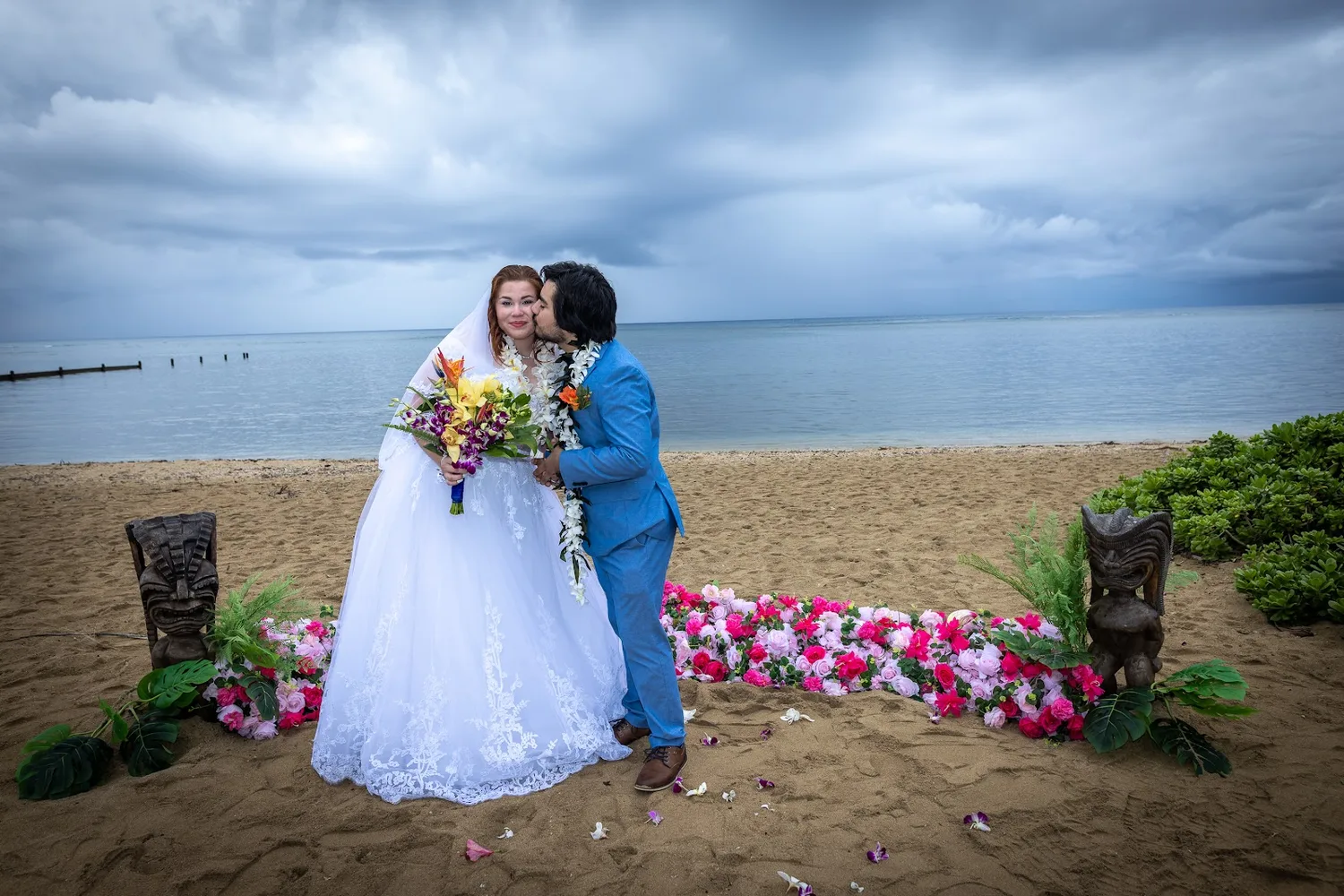
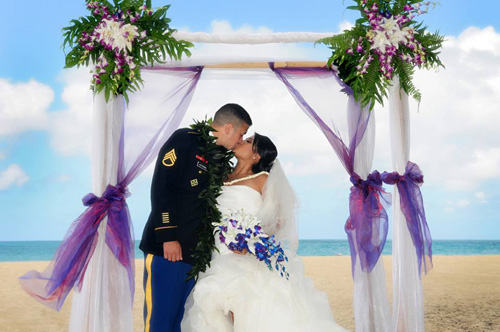
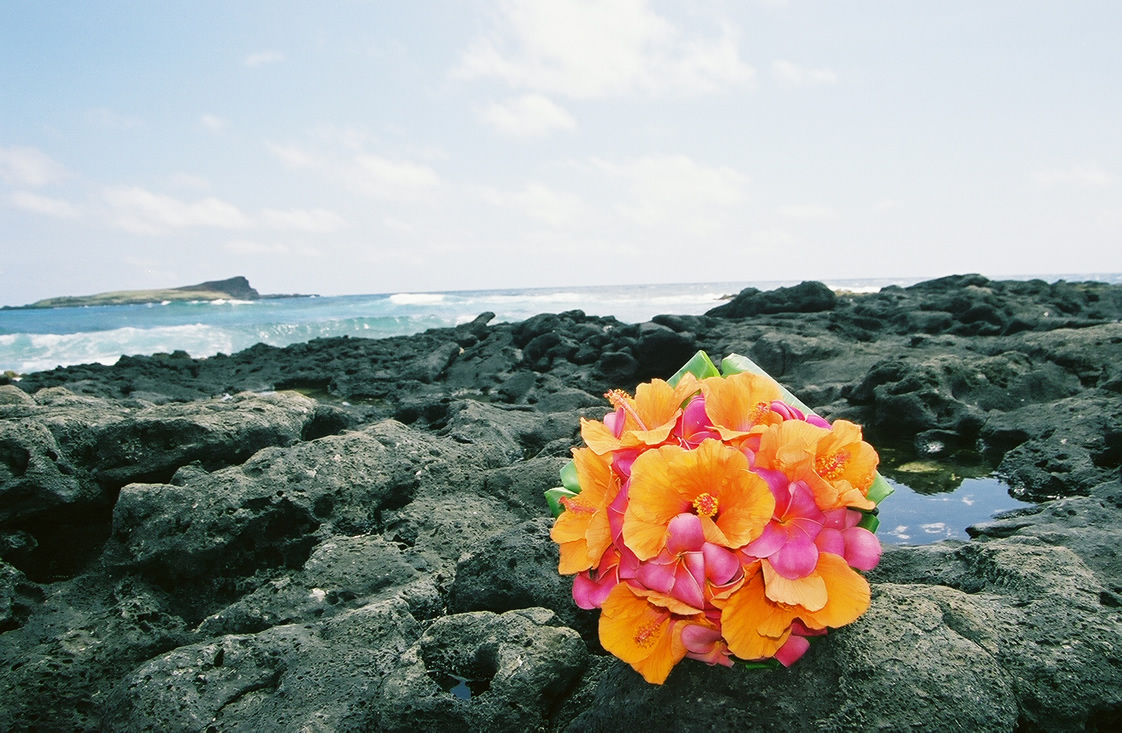
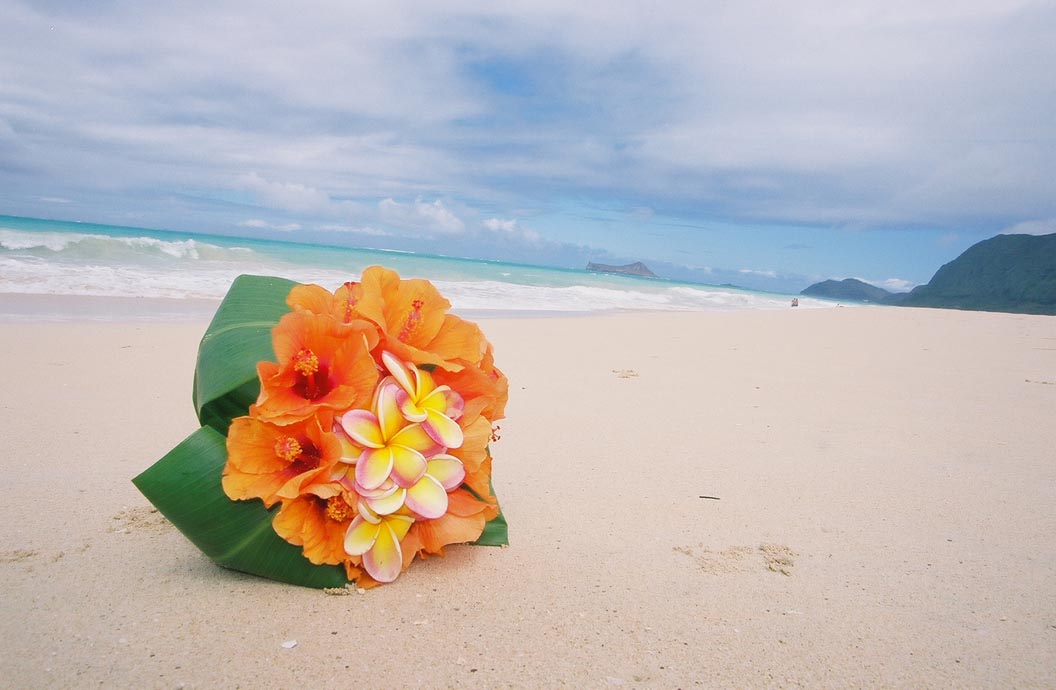
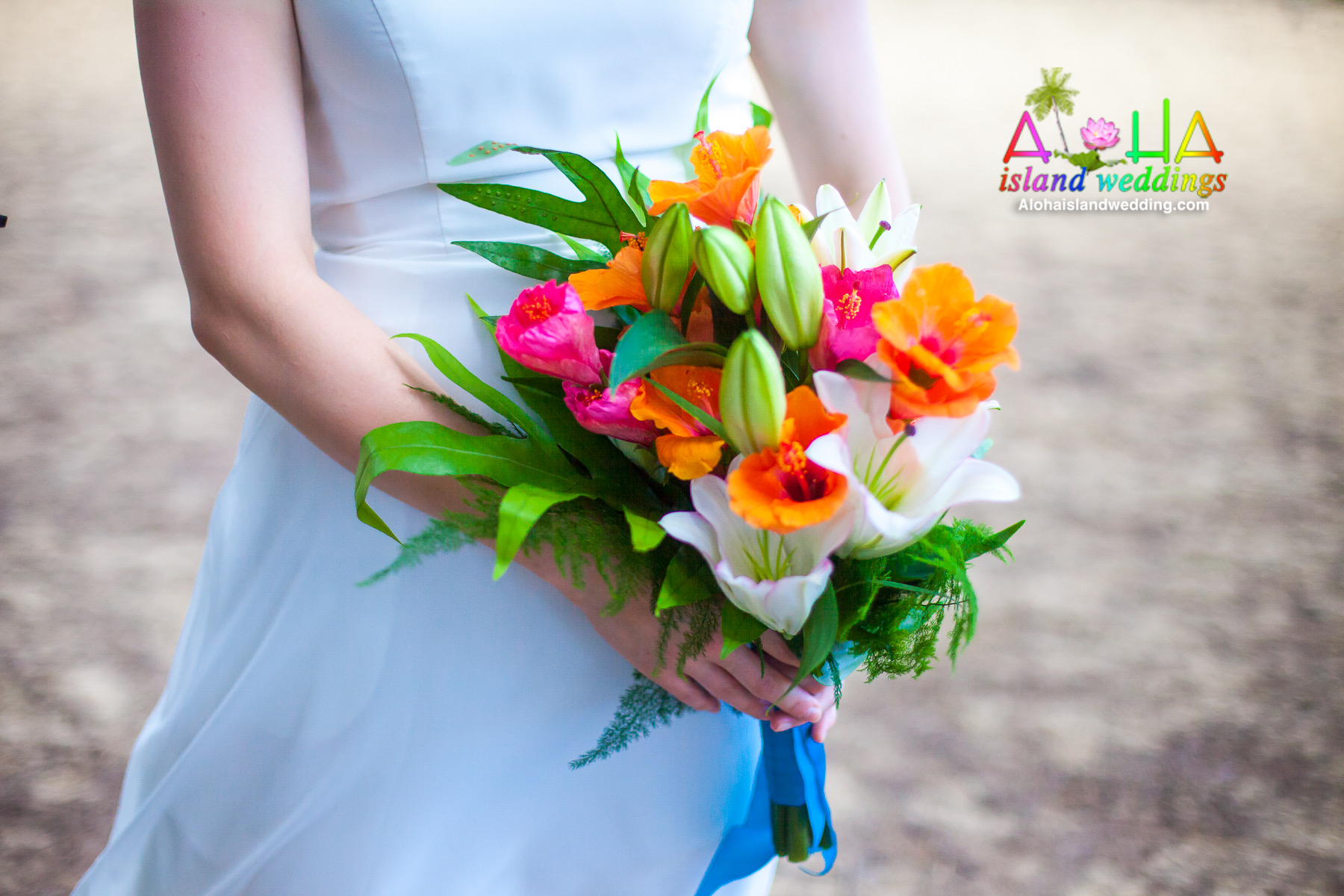
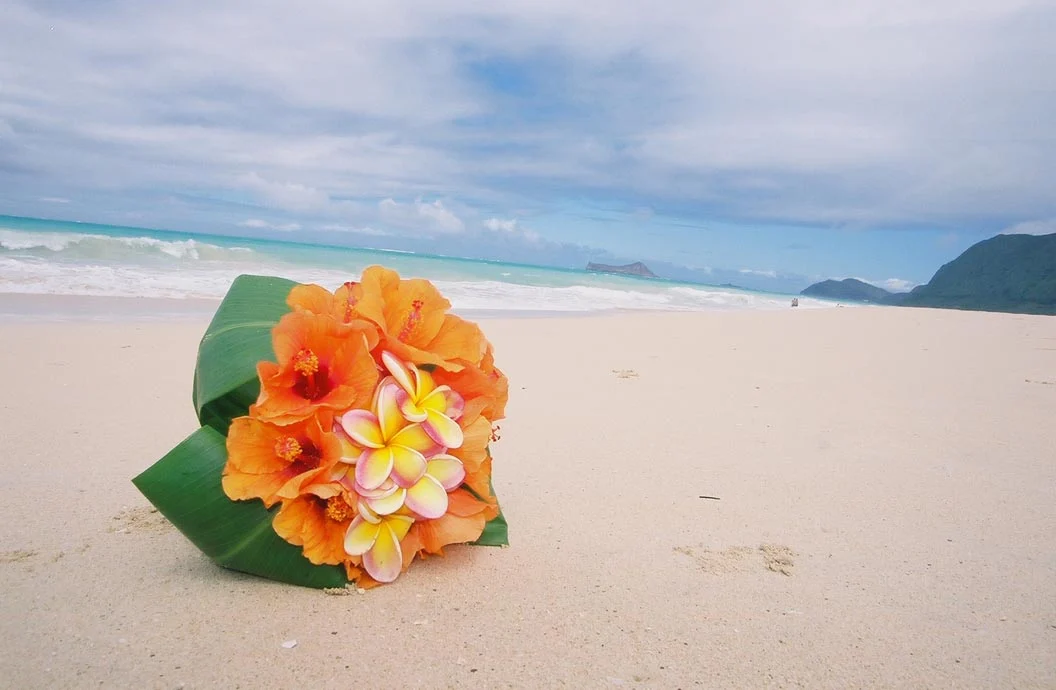
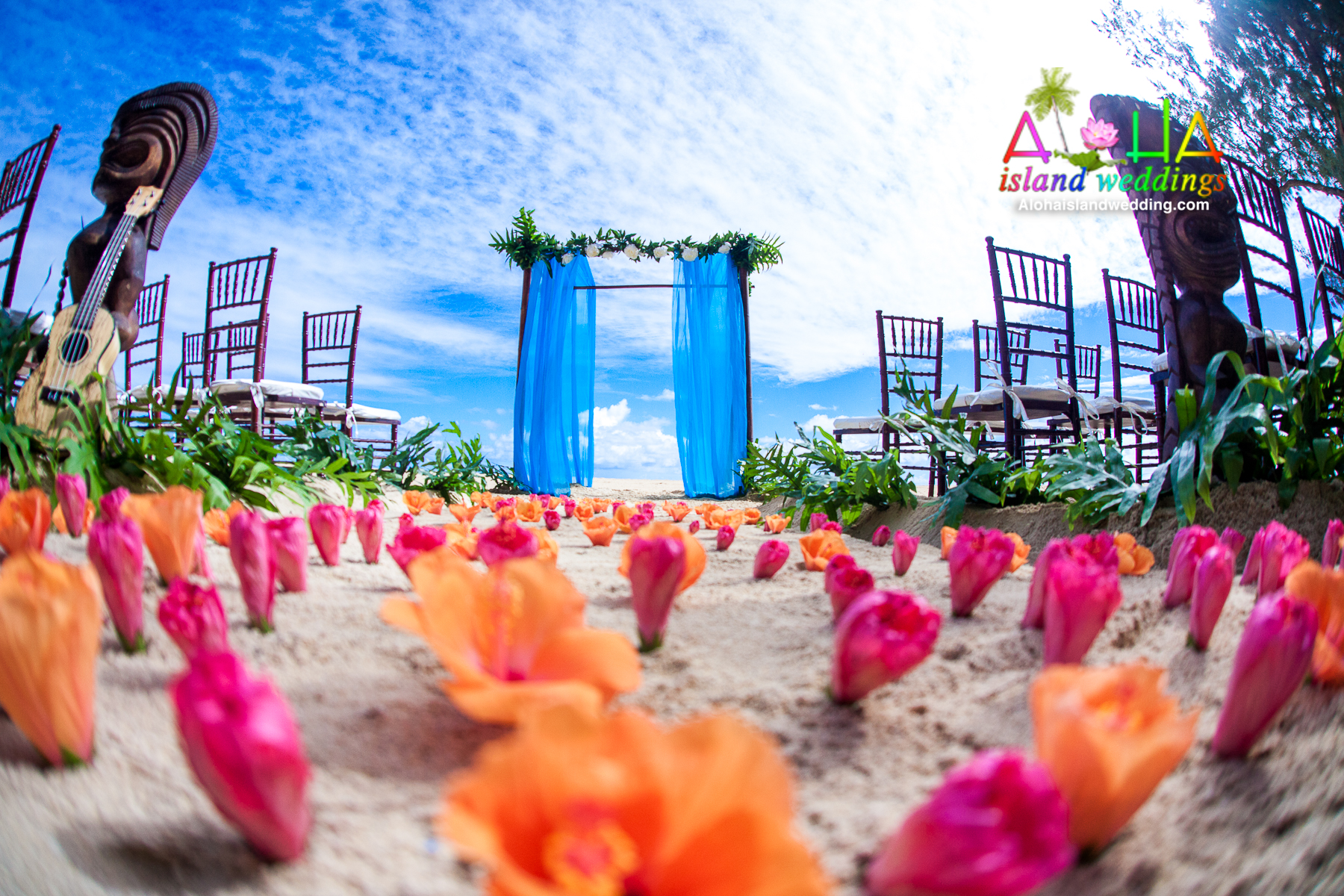
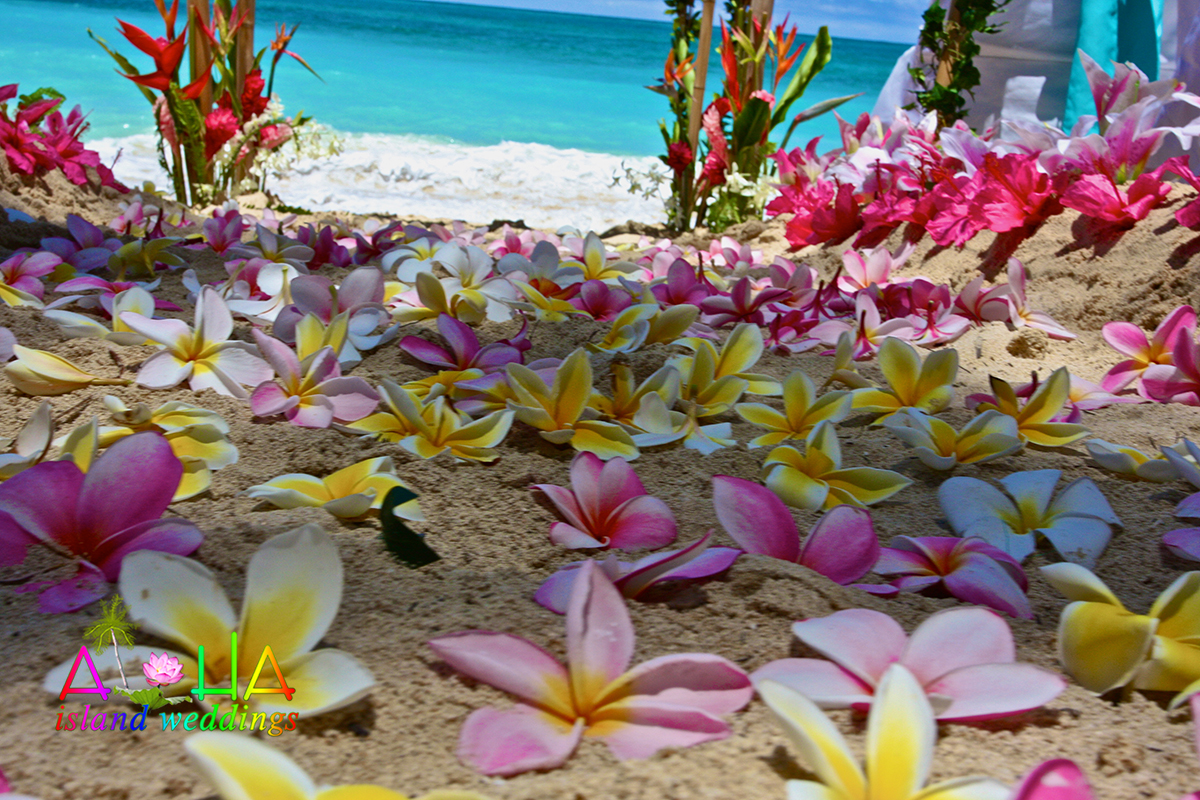
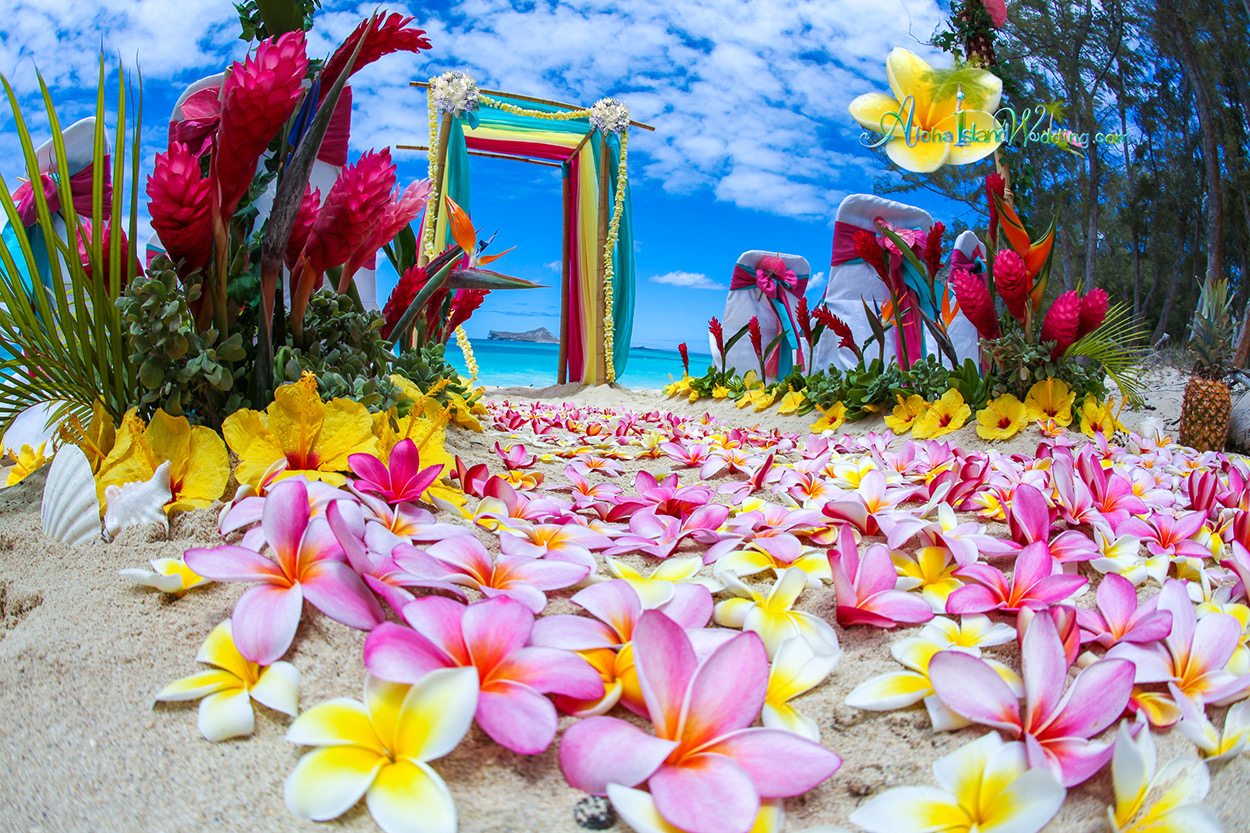
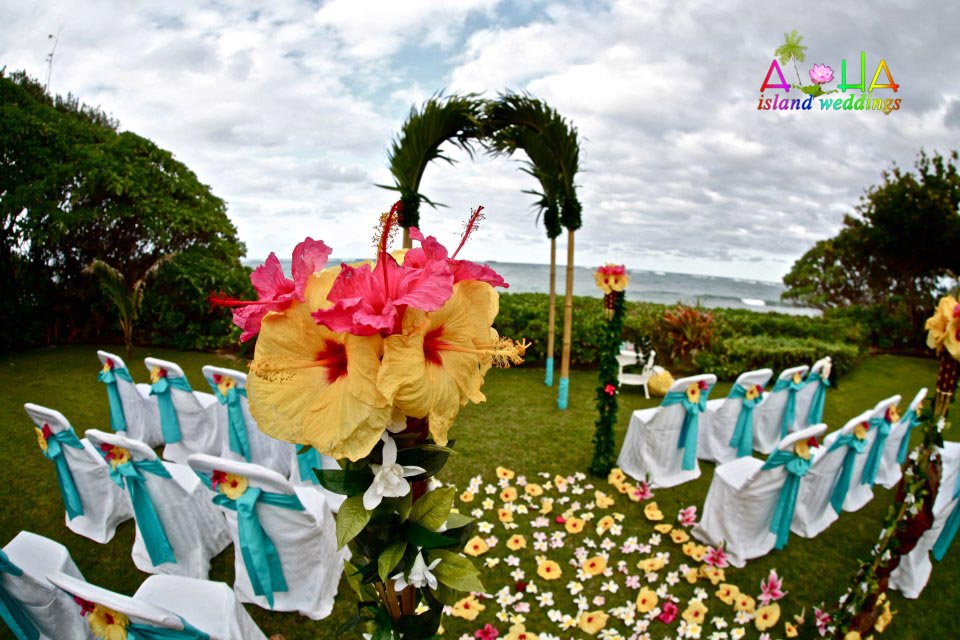
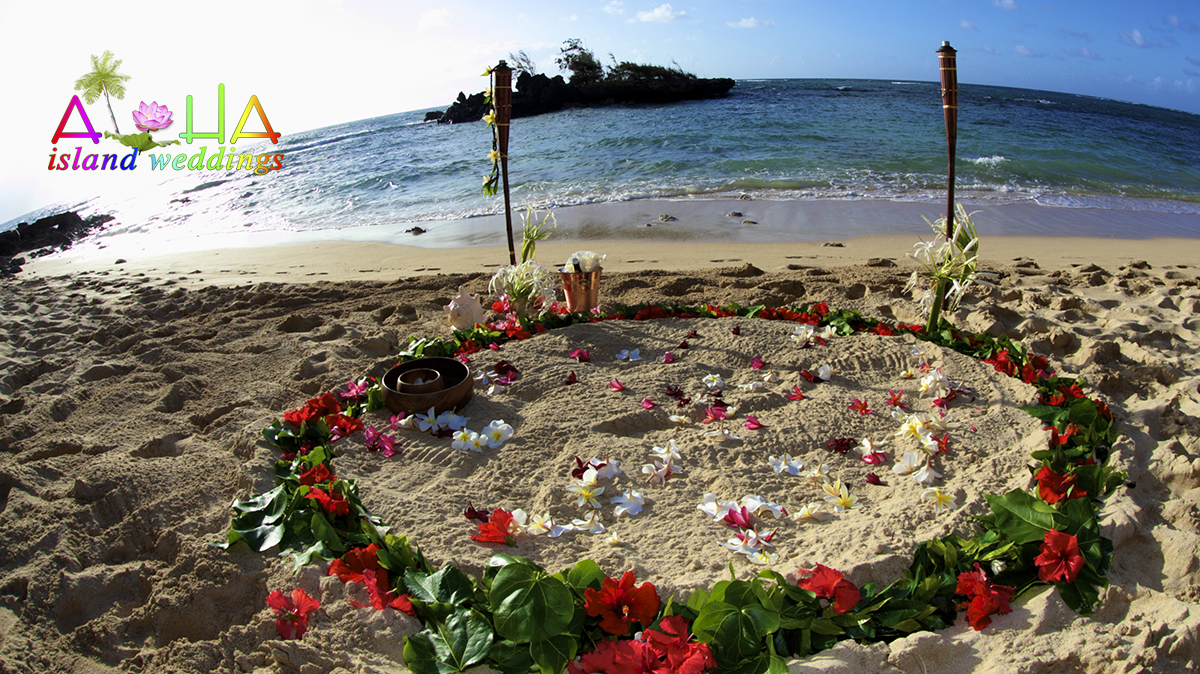
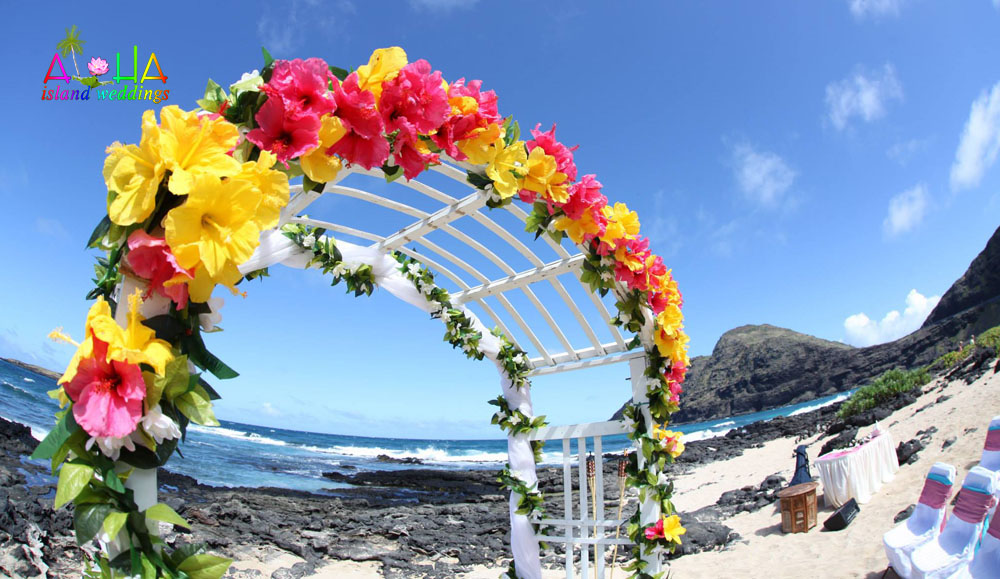
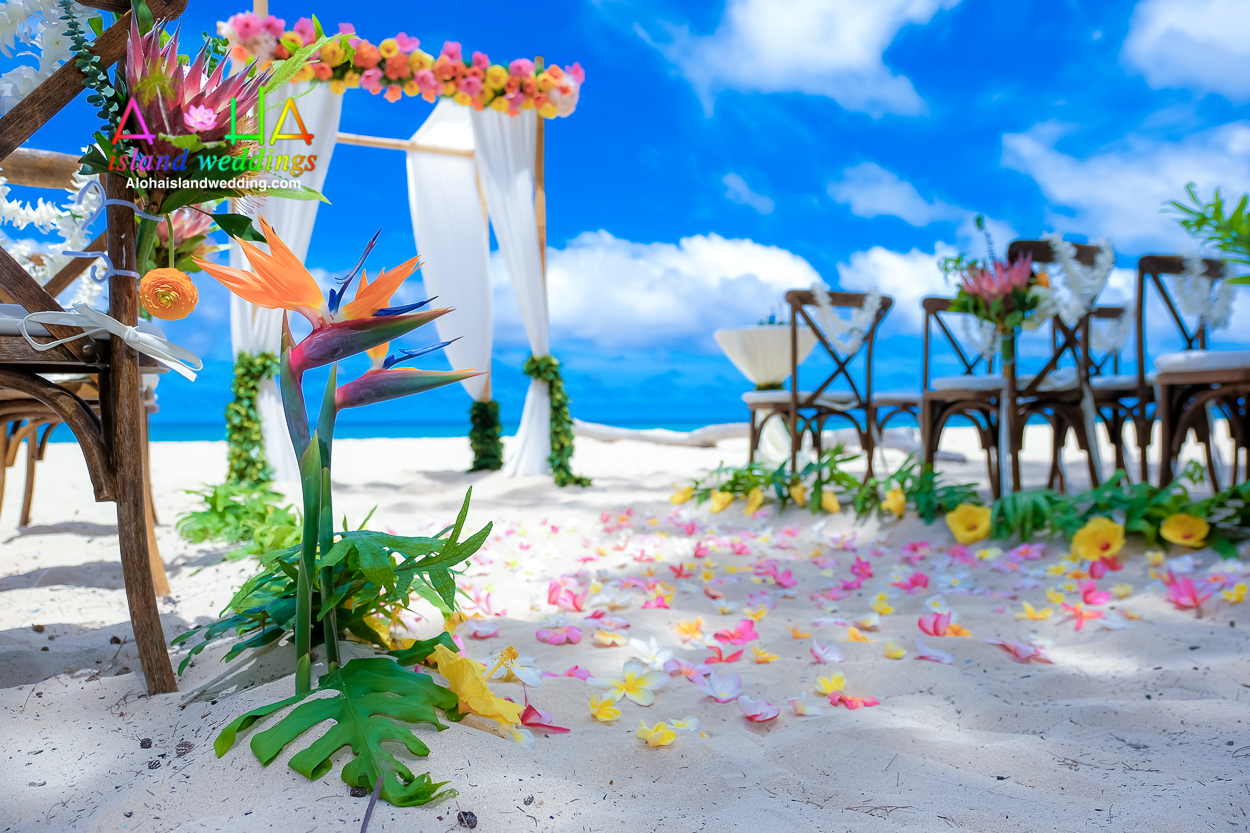
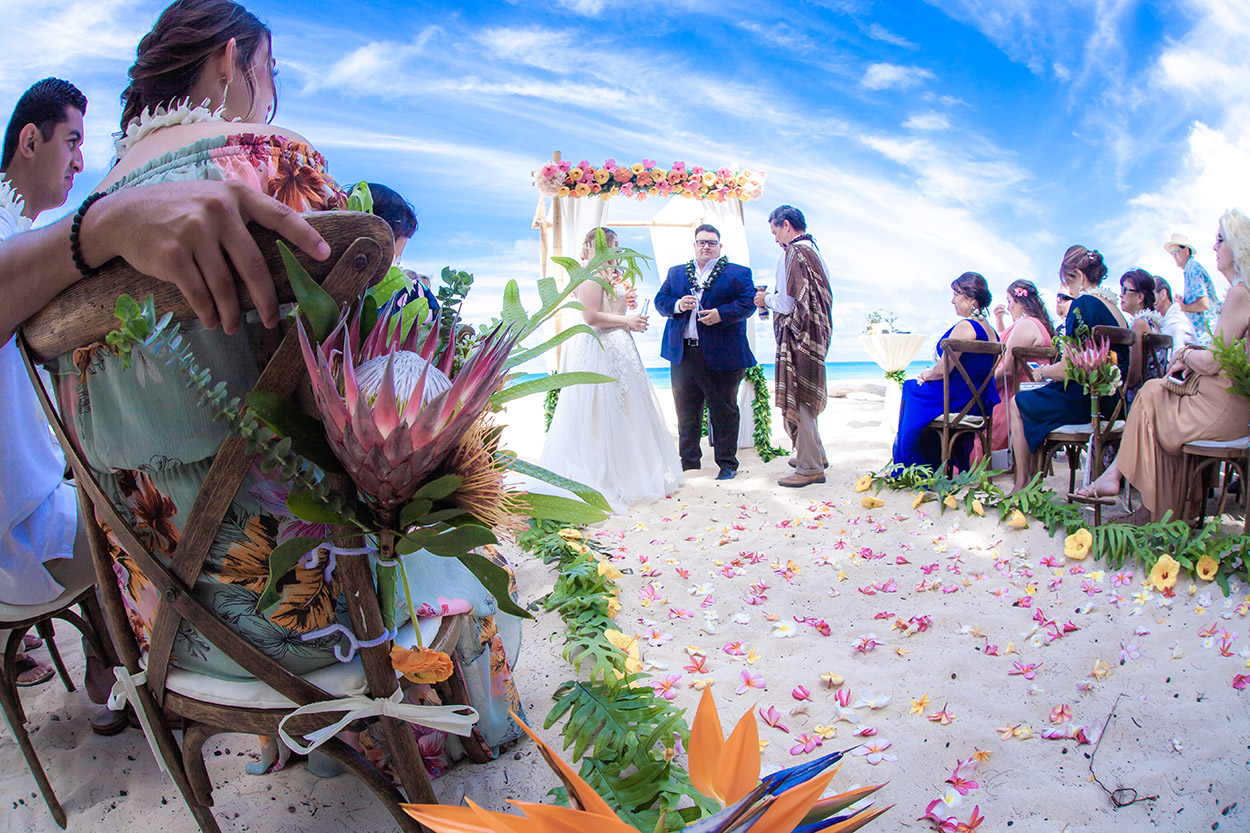
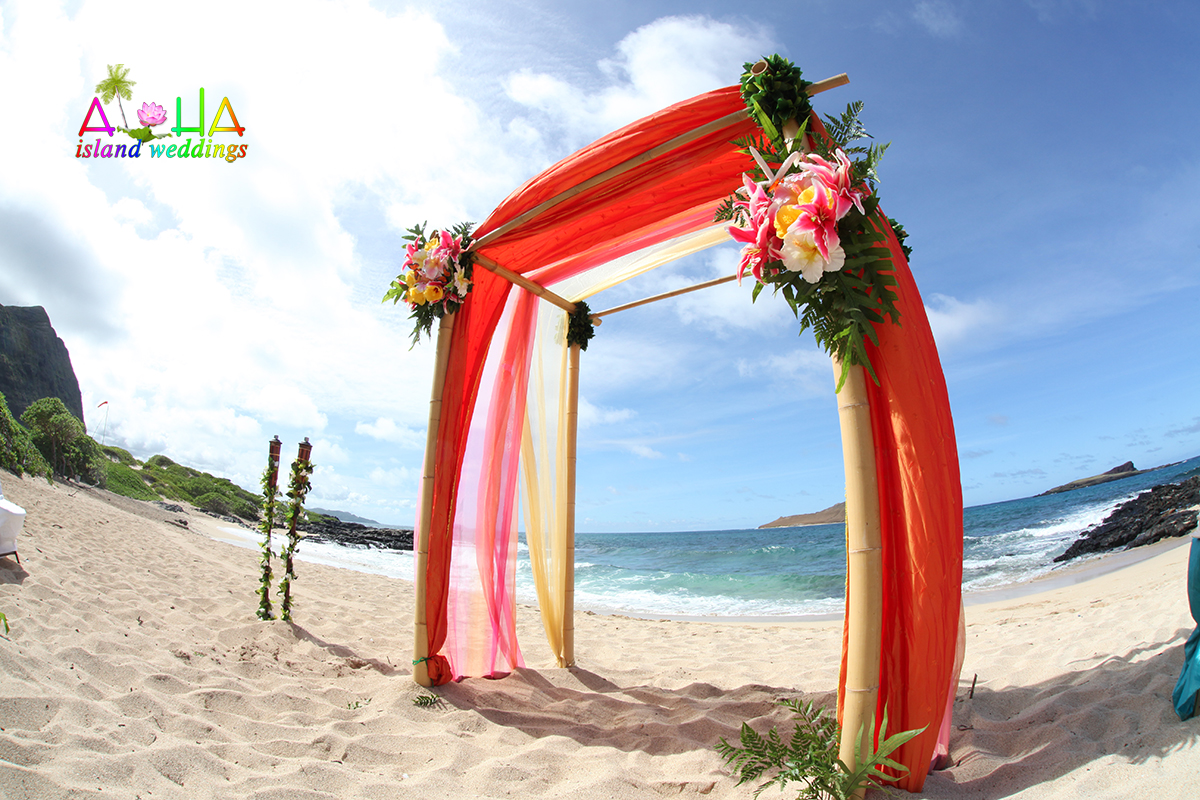
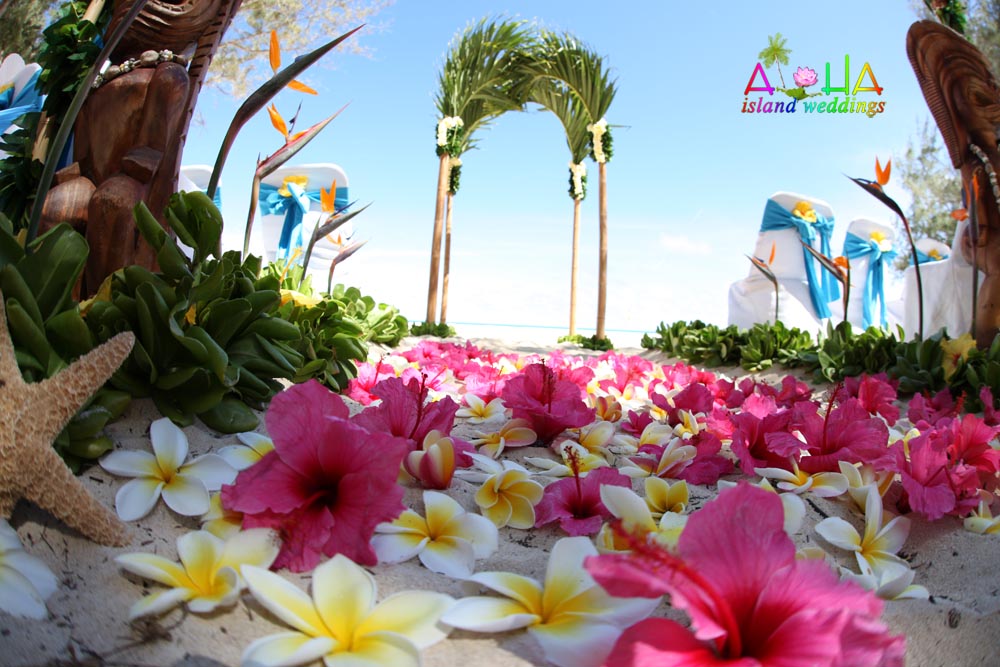
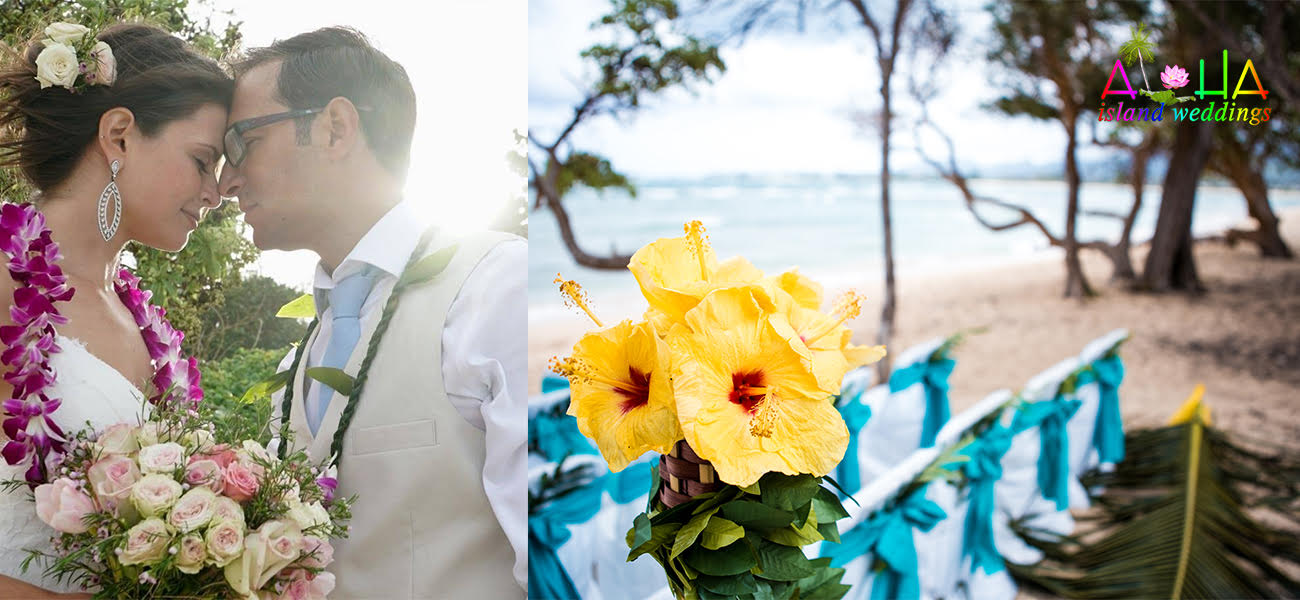
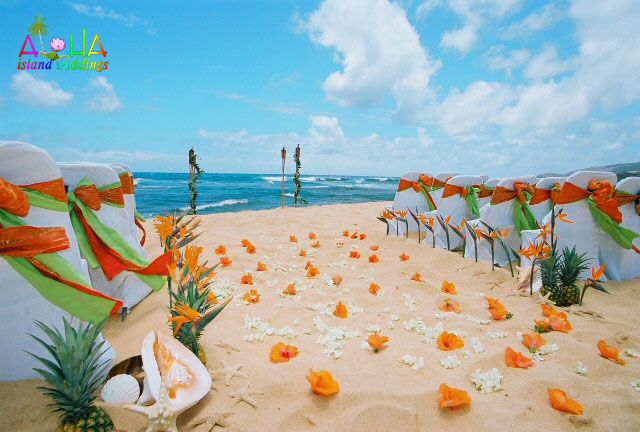
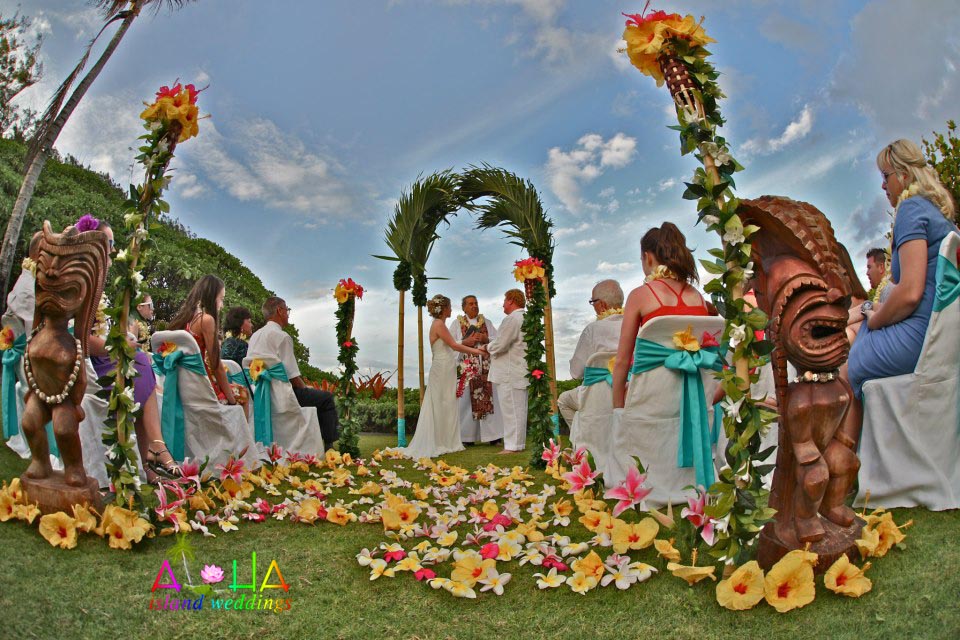
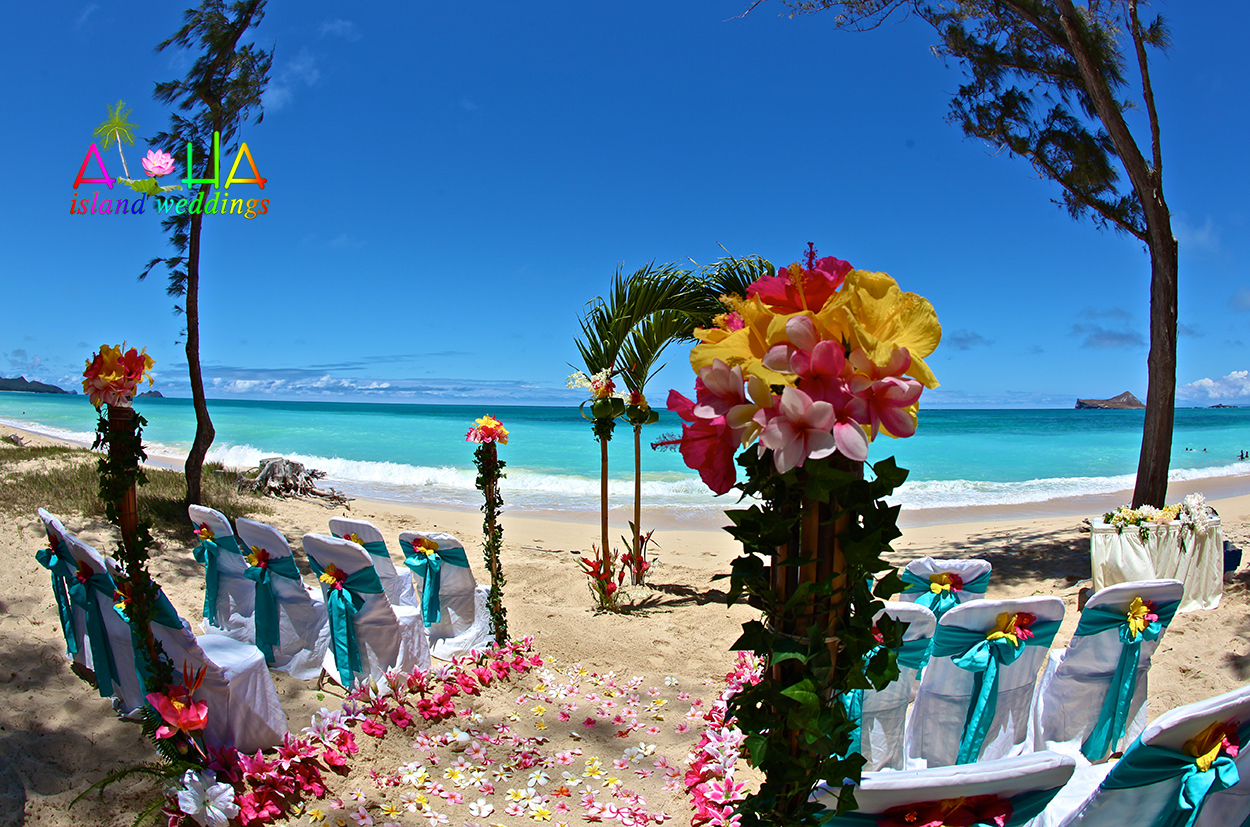
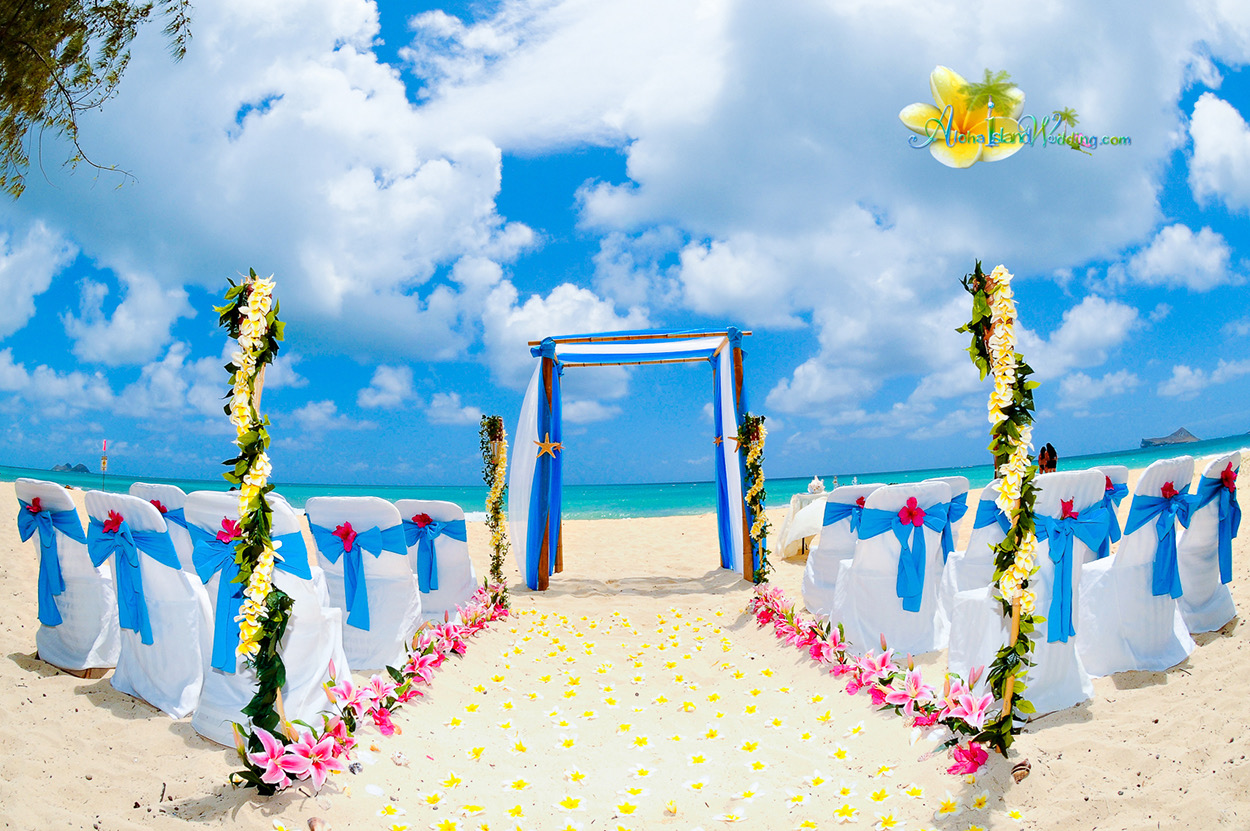
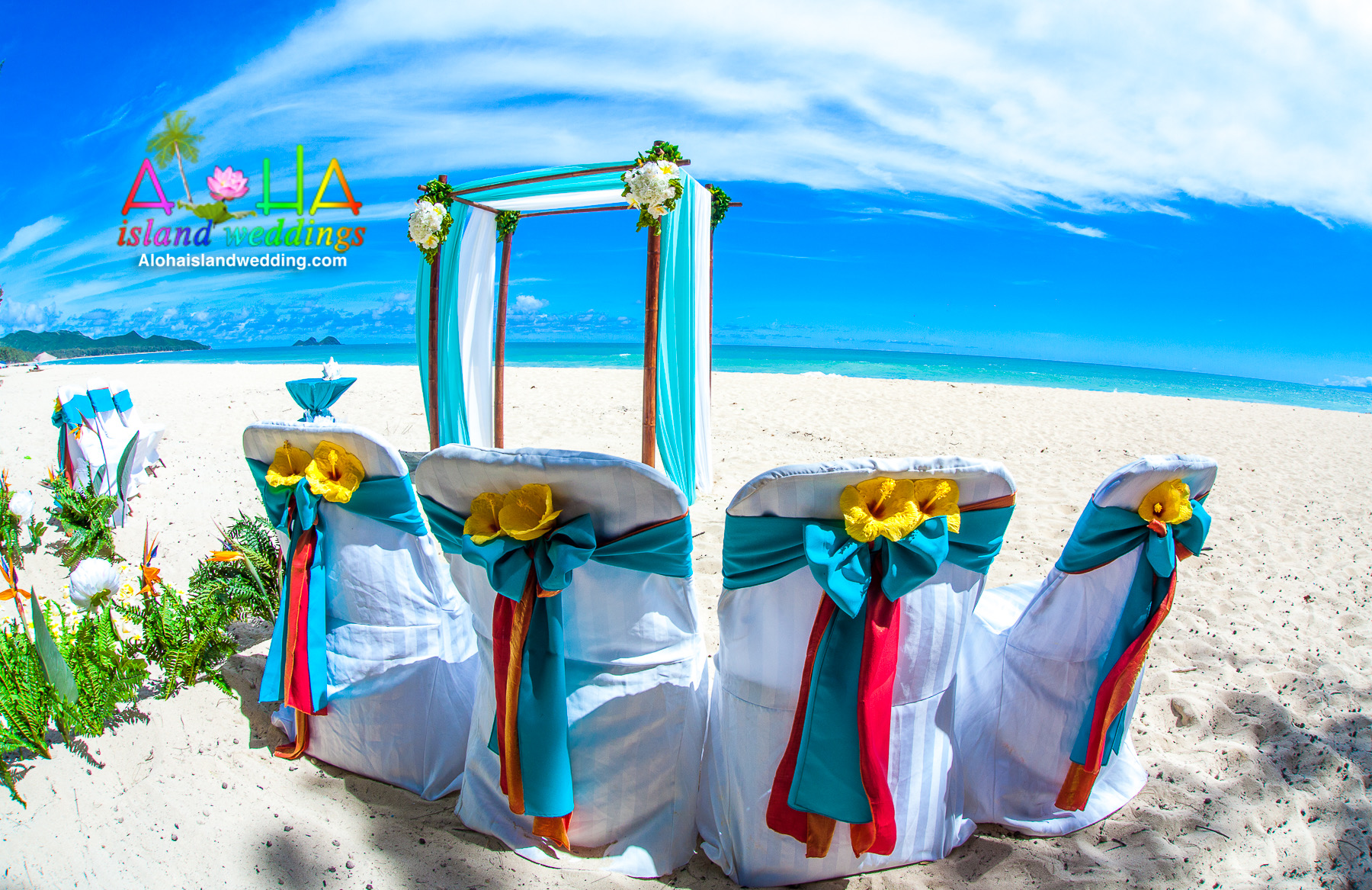
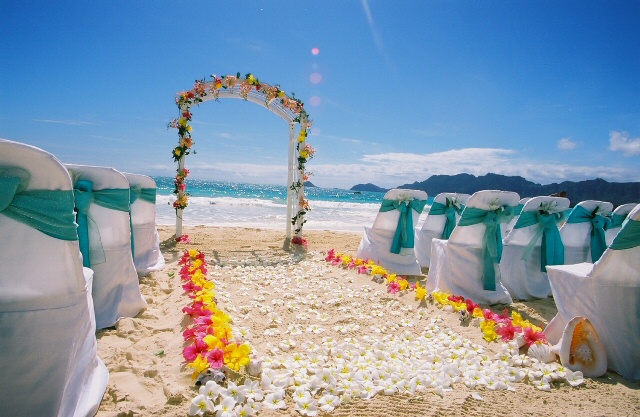
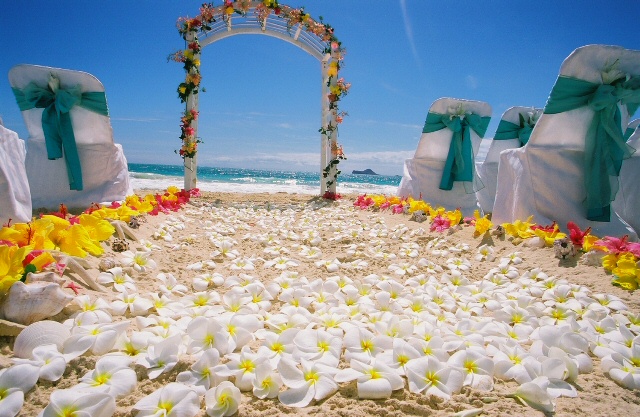
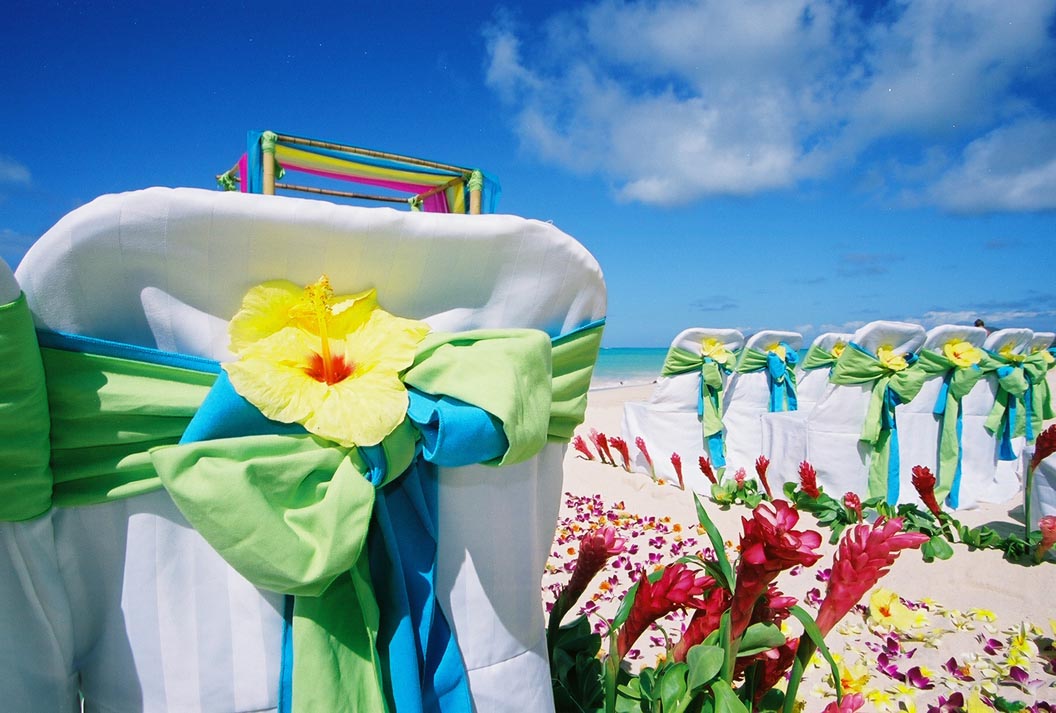
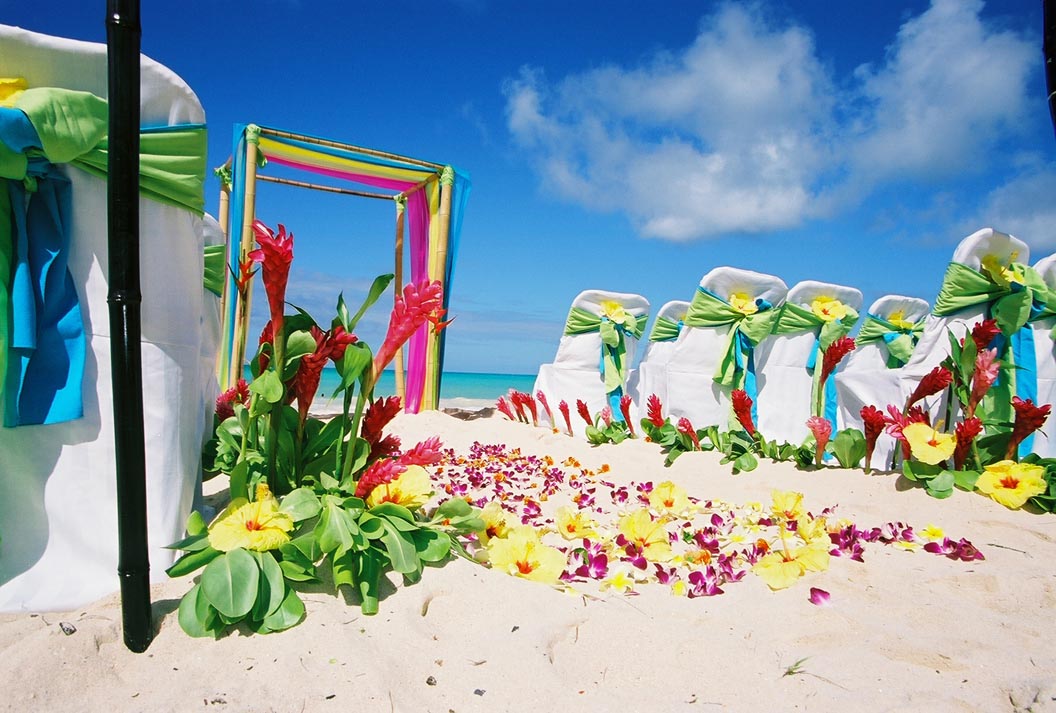
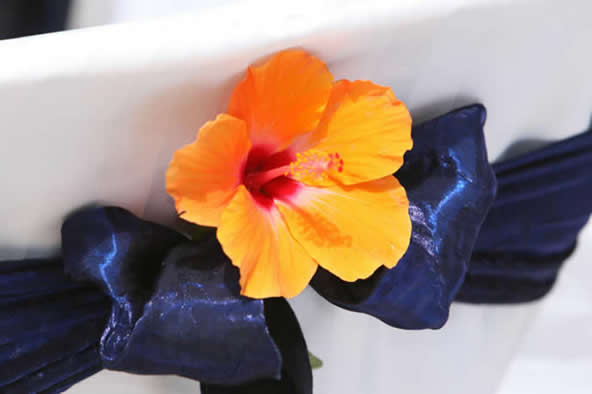
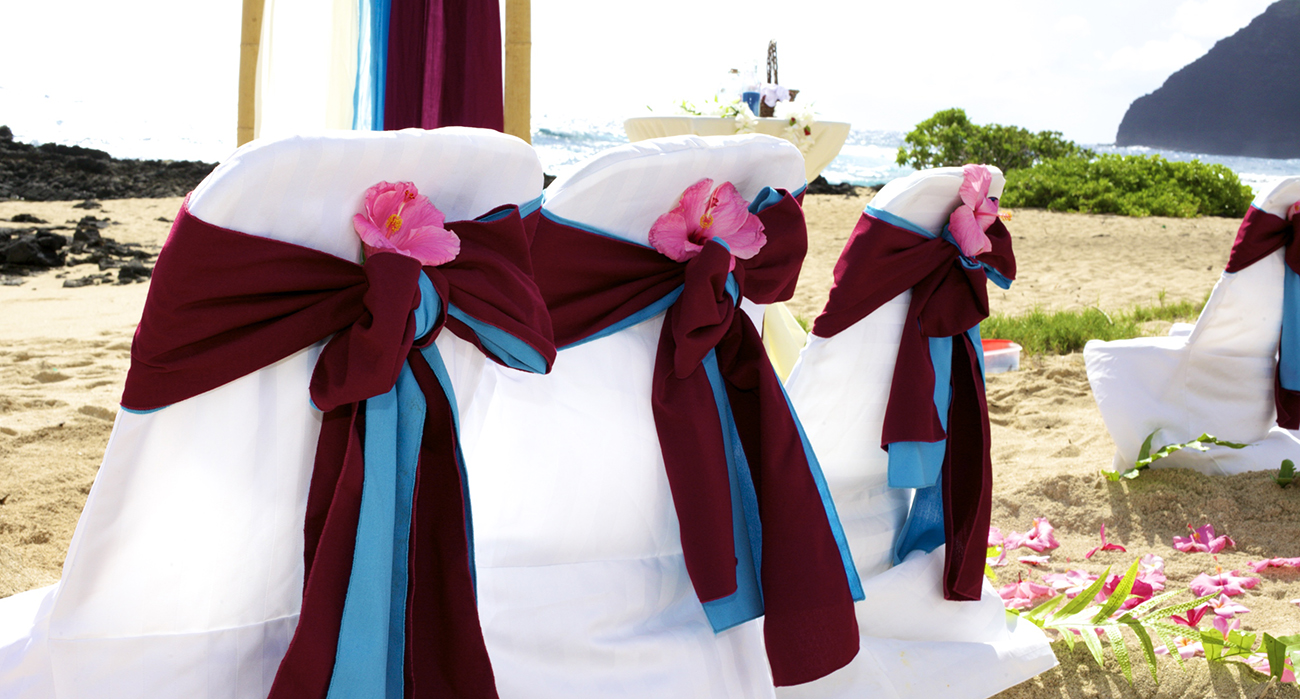
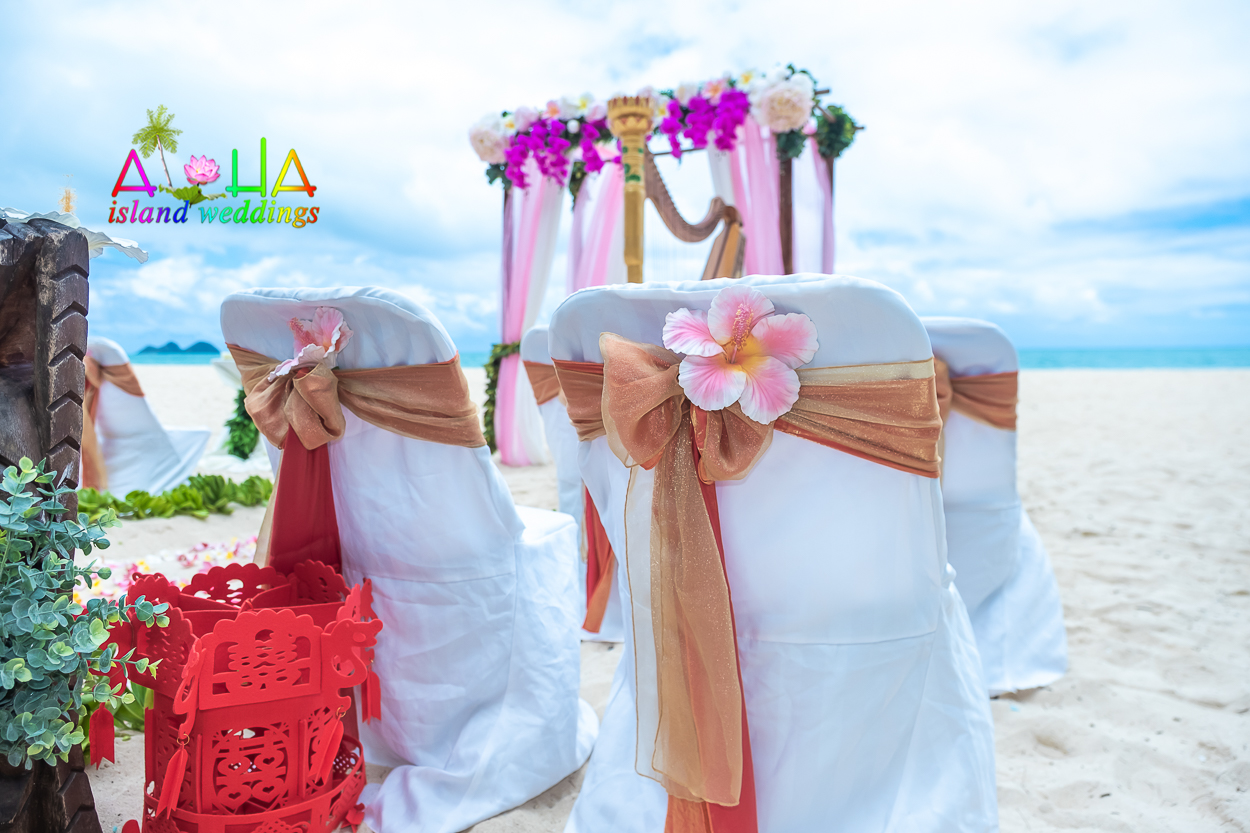
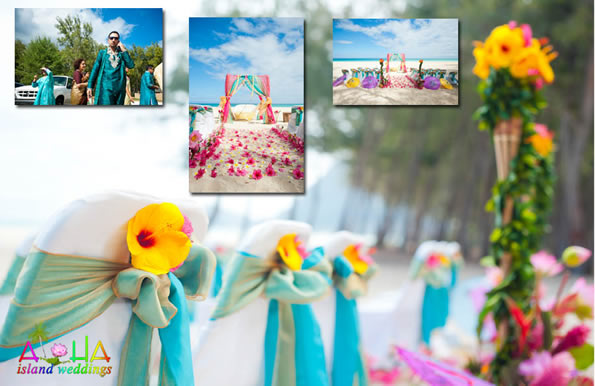
A hibiscus brings bold tropical color to a wedding. Because each bloom lasts only a day, we pick them fresh the same morning. We use them in bridal bouquets and hair flowers, along the flower pathway, on the wedding arch, tucked into the chair sashes, and as petals for guests to toss after the ceremony. See our flower prices.
Hibiscus flower pathways

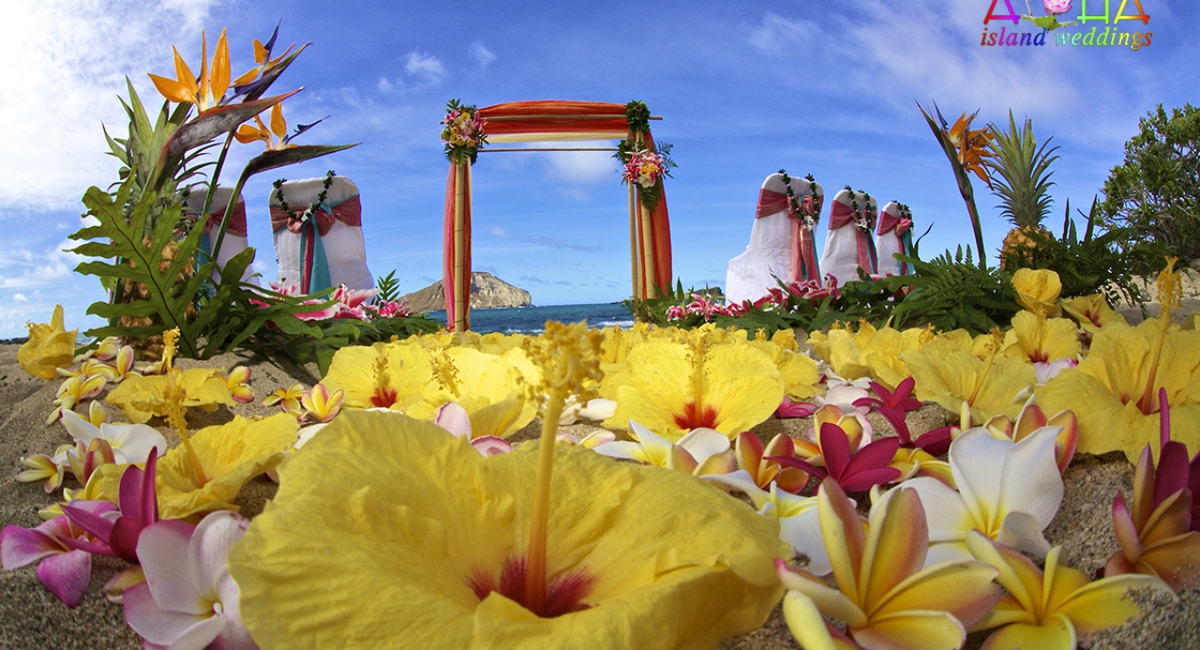




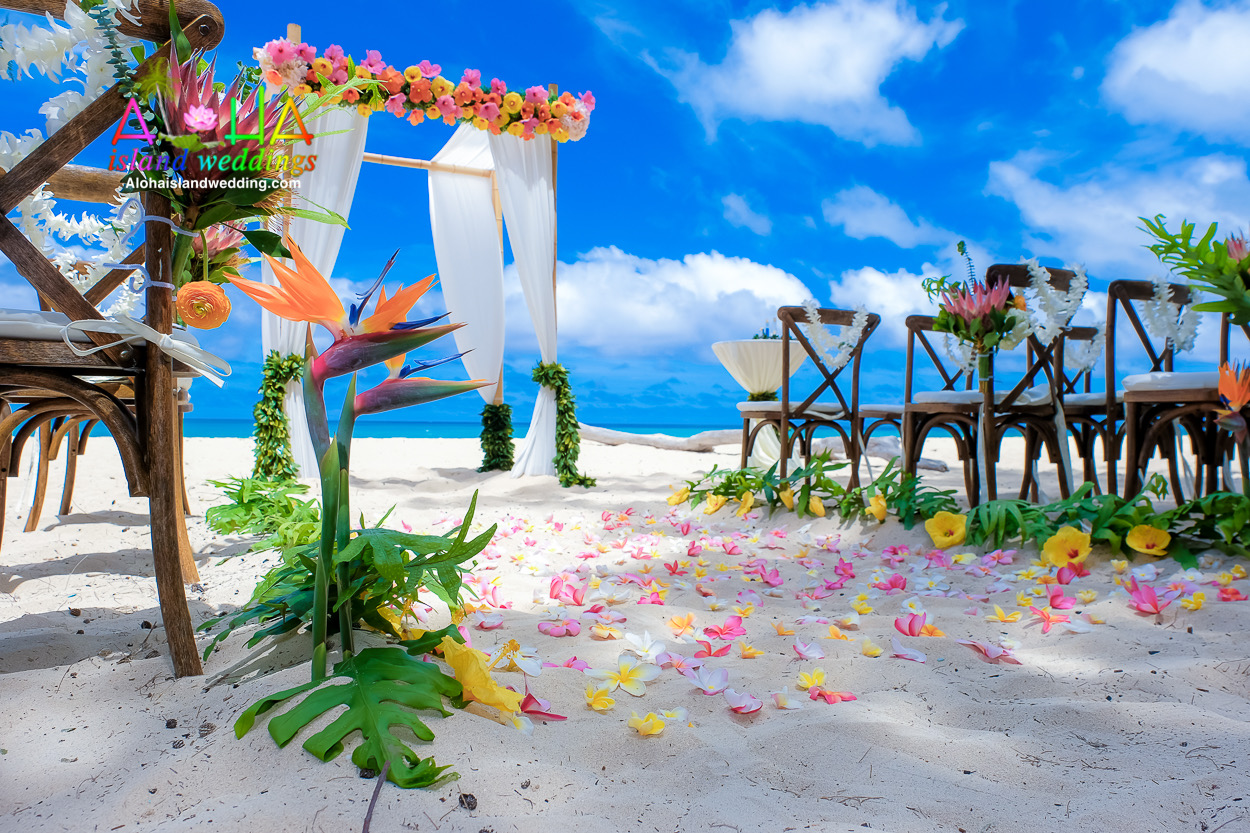


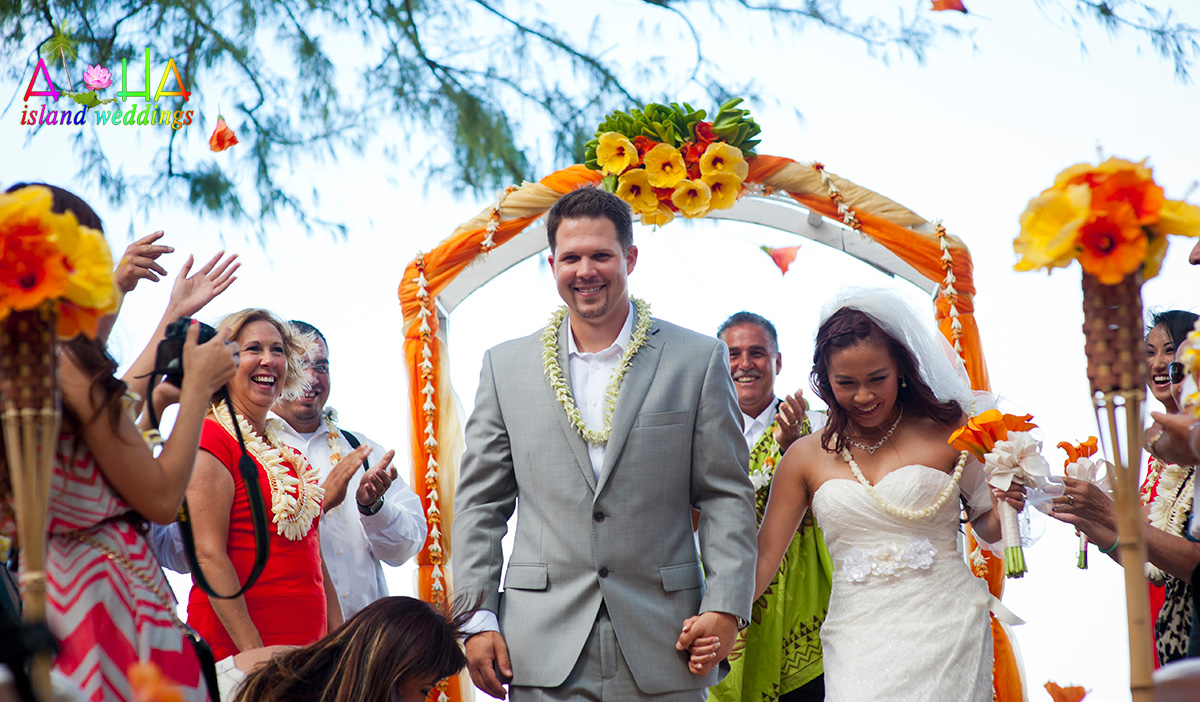
Hibiscus on the wedding arch




Hibiscus on the chairs




See our plumeria, flower pathways, haku leis and bouquets, and read our blog story, Hibiscus for Hawaii weddings.
Timeline
- 1923: the hibiscus is named Hawaii’s flower, with no species chosen[2]
- June 6, 1988: Act 177 names the yellow maʻo hau hele the official state flower[1]
- November 10, 1994: maʻo hau hele is federally listed as endangered[5]
Planning a wedding? Our beach wedding packages run from $350 to $8,000 (all packages), plus 4.712% Hawaii state tax. The average Hawaii wedding costs about $53,369, half of couples spend less than $21,117, and our own couples usually spend $10,000 to $15,000 (The Wedding Report; see our Hawaii wedding statistics).
Questions
Is the hibiscus Hawaii's state flower?
Yes. The yellow hibiscus, known in Hawaiian as ma'o hau hele, is the official state flower of Hawaii. Hibiscus of many colors grow all over the islands.
Can hibiscus be used in a wedding bouquet?
Yes. A hibiscus adds bold tropical color to a bouquet, often mixed with plumerias, orchids or roses. Hibiscus blooms are delicate, so they are best used fresh on the wedding day.
What colors do hibiscus come in?
Hibiscus come in baby pink, hot pink, red, orange, yellow, white and multi color blends, so it is easy to match your wedding colors.
Where can hibiscus be used at the ceremony?
In the bouquet and the bride's hair, along the flower pathway, on the wedding arch, tucked into the chair sashes, and as petals for the guests to toss after the ceremony.
See also
References
- Hawaii’s state flower history (2009). The Honolulu Advertiser.
- Maʻo hau hele (Hawaiian hibiscus). Maui Ocean Center.
- Hibiscus brackenridgei. University of Hawaiʻi Native Plants.
- Grow Aloha: Native Hawaiian hibiscuses. National Tropical Botanical Garden.
- Maʻo hau hele. Encyclopedia.com.
- Hibiscus. Wikipedia.
- Hibiscus rosa-sinensis. Wikipedia.