This article is about the bird of paradise flower and its life in Hawaii. For other tropical flowers of the islands, see our tropical wedding flowers.
An orange crest lifts from a sheath of green, a blue tongue flicks toward the sky, and for a moment it seems the whole flower might take wing over the sea.
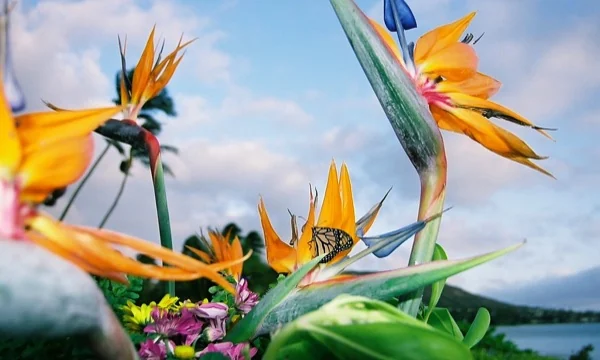
The bird of paradise (Strelitzia reginae; pronounced streh-LIT-see-uh reh-JY-nee) is a flowering plant of the family Strelitziaceae, native to South Africa. Its flower, with an upright orange crest and a blue, beak like tongue rising from a pointed green sheath, looks remarkably like the head of a tropical bird, which gives the plant its common name. In its homeland it is also called the crane flower.[1]
The bird of paradise is not native to Hawaii, but it grows beautifully in the islands’ warm, sunny climate and is a familiar sight in gardens, around hotels and on flower farms. It is one of the most loved tropical flowers at Hawaii weddings.[2]
Description and biology
The plant grows as a clump of stiff, paddle shaped, blue green leaves on long stalks, rising from a thick underground stem. The flowers appear on separate stalks that reach about as high as the leaves. Each “bird” begins inside a tough, boat shaped green sheath, the spathe, often edged in red or purple. One by one, flowers push up out of the sheath: three bright orange sepals form the crest, and two blue petals fuse into the arrow shaped “tongue” that hides the nectar and pollen. A single sheath can open several flowers over days, so the crest grows fuller over time.
After pollination the flower forms a woody capsule that splits open to reveal black seeds, each wearing a tuft of bright orange fluff.
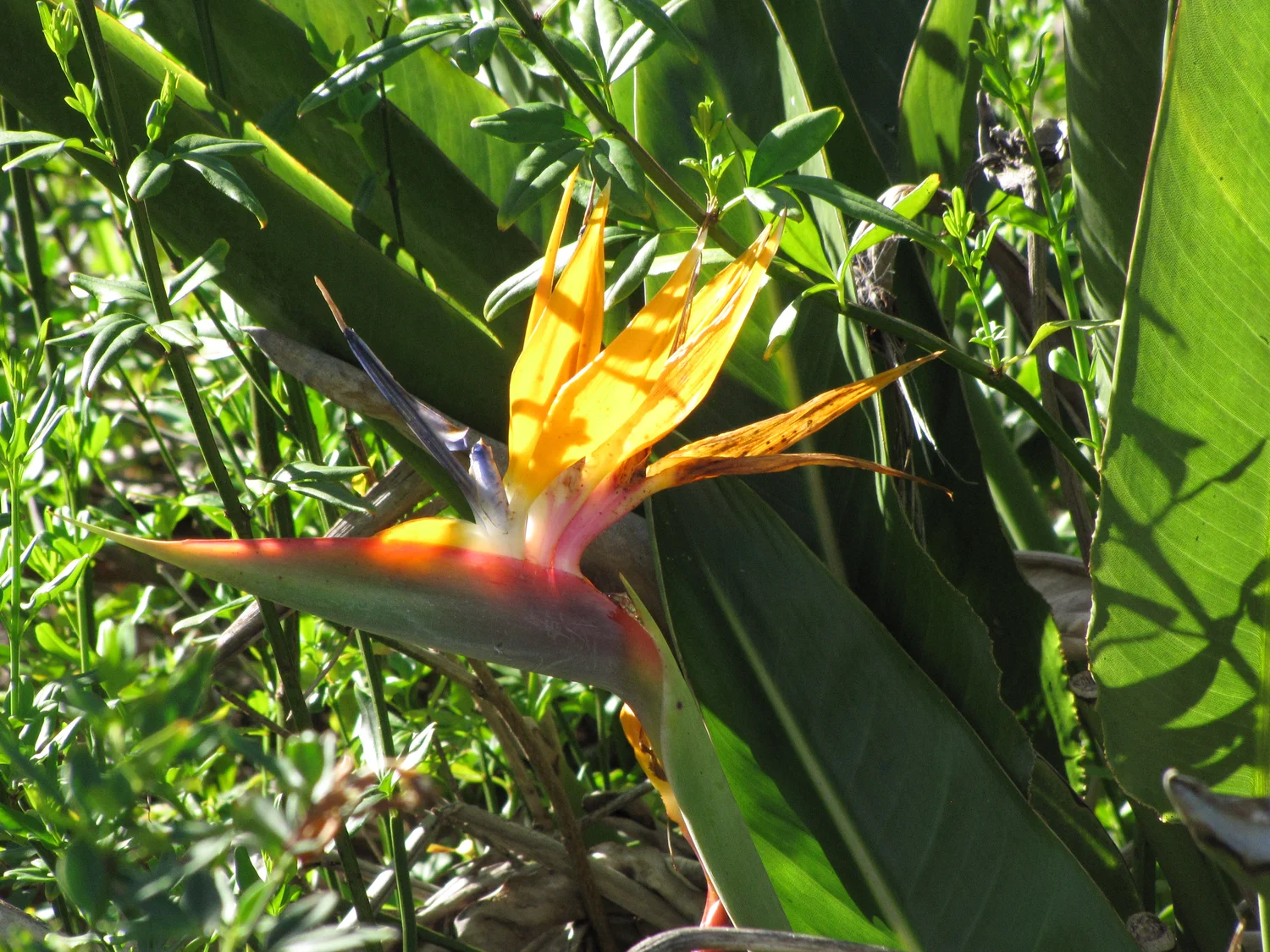
Photo: Forest and Kim Starr, CC BY 3.0 us, via Wikimedia Commons
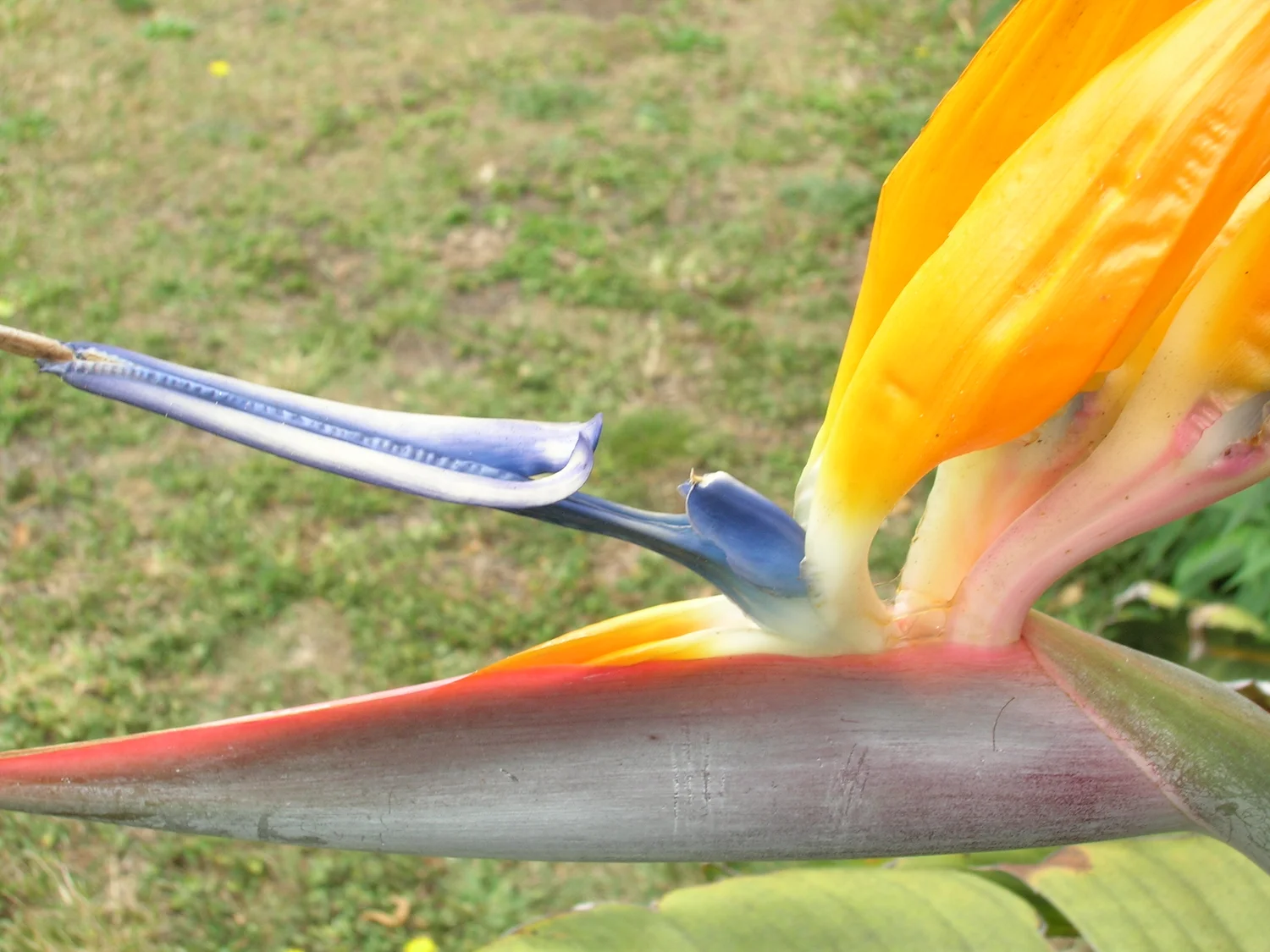
Photo: Forest and Kim Starr, CC BY 3.0 us, via Wikimedia Commons
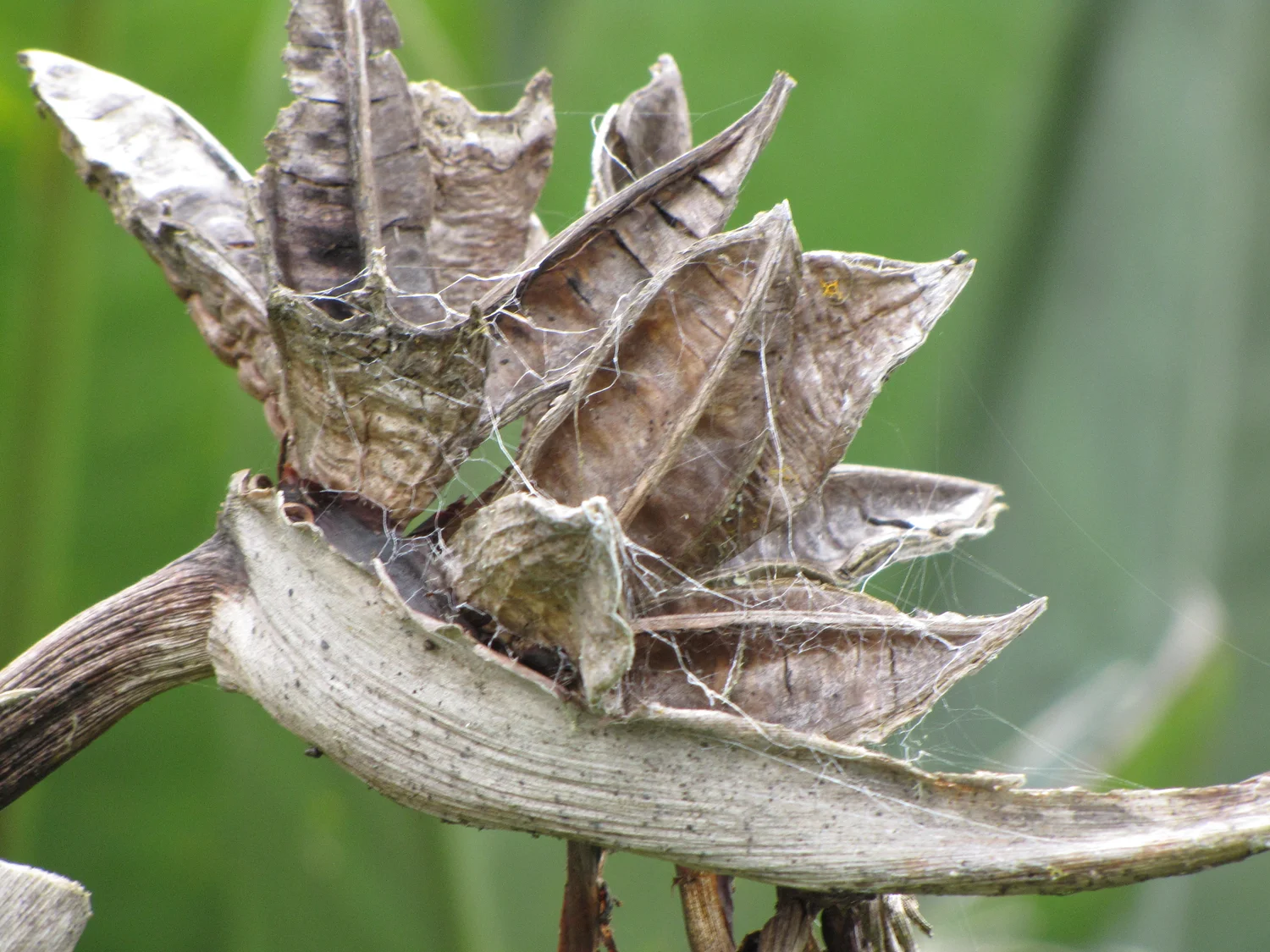
Photo: Forest and Kim Starr, CC BY 3.0 us, via Wikimedia Commons
Pollination
The flower is built for birds. In South Africa, sunbirds land on the blue tongue to drink the nectar, and their weight pushes the petals apart so the pollen dusts their feet. When they fly to the next flower, they carry the pollen with them.[1] In Hawaii, where there are no sunbirds, gardeners and growers often pollinate the flowers by hand to get seed.
Etymology and history
The bird of paradise first reached Britain in 1773, where it was grown at the Royal Botanic Gardens at Kew. In 1788 the naturalist Joseph Banks named it in honor of Queen Charlotte, the wife of King George III, who was born into the house of Mecklenburg-Strelitz. The genus name Strelitzia comes from her family, and the species name reginae means “of the queen.”[1]
Distribution and habitat
In the wild the bird of paradise grows along the coast of South Africa, in the Eastern Cape and KwaZulu-Natal, among coastal bush and on the banks of rivers.[1] From the gardens of Europe it traveled to warm places around the world, and it flowers best in sunny, frost free climates like those of California and Hawaii.[4]
In Hawaii
In Hawaii the bird of paradise is grown in home gardens, in hotel and resort landscapes and on flower farms, and the Plants of Hawaii database records it in cultivation on Oʻahu and Kauaʻi.[2] Its strong stems and long lasting flowers make it a favorite in island arrangements, from hotel lobbies to wedding aisles. On Maui it grows in the cool upcountry around Kula as well as in the warm lowlands.
Cultivation
The bird of paradise likes full sun to light shade, rich, well drained soil and regular water, and it tolerates salty ocean breezes, which suits island gardens well. Plants grown from seed can take several years to bloom, so most gardeners start from divisions of an older clump, which flower much sooner. Once established, a clump keeps sending up new birds through much of the year.[4]
Relatives
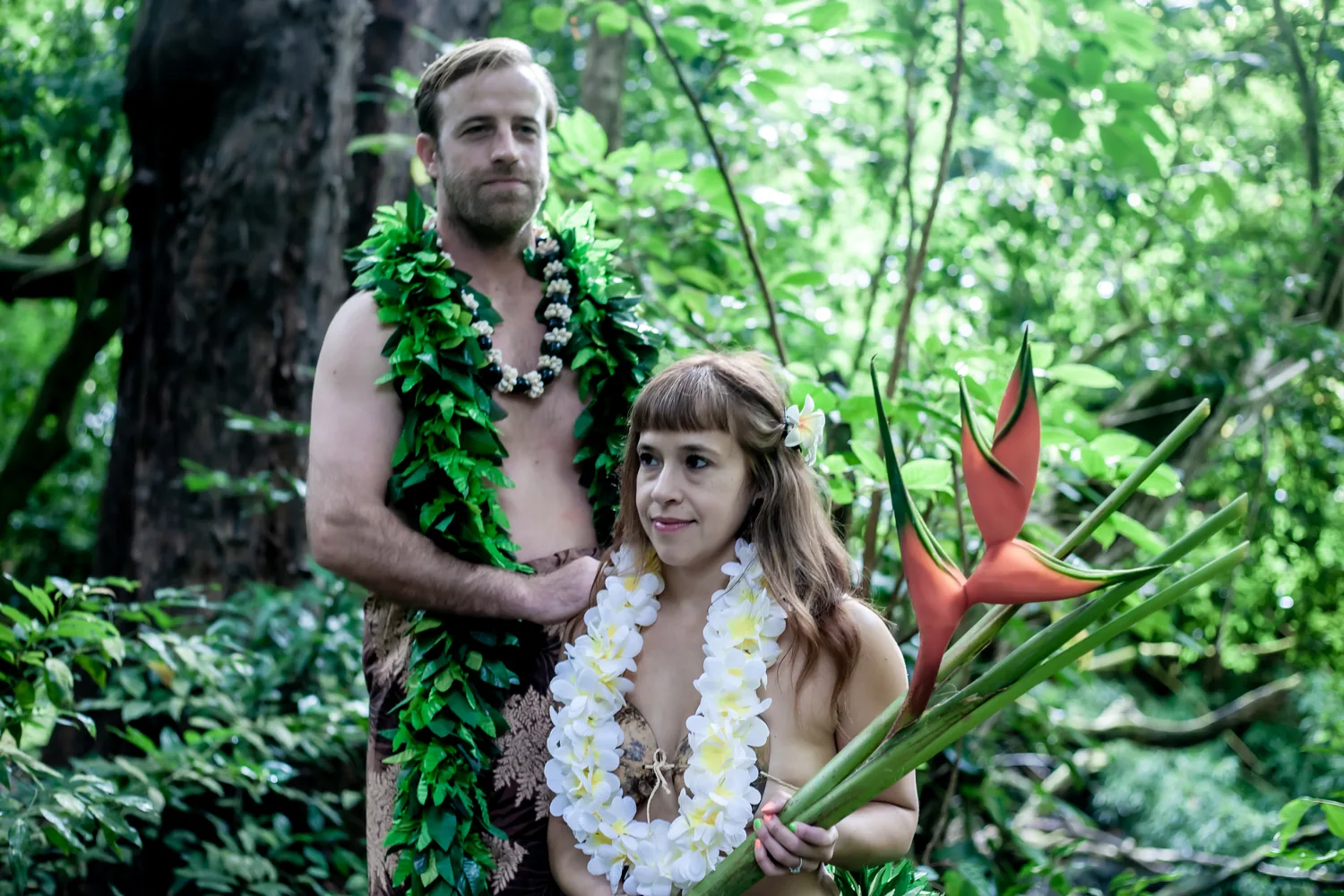
Its giant cousin, the white bird of paradise (Strelitzia nicolai), grows into a tall, banana like plant with huge leaves and white and dark blue flowers held in purple sheaths. It too is planted in Hawaii, where it shades parks, parking lots and gardens.[3] The bird of paradise belongs to the order Zingiberales, together with bananas, gingers and heliconias; some heliconias are even nicknamed “false bird of paradise.”
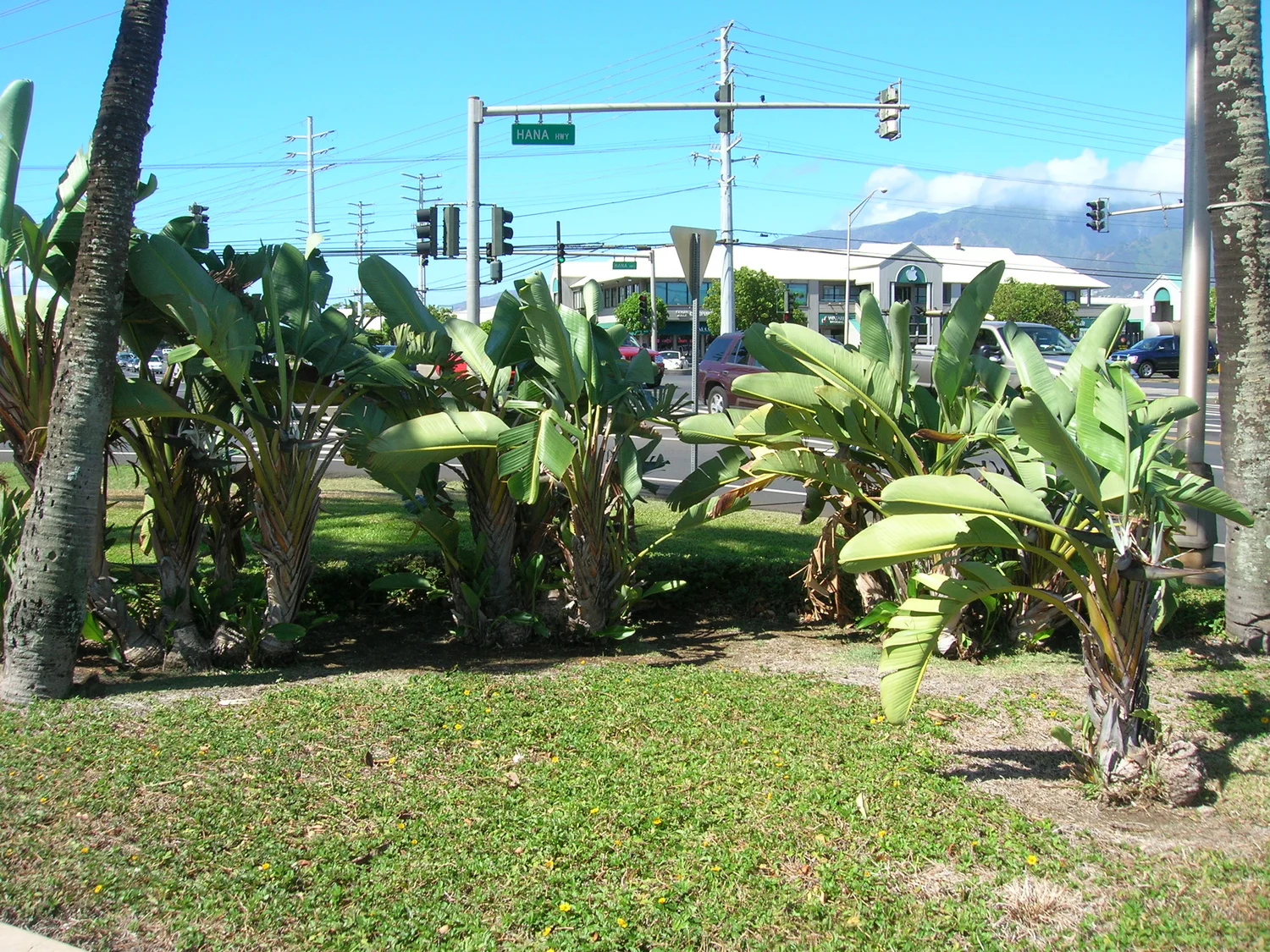
Photo: Forest and Kim Starr, CC BY 2.0, via Wikimedia Commons
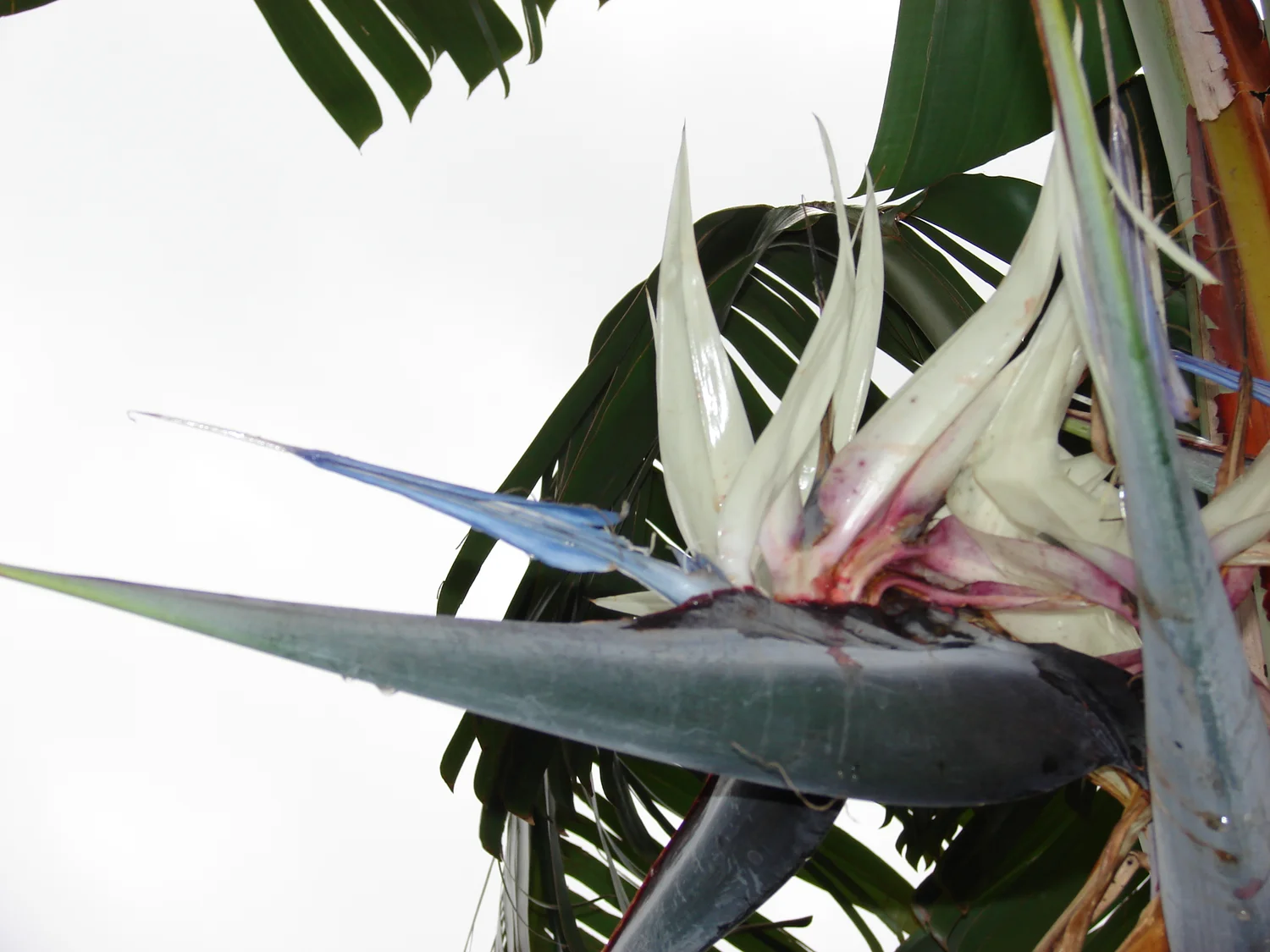
Photo: Forest and Kim Starr, CC BY 3.0 us, via Wikimedia Commons
As a symbol
The bird of paradise is the official flower of the City of Los Angeles.[1] In Hawaii it has become one of the flowers that say “tropics” at a glance, painted on aloha shirts, printed on postcards and set in tall arrangements wherever the islands welcome their guests.
Use in Hawaiian weddings
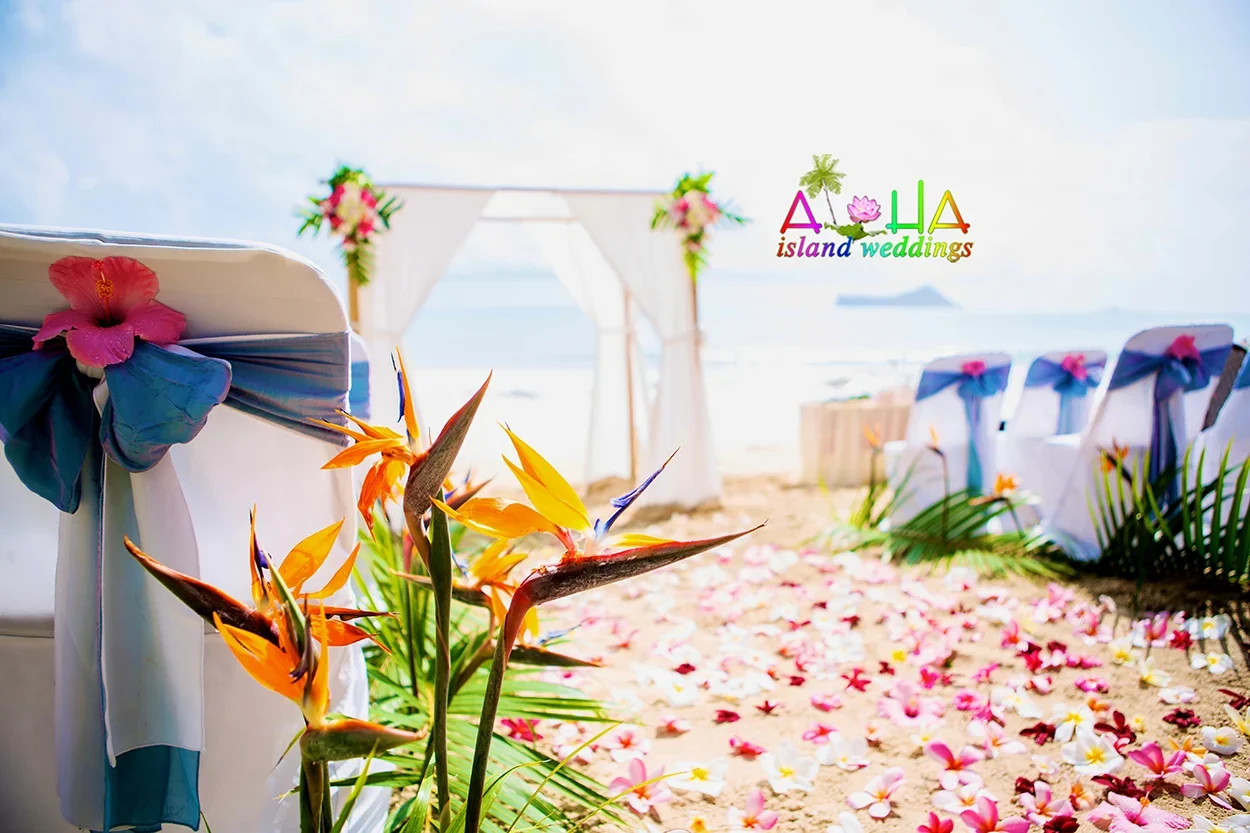
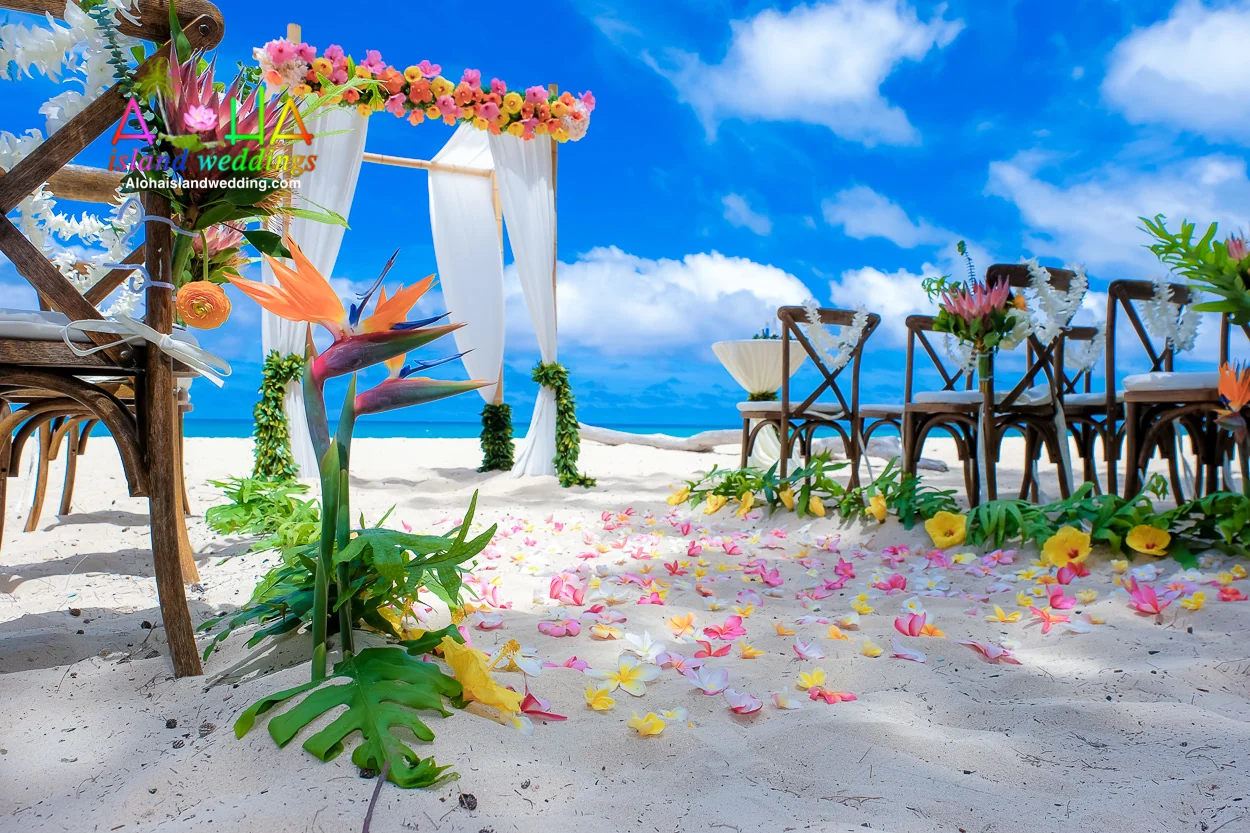
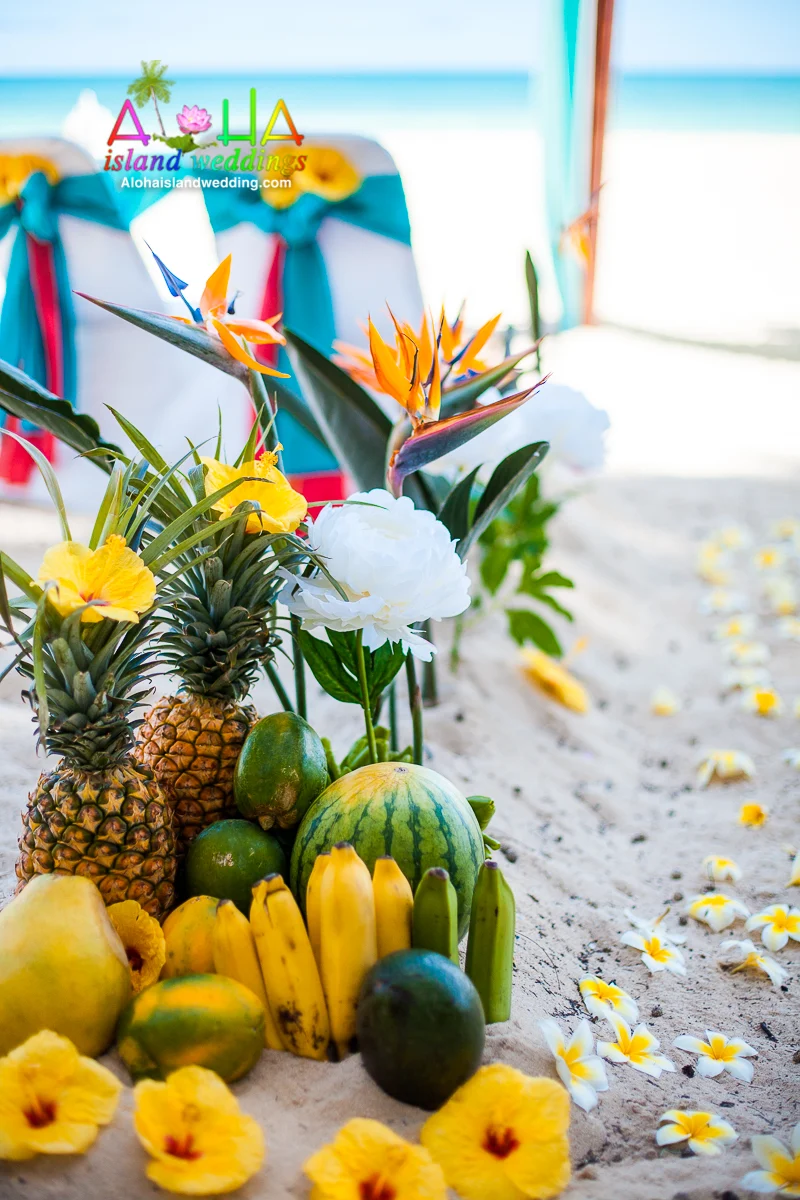
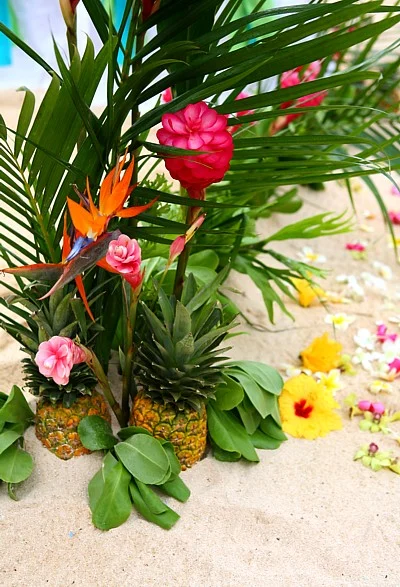
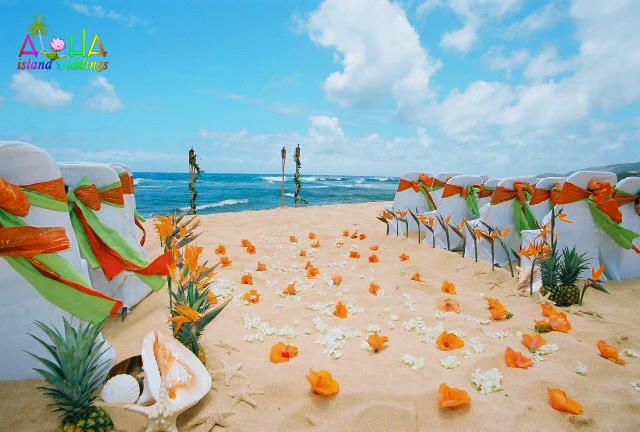
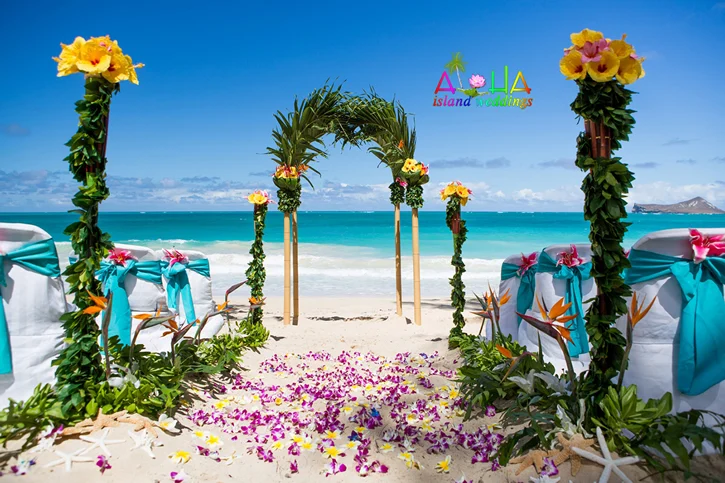
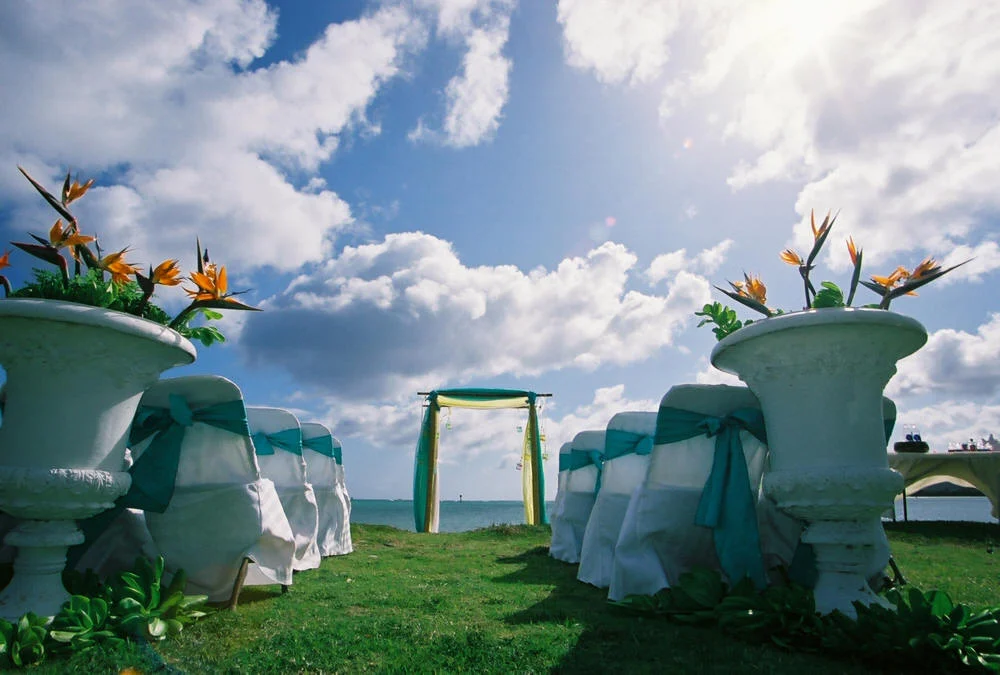
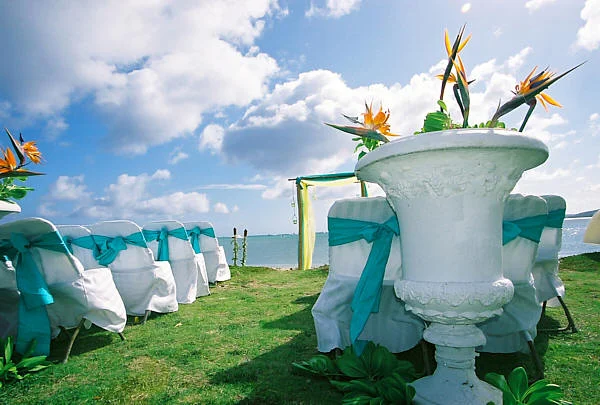
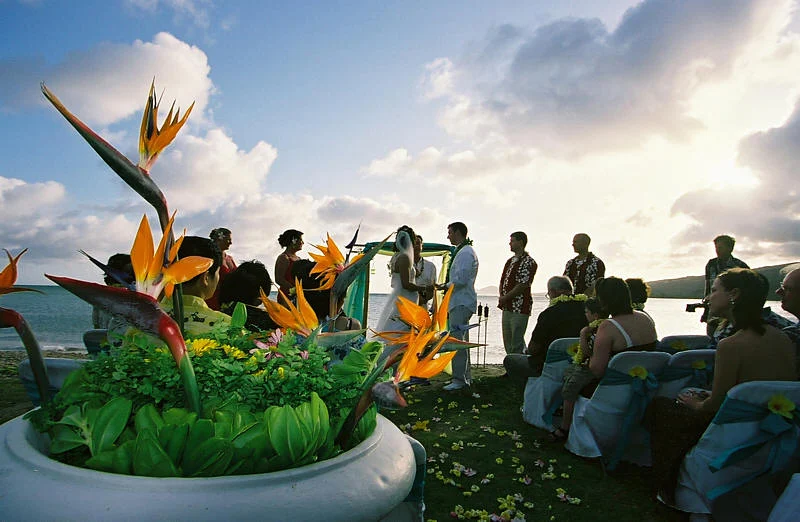
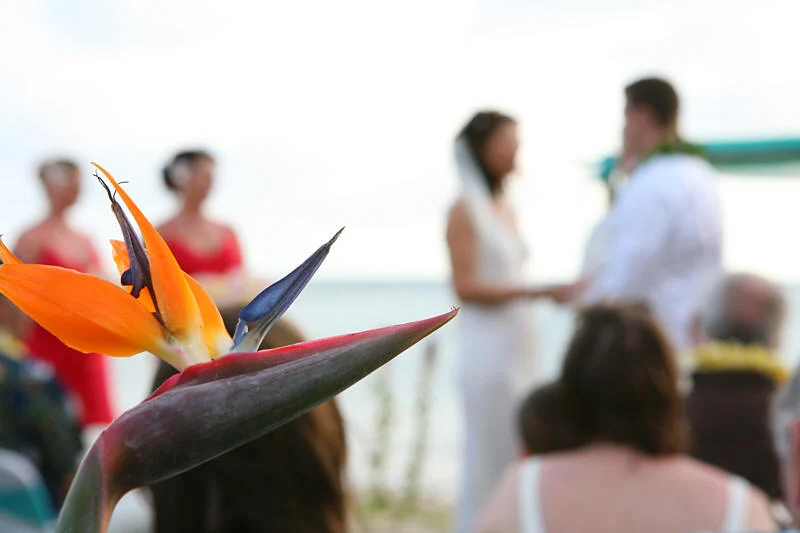
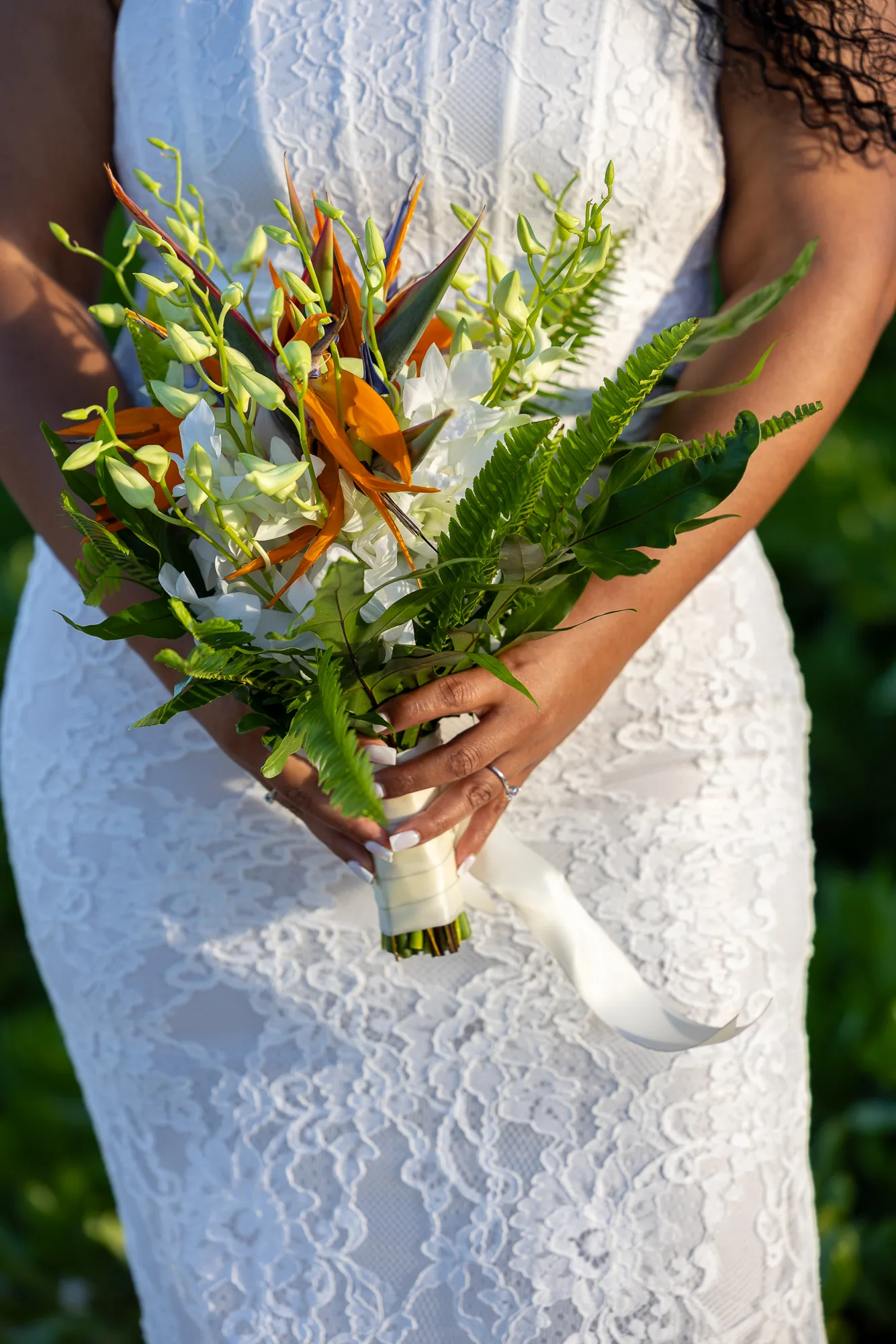
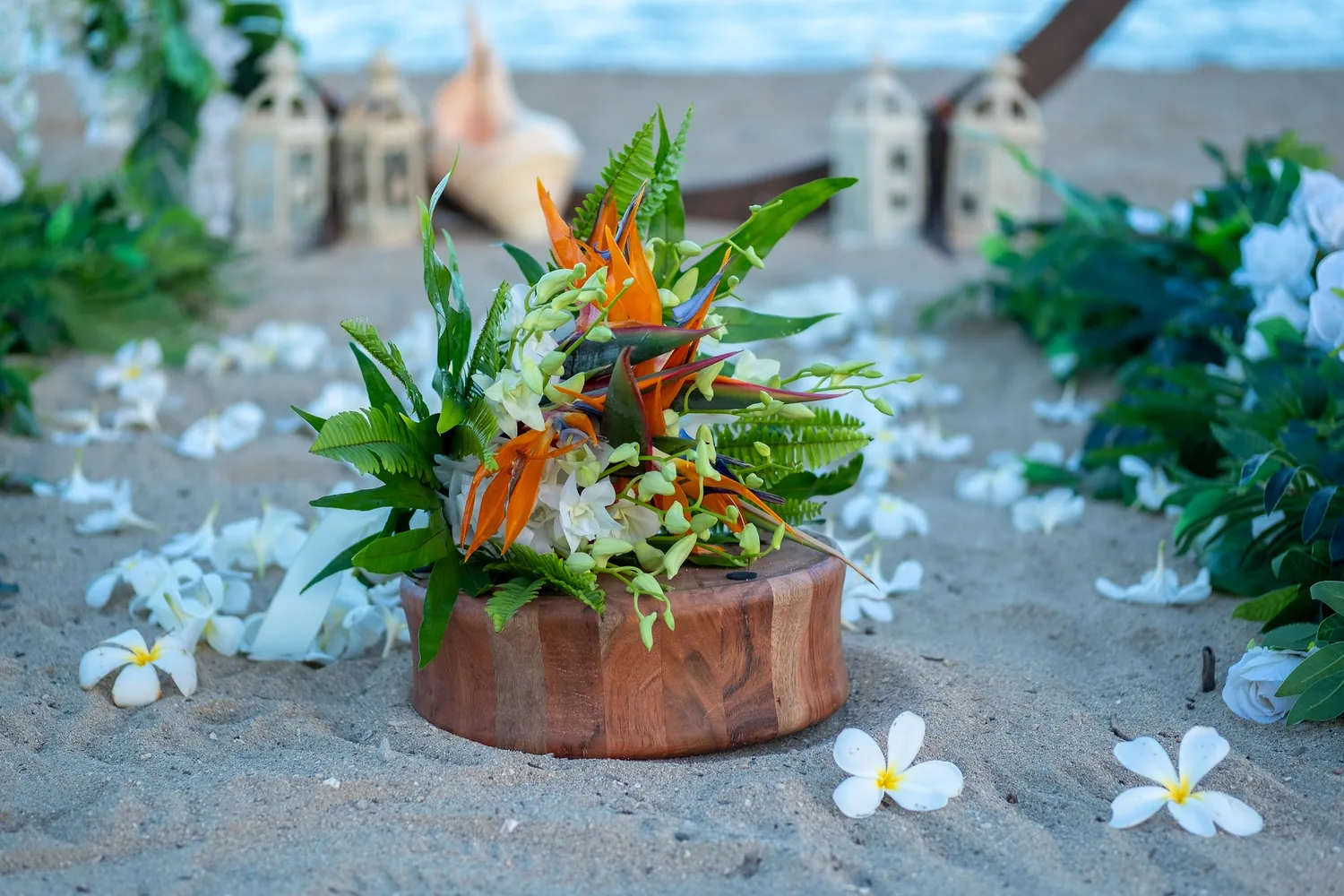
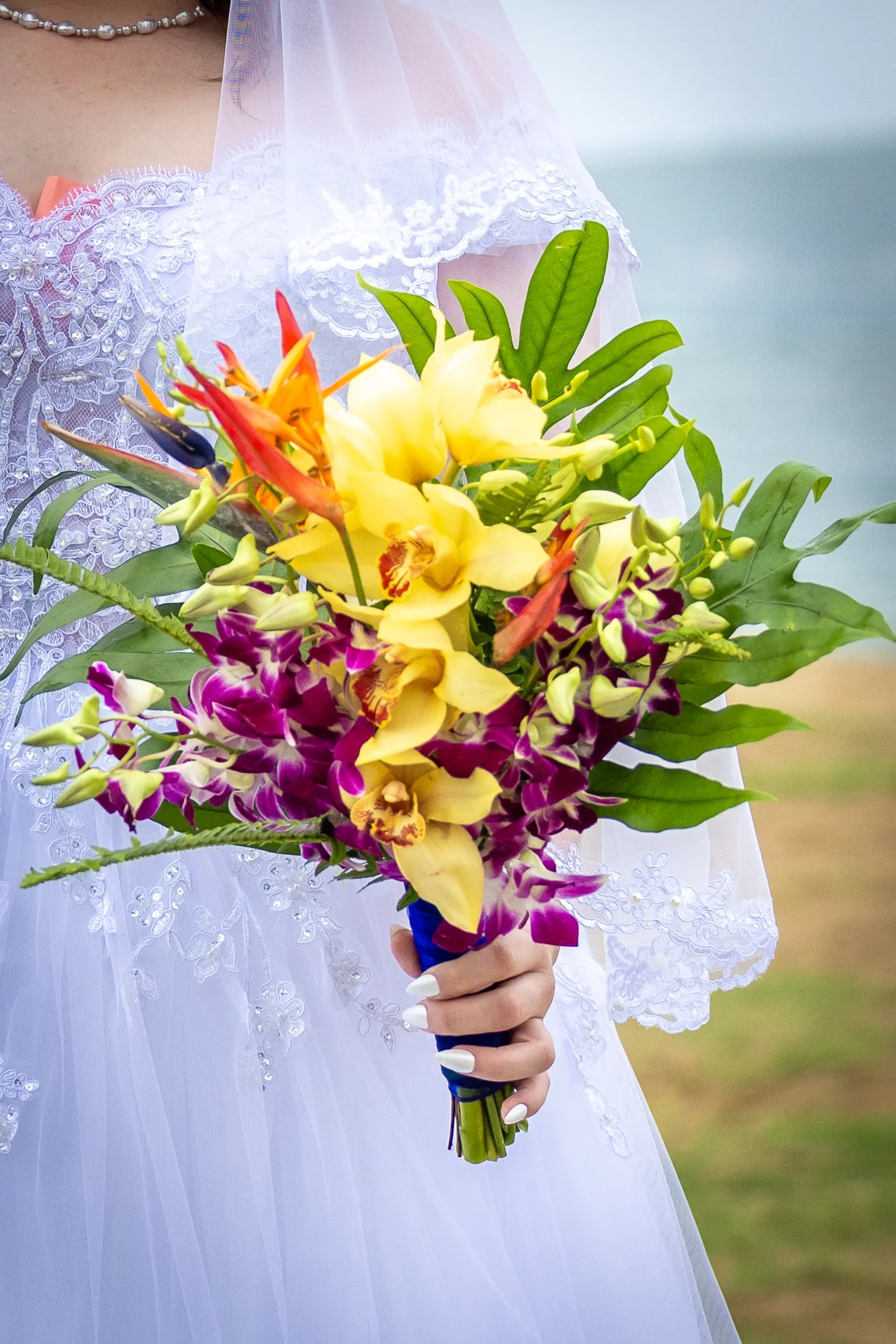
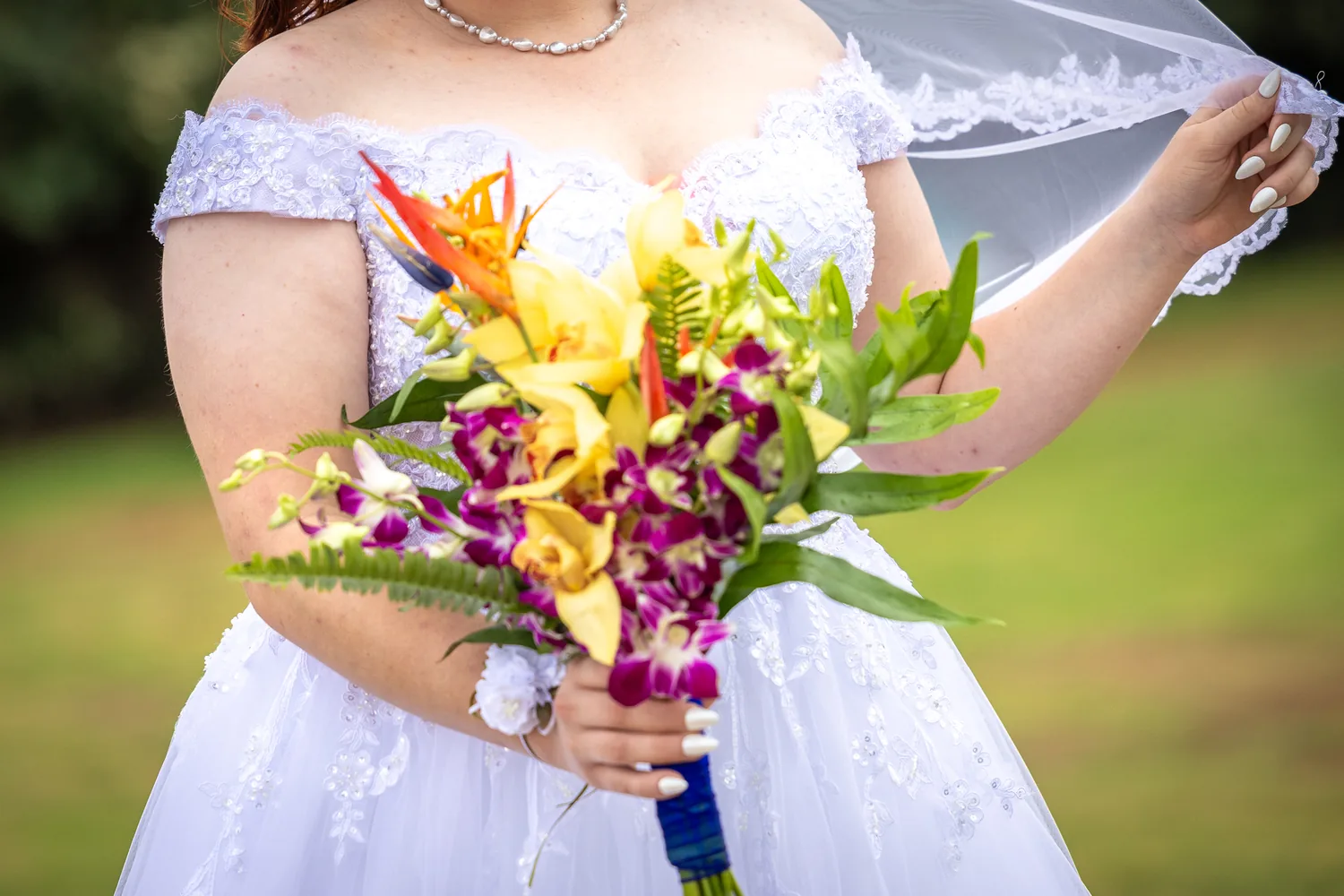
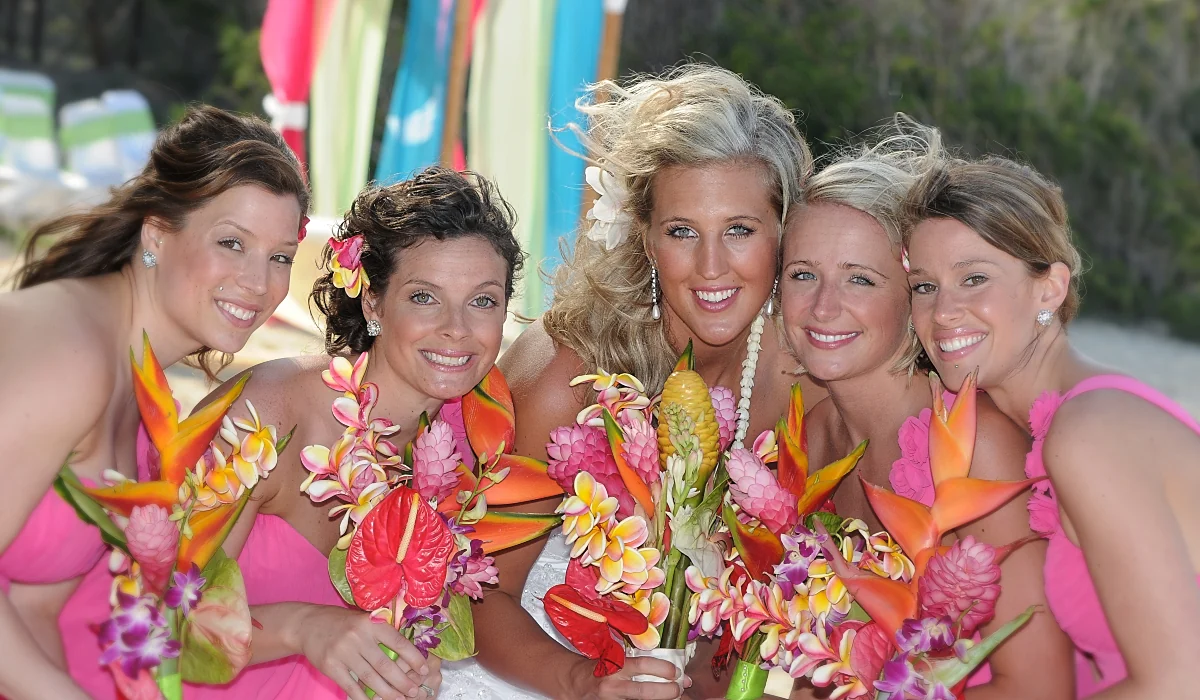
Its thick, waxy petals and strong stems stand up to the sun and the trade winds, so the bird of paradise stays fresh through the ceremony and the photos. Its colors, sunset orange and deep blue, pair naturally with turquoise sashes, yellow hibiscus, pink plumerias and the green of palm fronds and ferns. A few stems go a long way: two tall urns can frame the whole aisle, a cluster at the foot of the arch draws every eye to the front, and a single bird tucked into an orchid bouquet makes it unmistakably tropical.
Bird of paradise prices
- Bird of paradise bouquet: $285
- Aisle of birds of paradise: $240
- Reception table arrangement with birds of paradise and other exotic Hawaiian flowers: $275
All prices are plus 4.712% Hawaii state tax. See all our flower prices, or ask us about matching leis, haku flower crowns and arch flowers.
On the aisle and arch
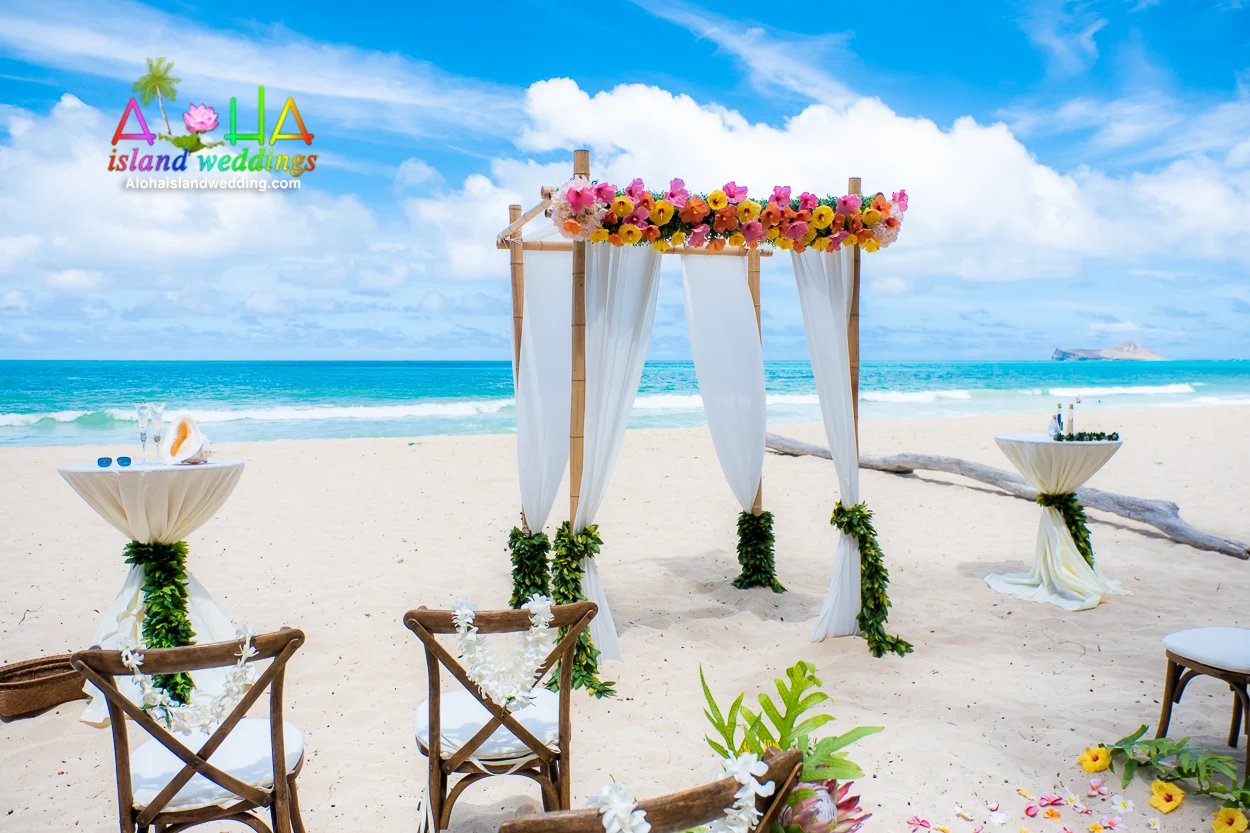

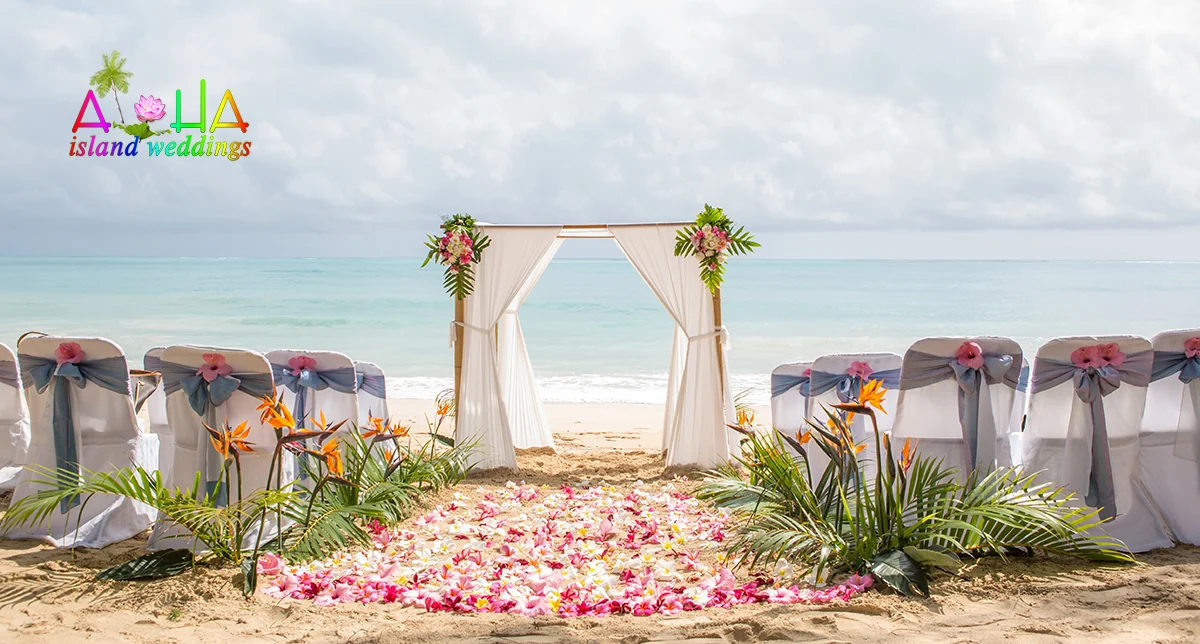
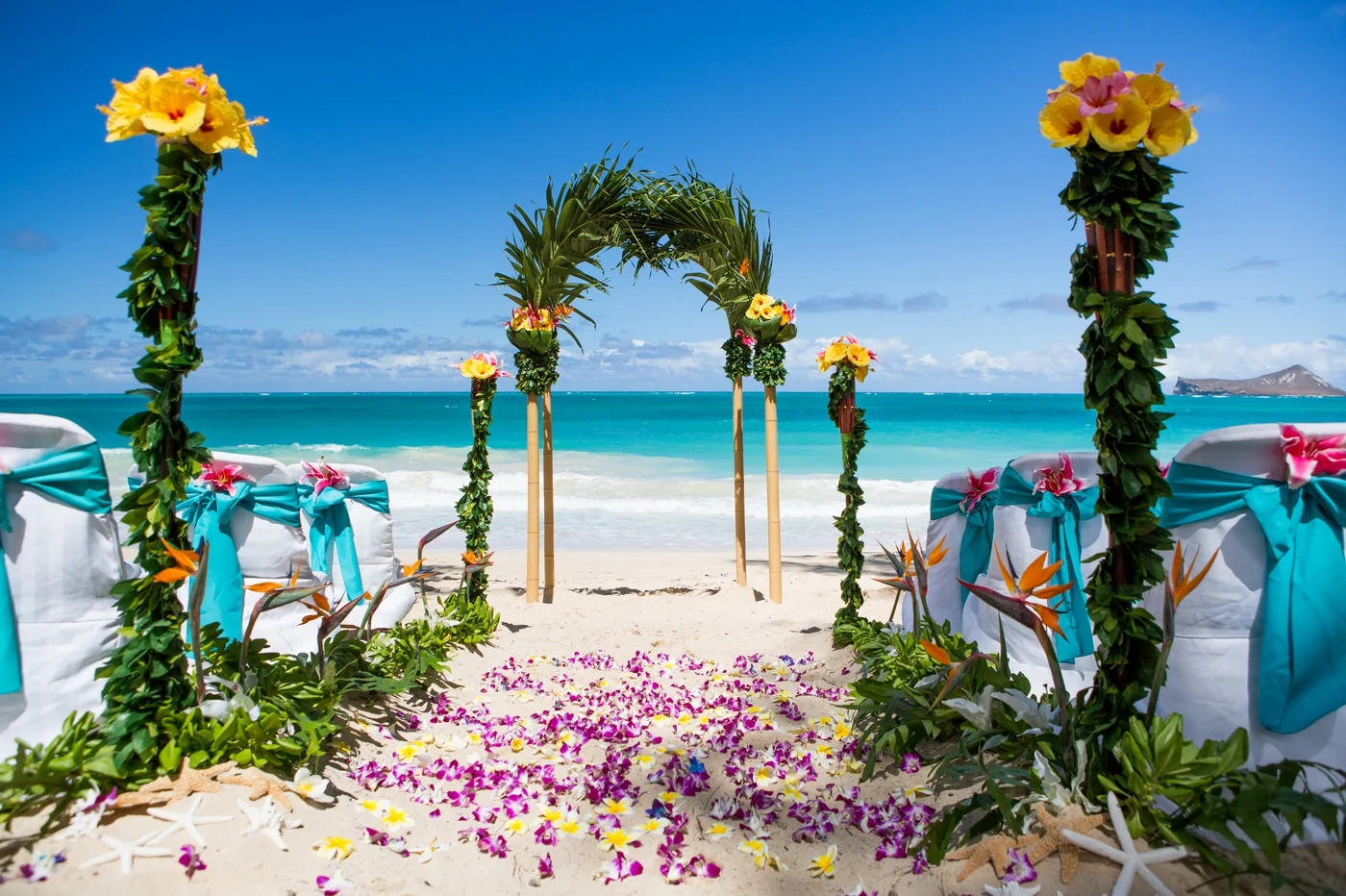
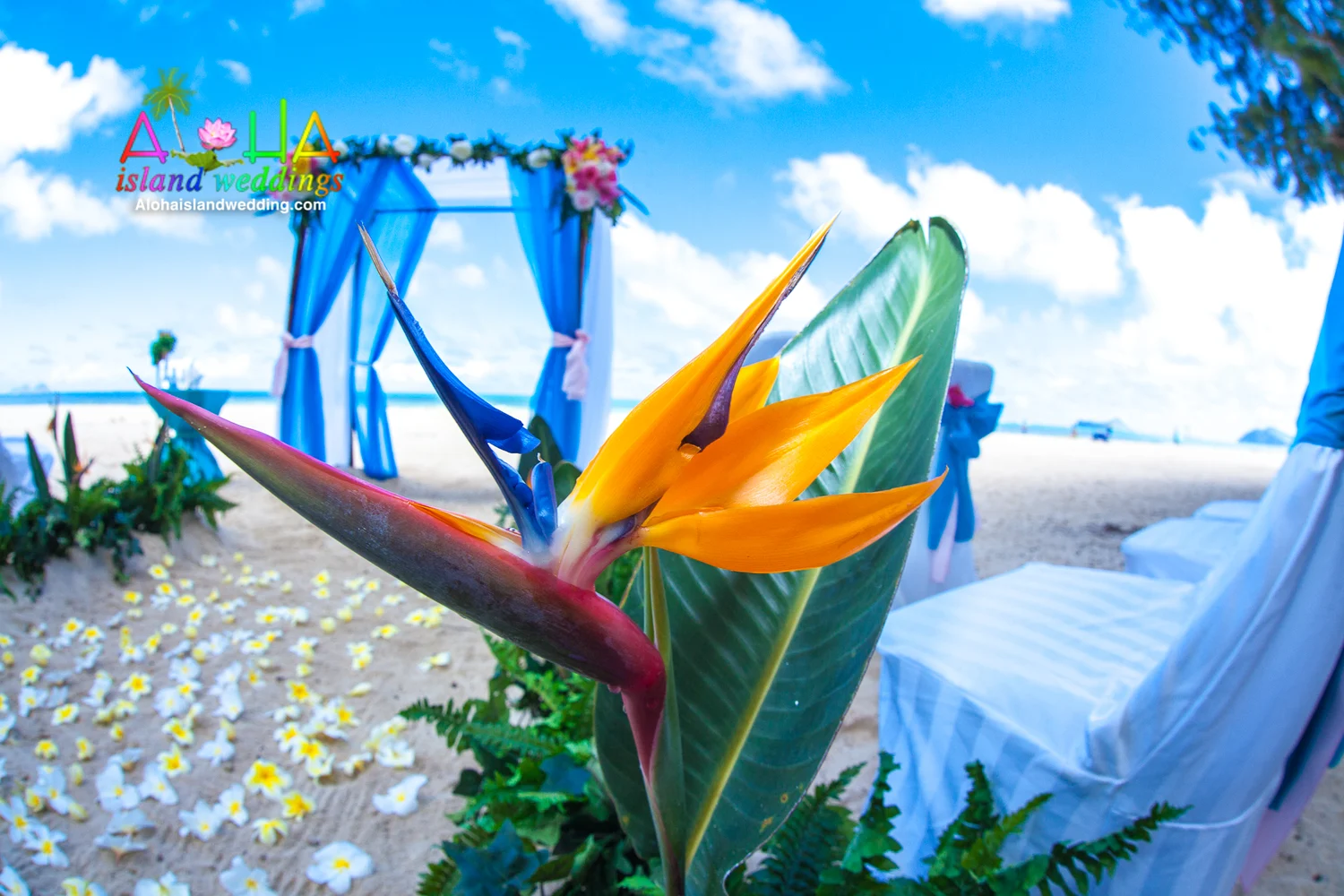
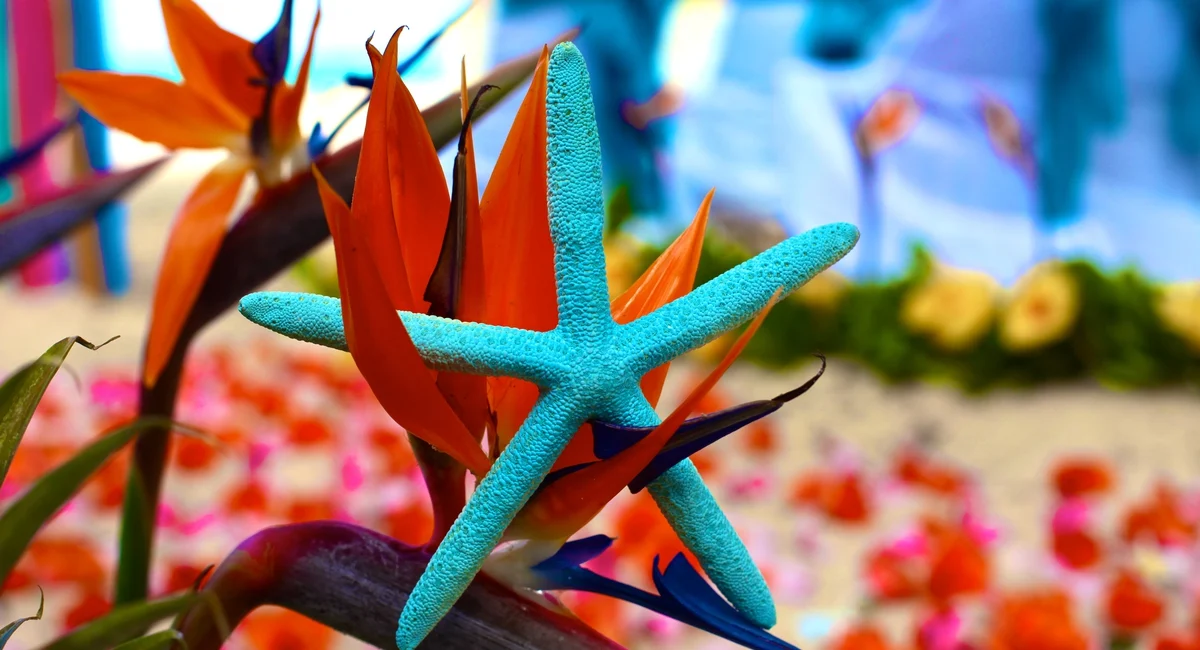
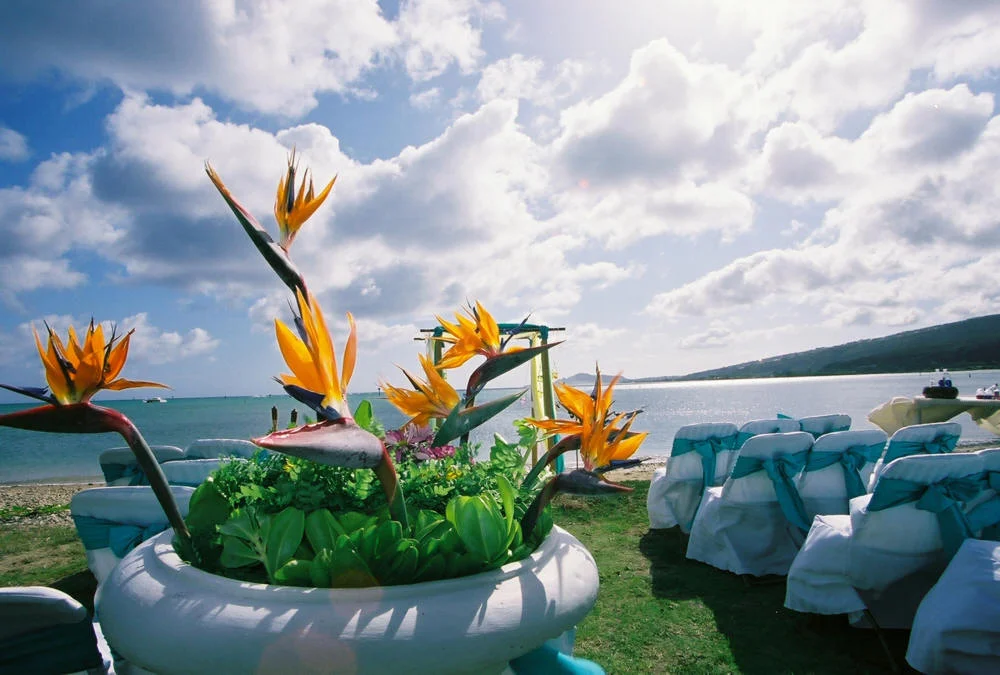
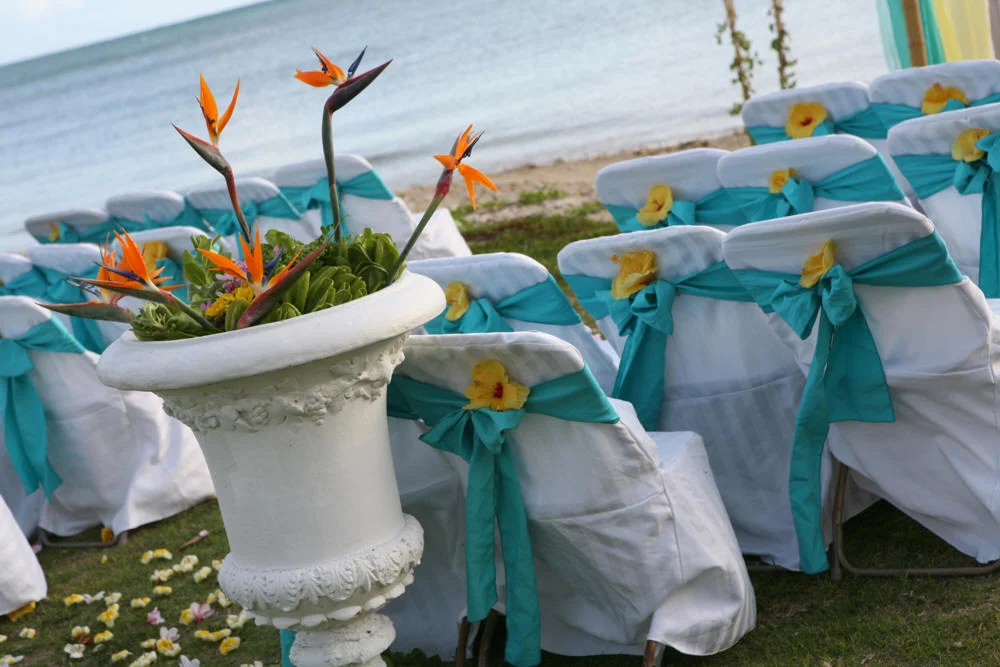
Urns on the lawn
For an estate or lawn wedding above the sea, white urns filled with birds of paradise make a grand entrance to the aisle.
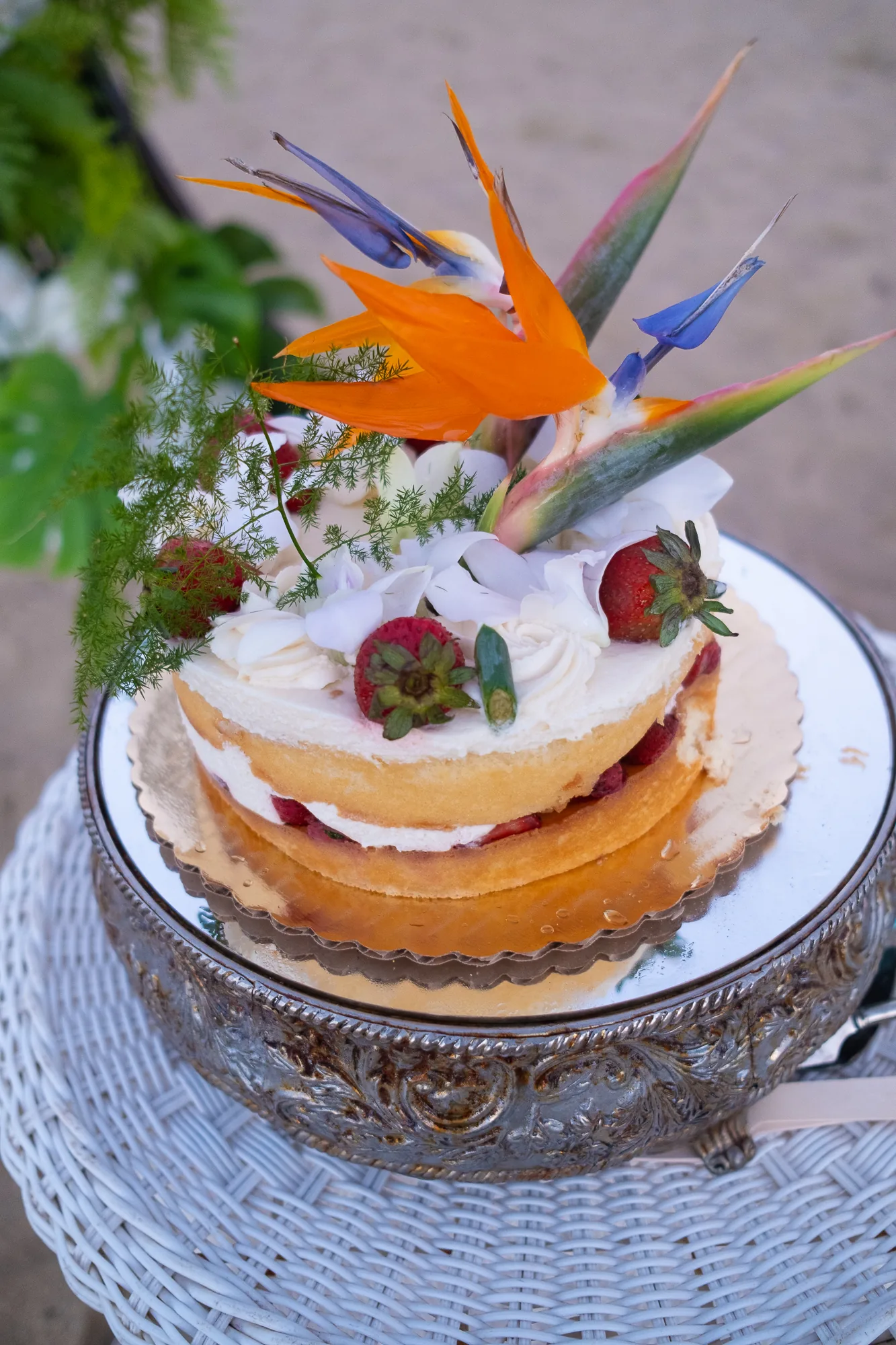
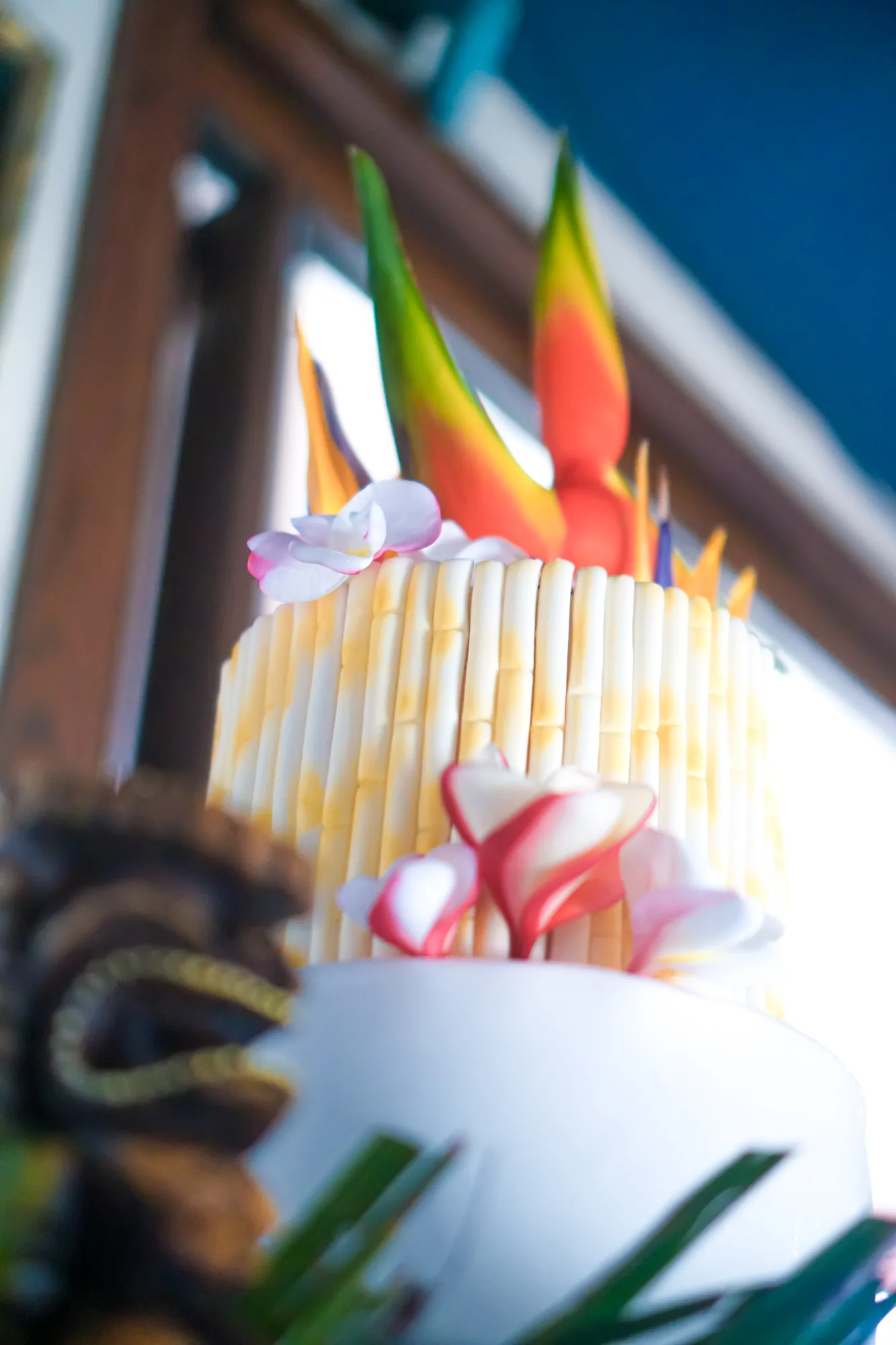
Bouquets and cakes
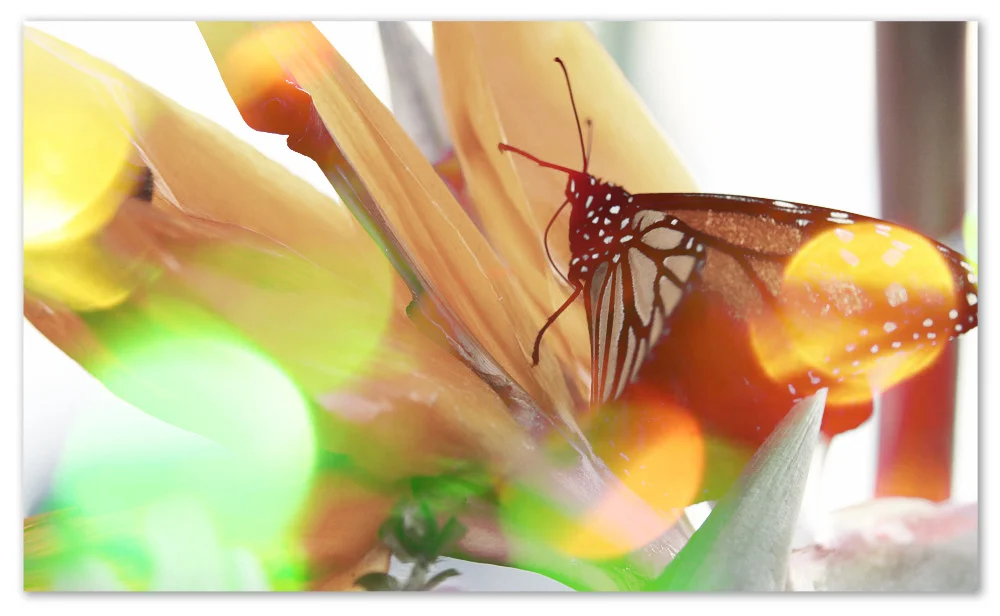
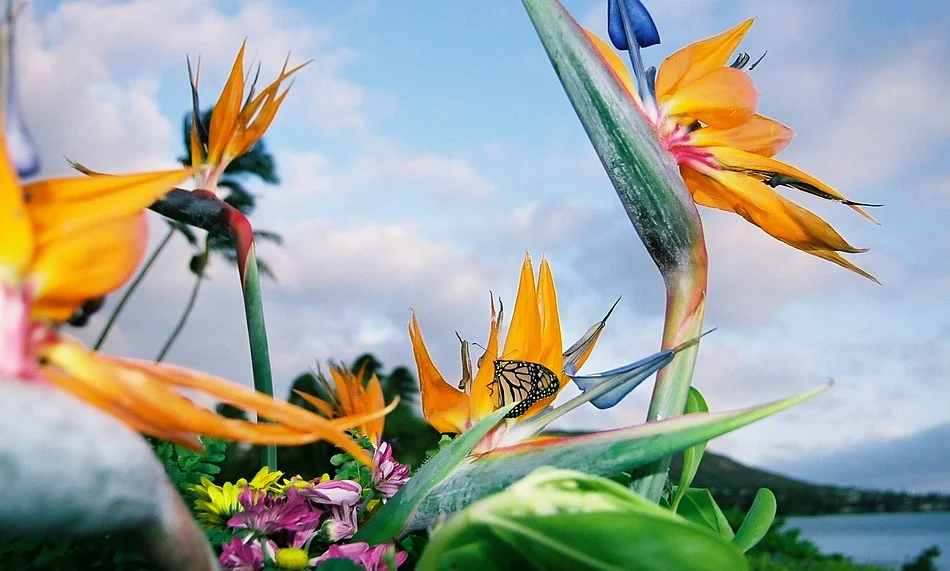
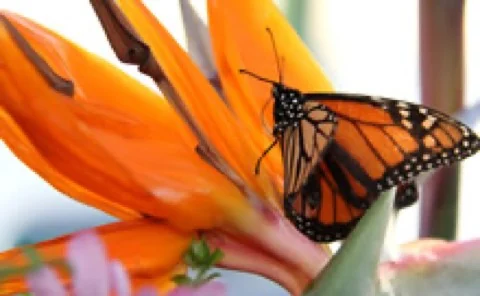
Butterflies on the bird of paradise
At a butterfly release, the monarchs often land on the bright orange petals for a moment before they fly away.
Couples and birds of paradise
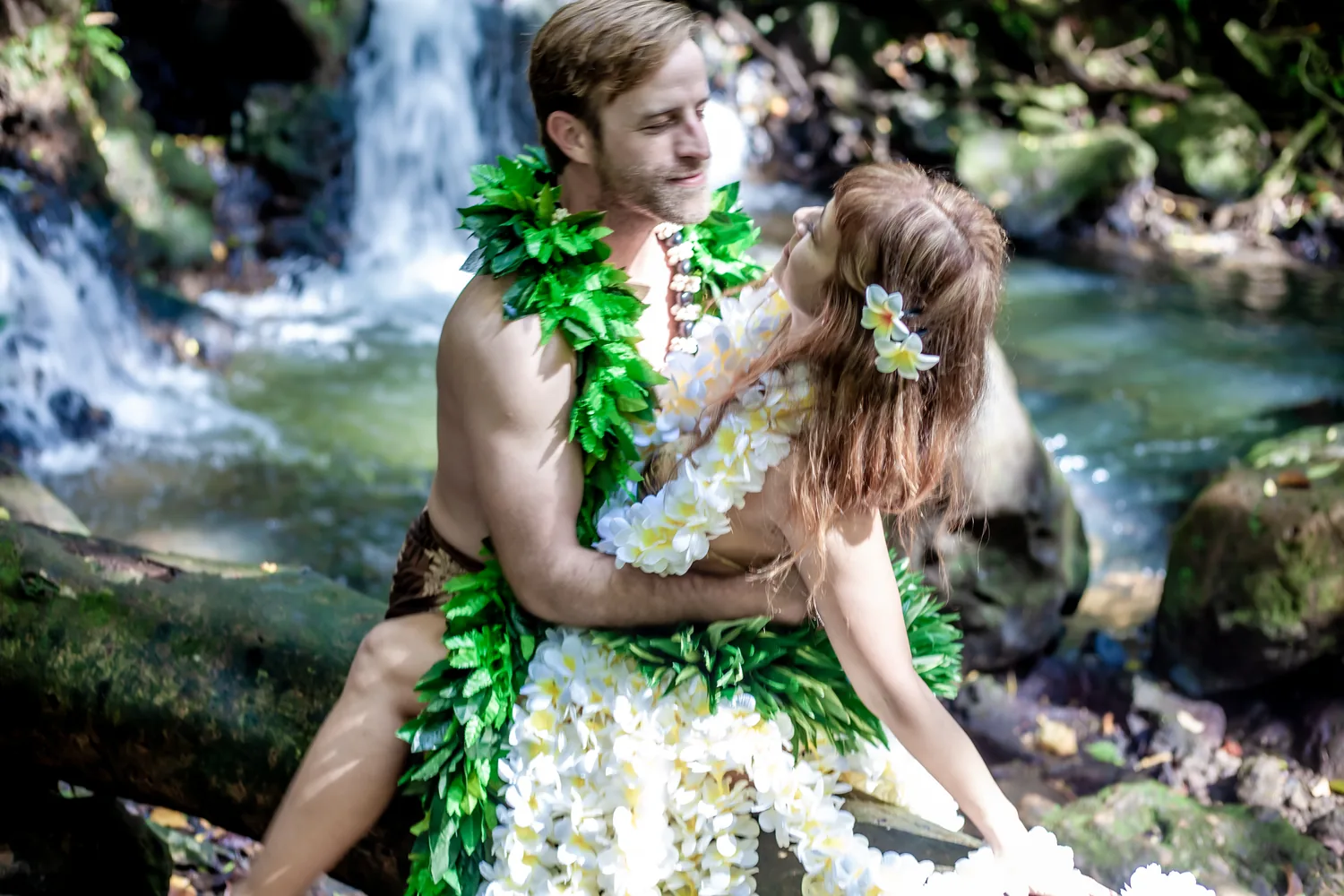
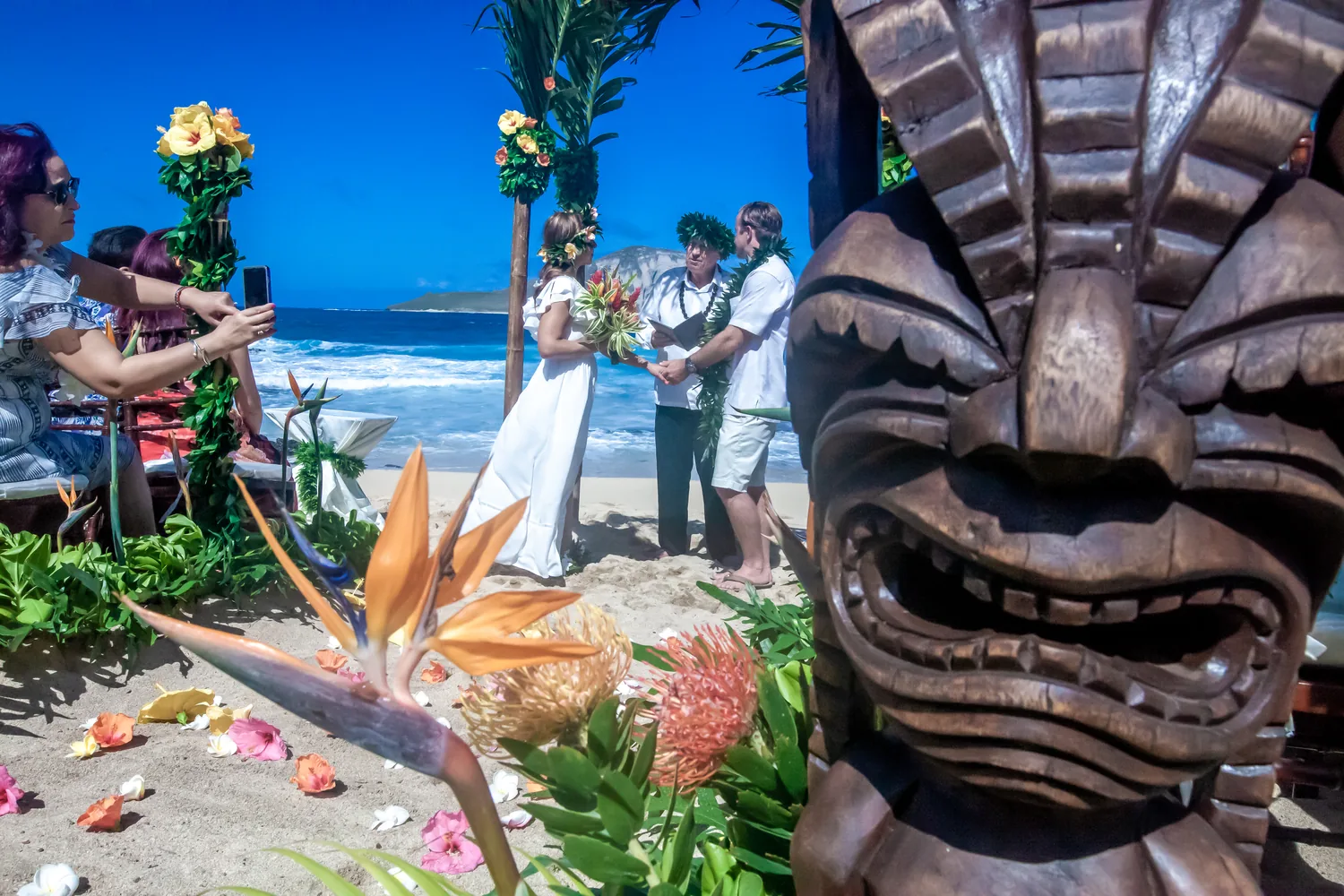
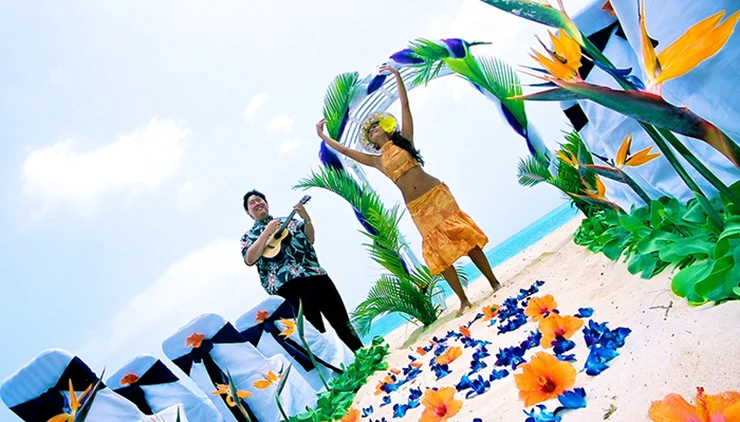
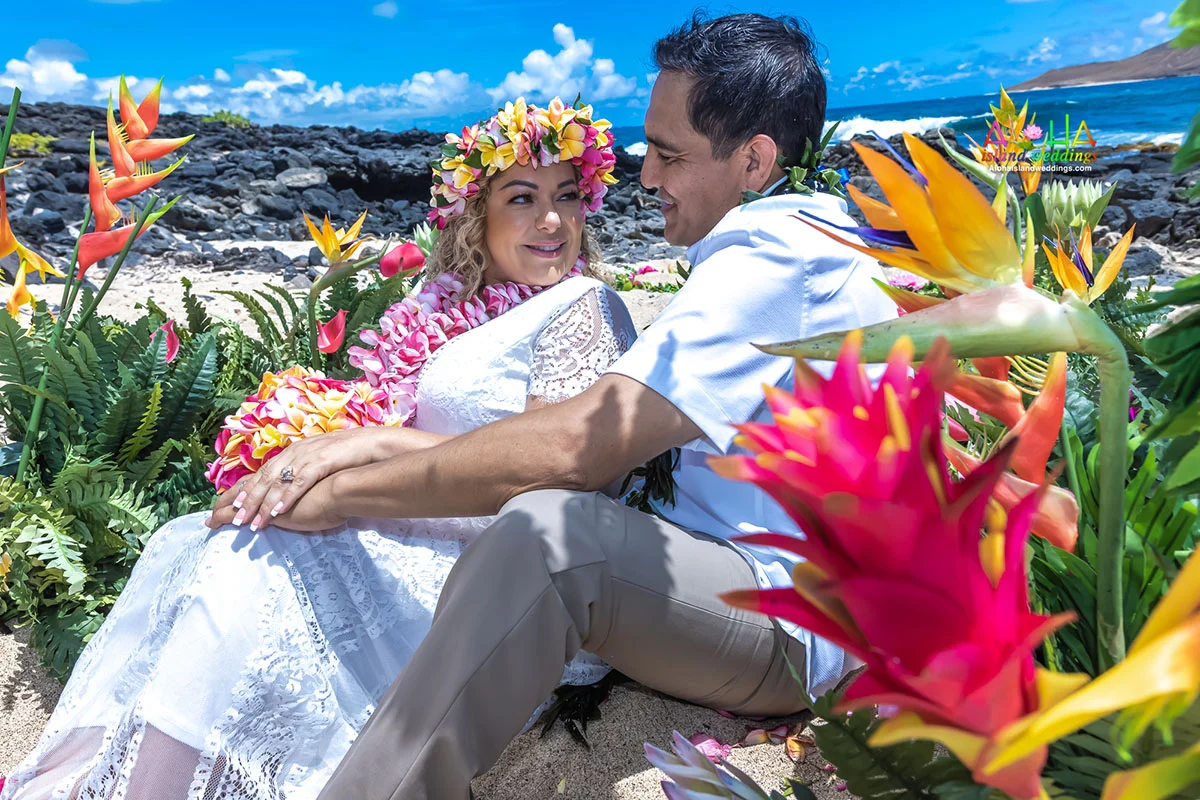
See these weddings: Ashley & LC · Christine & Matthew · John & Dianna · Elena & Rafael · Elsa & Willy · Lauren & Johnathan
More Hawaiian wedding flowers: tropical flowers · bouquets · hibiscus · plumeria · flower pathways · butterfly release
Planning a wedding? Our beach wedding packages run from $350 to $8,000 (all packages), plus 4.712% Hawaii state tax. The average Hawaii wedding costs about $53,369, half of couples spend less than $21,117, and our own couples usually spend $10,000 to $15,000 (The Wedding Report; see our Hawaii wedding statistics).
Questions
Is the bird of paradise a Hawaiian flower?
Not originally. The bird of paradise (Strelitzia reginae) is native to South Africa. It loves warm sun, so it grows beautifully in Hawaii today and is a favorite tropical flower for island weddings.
Why is it called the bird of paradise?
Its orange and blue petals rise from a pointed green sheath like the head and crest of a bird in flight. In South Africa it is also called the crane flower.
Does the bird of paradise hold up at a beach wedding?
Yes. Its thick, waxy petals and strong stems stand up well to the sun and the trade winds, so it stays fresh through the ceremony and the photos.
How can I use birds of paradise at my wedding?
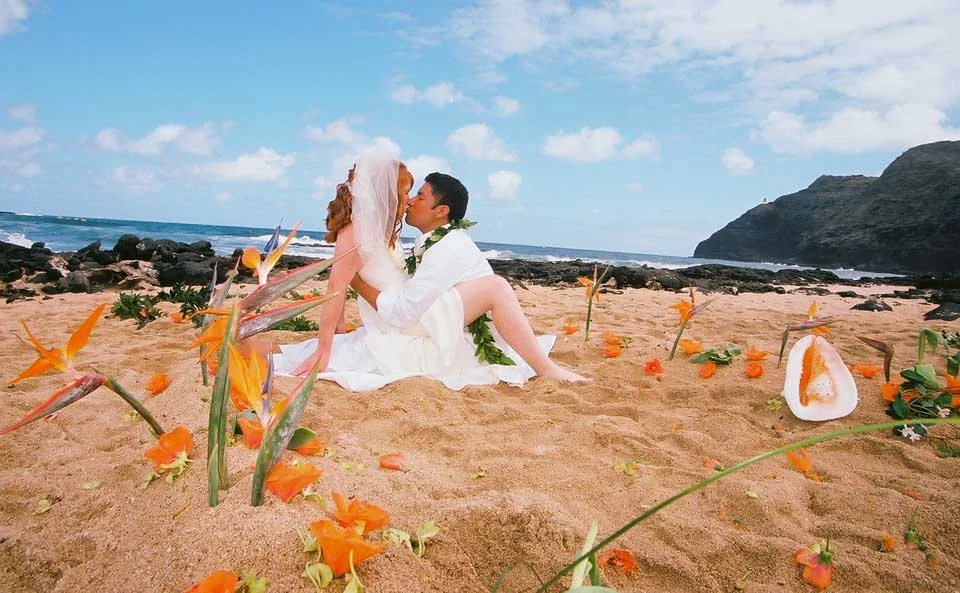
Along the aisle and at the arch, in tall urns on the lawn, in tropical bouquets with orchids and heliconia, on the wedding cake, and scattered on the sand for romantic couple photos.
See also
References
- Strelitzia reginae. Wikipedia.
- Strelitzia reginae. Plants of Hawaii.
- Strelitzia nicolai. Plants of Hawaii.
- Strelitzia reginae: Bird-of-Paradise. University of Florida IFAS Extension.