This article is about the king protea and the protea family in Hawaii. For other tropical flowers of the islands, see Exotic Hawaiian Flowers.
A crown of silver and rose, opening slowly in the cool mountain air of Kula. The king protea was born in the fire swept hills of the Cape, and it found a second home on the slopes of Haleakalā.
The king protea (Protea cynaroides; pronounced PROH-tee-uh) is a flowering shrub of the family Proteaceae and has the largest flower head of any protea.[2] It is native to South Africa, where it is the national flower, and it belongs to the genus Protea, whose species grow almost entirely in southern Africa.[1]
The king protea is not native to Hawaii. It was brought to the islands in the mid 1960s by the University of Hawaiʻi and became the heart of a flower industry in Kula, on the upcountry slopes of Maui, whose proteas are shipped to florists around the world.[3][4][5]
Description and biology
The king protea grows as a sturdy, woody shrub with thick stems and tough, leathery leaves. What looks like one giant flower is really a flower head: hundreds of small flowers packed together in a dome at the center, surrounded by a ring of large, stiff, colored bracts that look like petals. The bracts may be deep rose, pale pink, silvery white or cream, and the whole head can be as wide as a dinner plate.[2]
Most proteas are pollinated by insects, especially beetles that crawl through the flower heads feeding on nectar, with birds and wind helping too; the king protea is also able to pollinate itself.[1] After flowering, the head dries into a woody cone that holds the seeds.
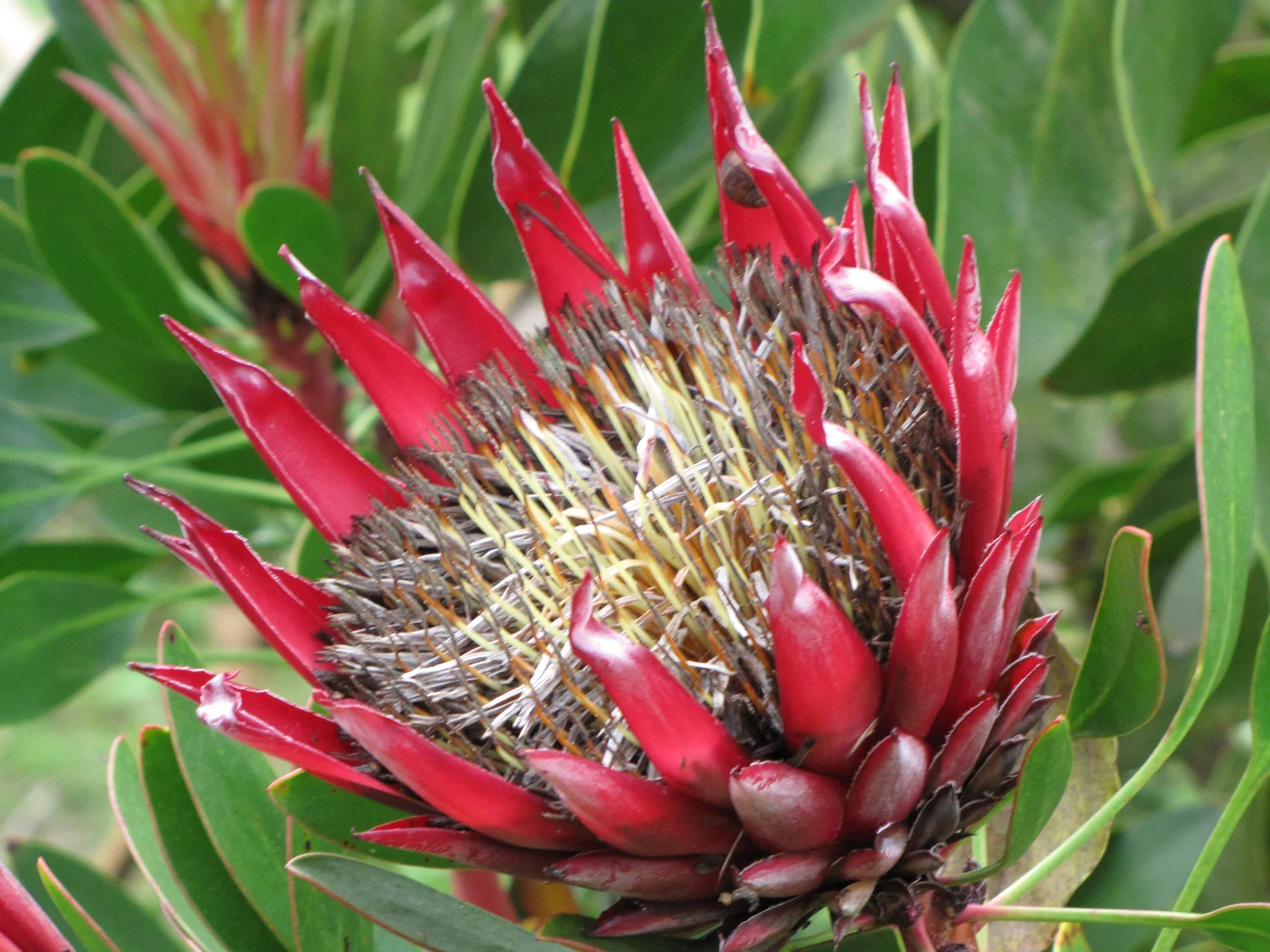
Photo: Forest and Kim Starr, CC BY 3.0 us, via Wikimedia Commons
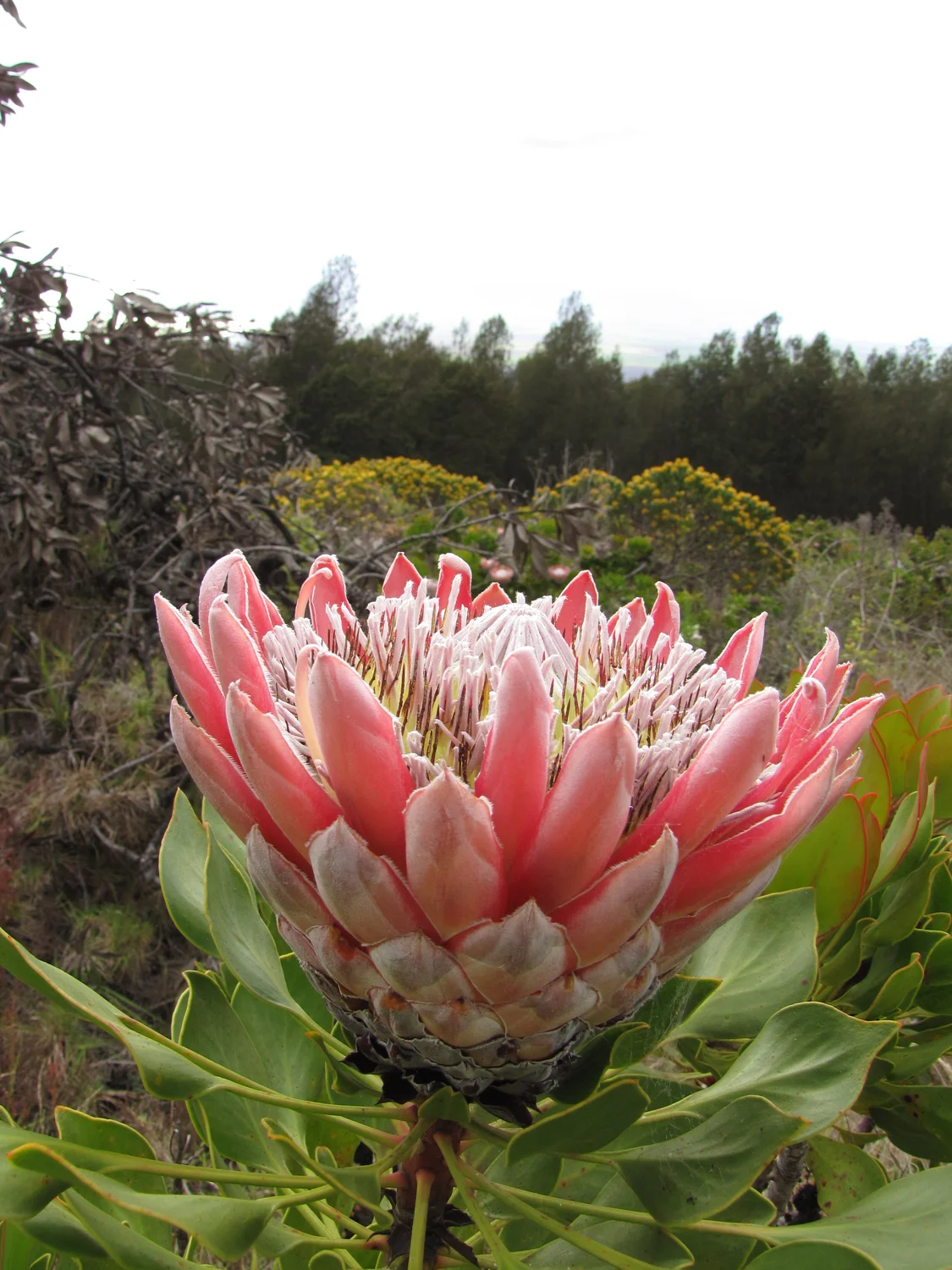
Photo: Forest and Kim Starr, CC BY 3.0 us, via Wikimedia Commons
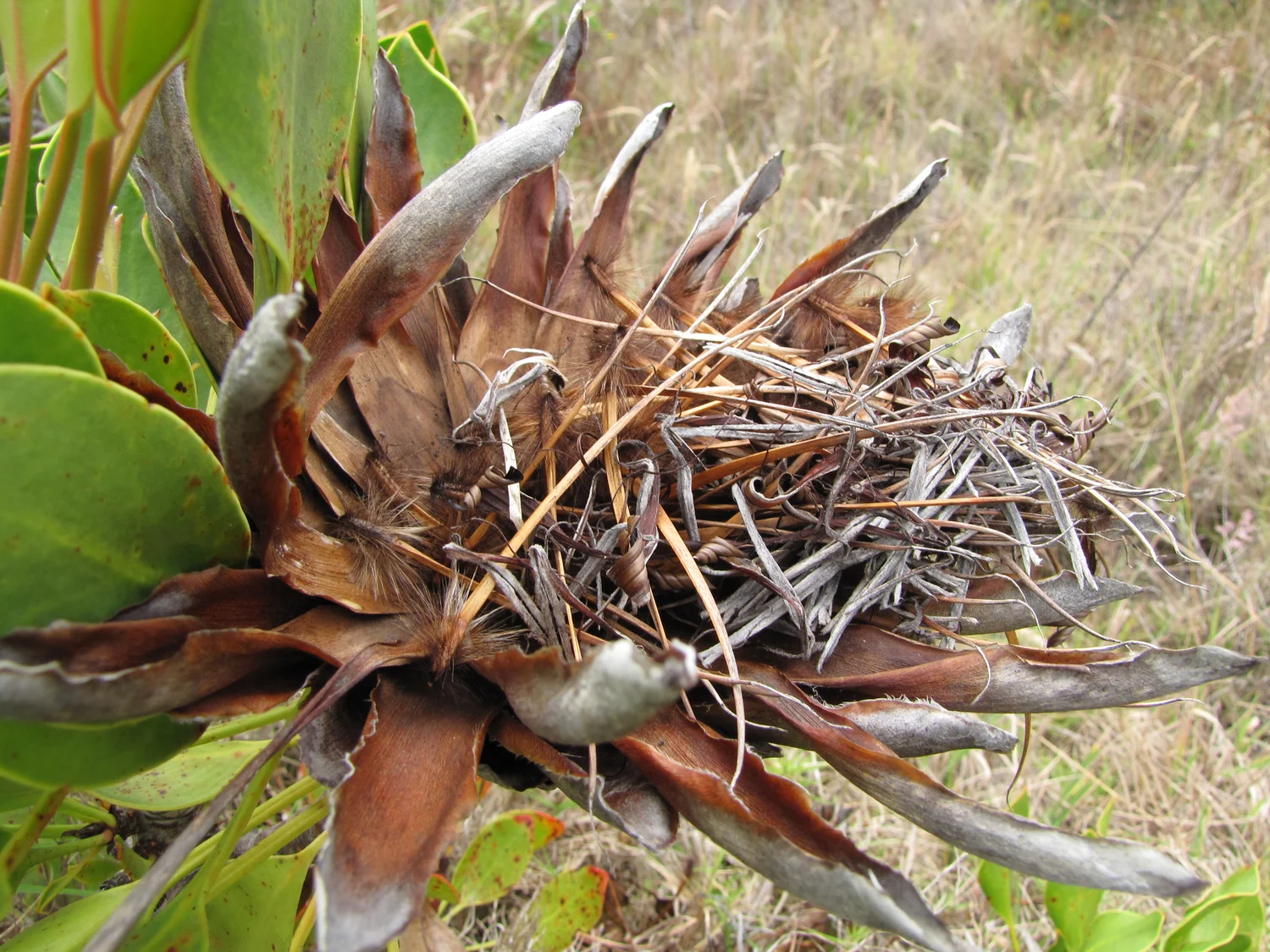
Photo: Forest and Kim Starr, CC BY 3.0 us, via Wikimedia Commons
Etymology
The genus was named by the Swedish botanist Carl Linnaeus after Proteus, the Greek god of the sea who could change his shape at will, because proteas take so many different forms.[1] The species name cynaroides means “like an artichoke,” after the artichoke genus Cynara, which the large, scaly flower buds resemble.
Distribution and habitat
About 92 percent of all protea species grow only in the Cape Floristic Region, a mountainous coastal belt at the southern tip of Africa, with a few more in the highlands of tropical Africa.[1] There they live in the fynbos, a shrubland of poor, sandy soils, dry summers and frequent wildfires, and the king protea survives the fires by sprouting again from its thick underground stem. The family is ancient: fossil pollen shows its ancestors grew on the supercontinent Gondwana 75 to 80 million years ago, which is why protea relatives are found today in Africa, Australia and South America.[1]
History in Hawaii
The protea came to Hawaii through the University of Hawaiʻi. In 1964 a visiting professor of horticulture, Dr. Sam McFadden, brought in seed of several members of the protea family for trials in Honolulu.[3] The plants did far better in the cool upcountry of Maui, and the first proteas were planted at the university’s research station in Kula around 1965.[4][5]
Philip Parvin took charge of the Maui station in 1968 and led its breeding of new protea hybrids; he is remembered as the “father of the Hawaiian protea industry.”[6] By 1984 more than 40 farmers were growing proteas commercially in Upcountry Maui,[7] and at its height the state had about 50 protea farms, though the number had fallen to 27 by 1999.[4]
Cultivation in Hawaii
Kula lies around 3,000 feet up the slopes of Haleakalā, with cool nights, sunny days and loose, well drained volcanic soil, conditions much like the protea’s home in the Cape. Proteas dislike wet feet and rich, heavy soil, and they thrive in the lean, airy earth of the upcountry. The fields of Kula, with their rows of silvery shrubs and rose colored crowns, have become one of Maui’s most memorable sights, and family farms there carry on the tradition today.[8]
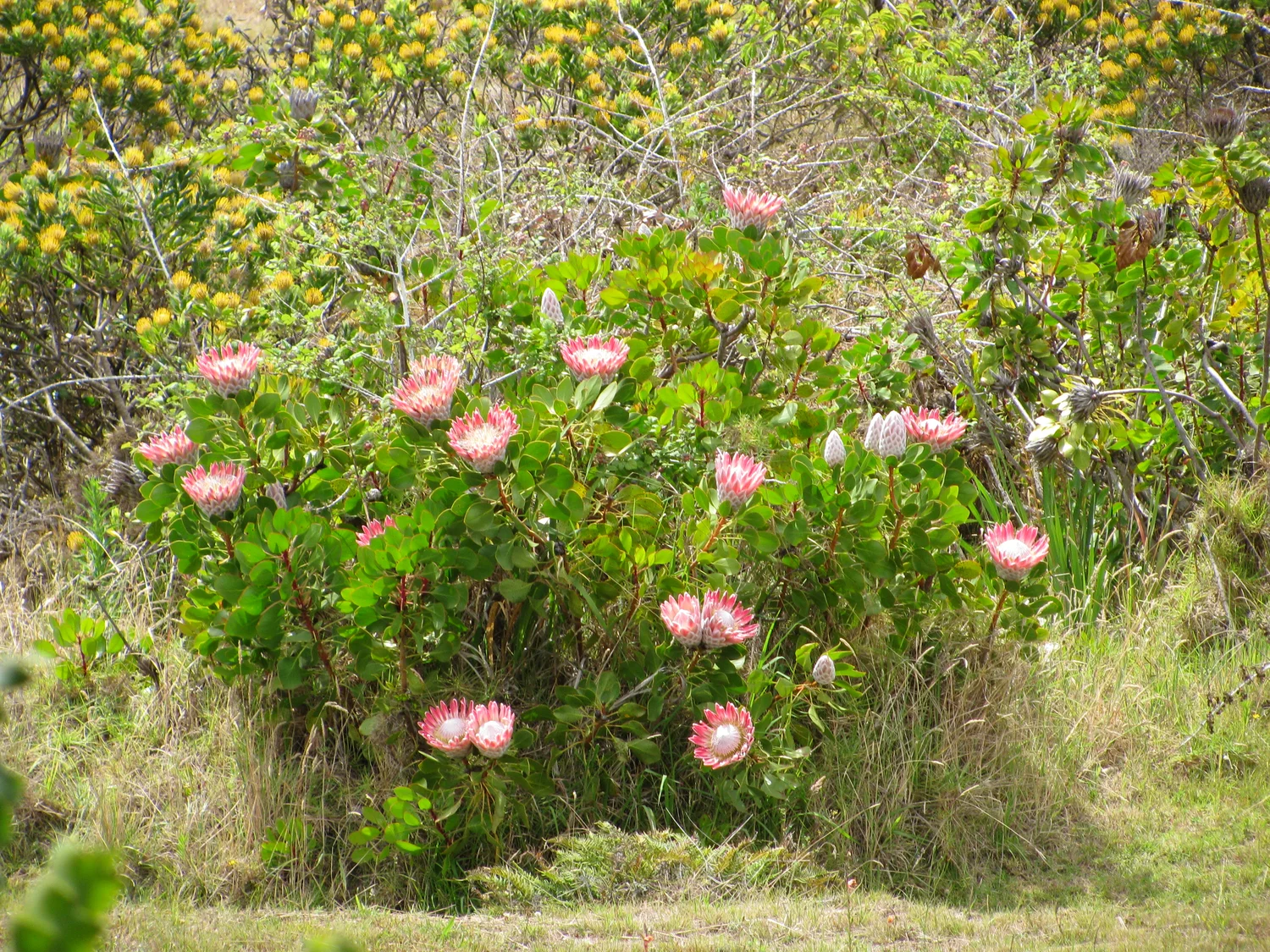
Photo: Forest and Kim Starr, CC BY 3.0 us, via Wikimedia Commons
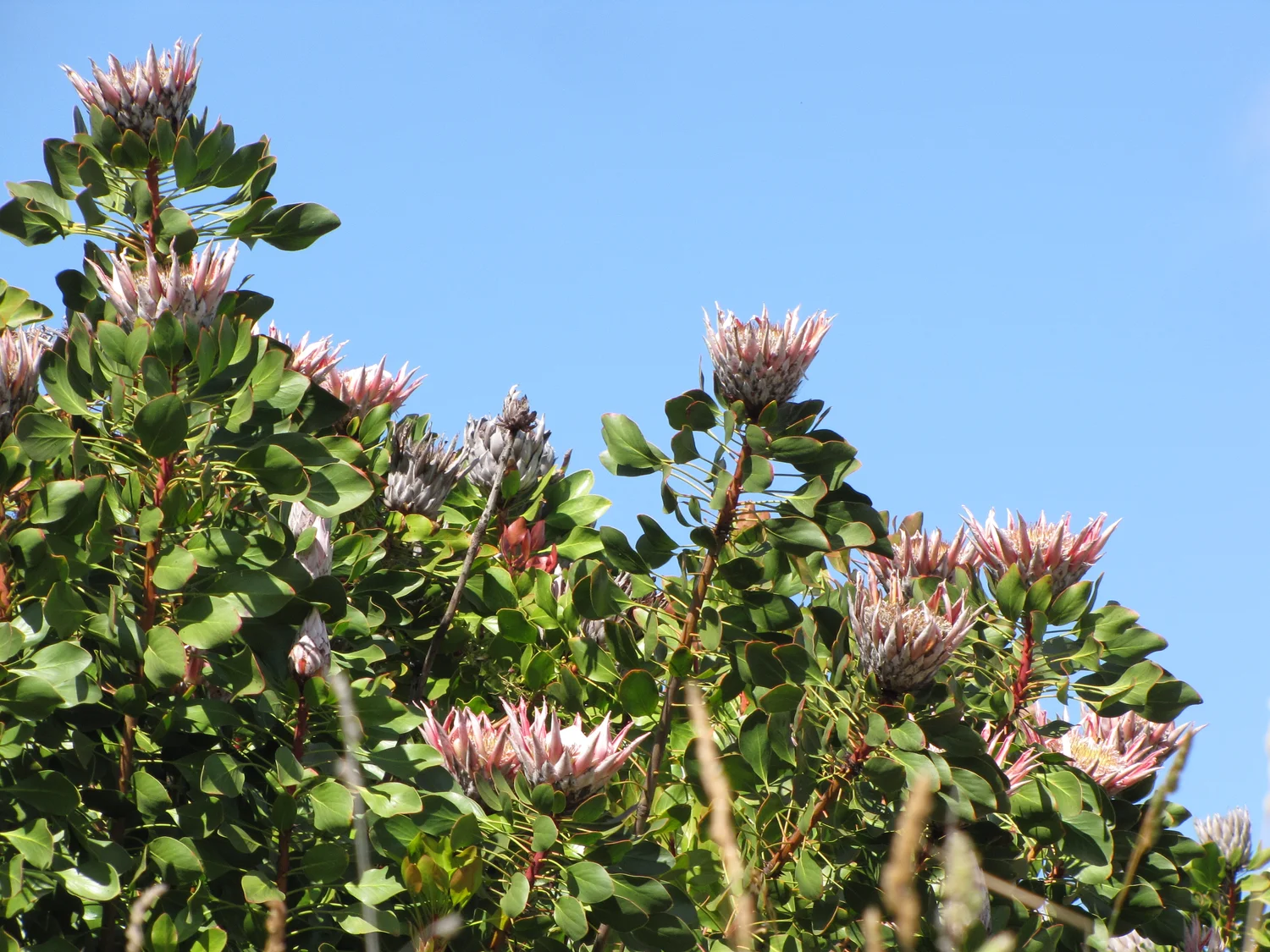
Photo: Forest and Kim Starr, CC BY 3.0 us, via Wikimedia Commons
Propagation
Proteas can be grown from seed, but new hybrids are kept true by cuttings. The Kula research station still supplies the industry: cuttings of its hybrids go out to farms across Hawaii, which in turn send proteas to florists as far away as Europe.[5]
The protea family in Hawaii
The king protea has many cousins, and Hawaii’s growers raise several of them. The pincushion (Leucospermum) has a round head of bright yellow, orange or red “pins” and is a favorite in tropical bouquets. Leucadendrons have colorful leafy cones, and banksias from Australia have tall, bottle brush like spikes. Other proteas, like the fuzzy rose colored Protea grandiceps, grow at Kula Botanical Garden. Even the macadamia nut tree, grown today on the Big Island and Maui, belongs to the protea family.
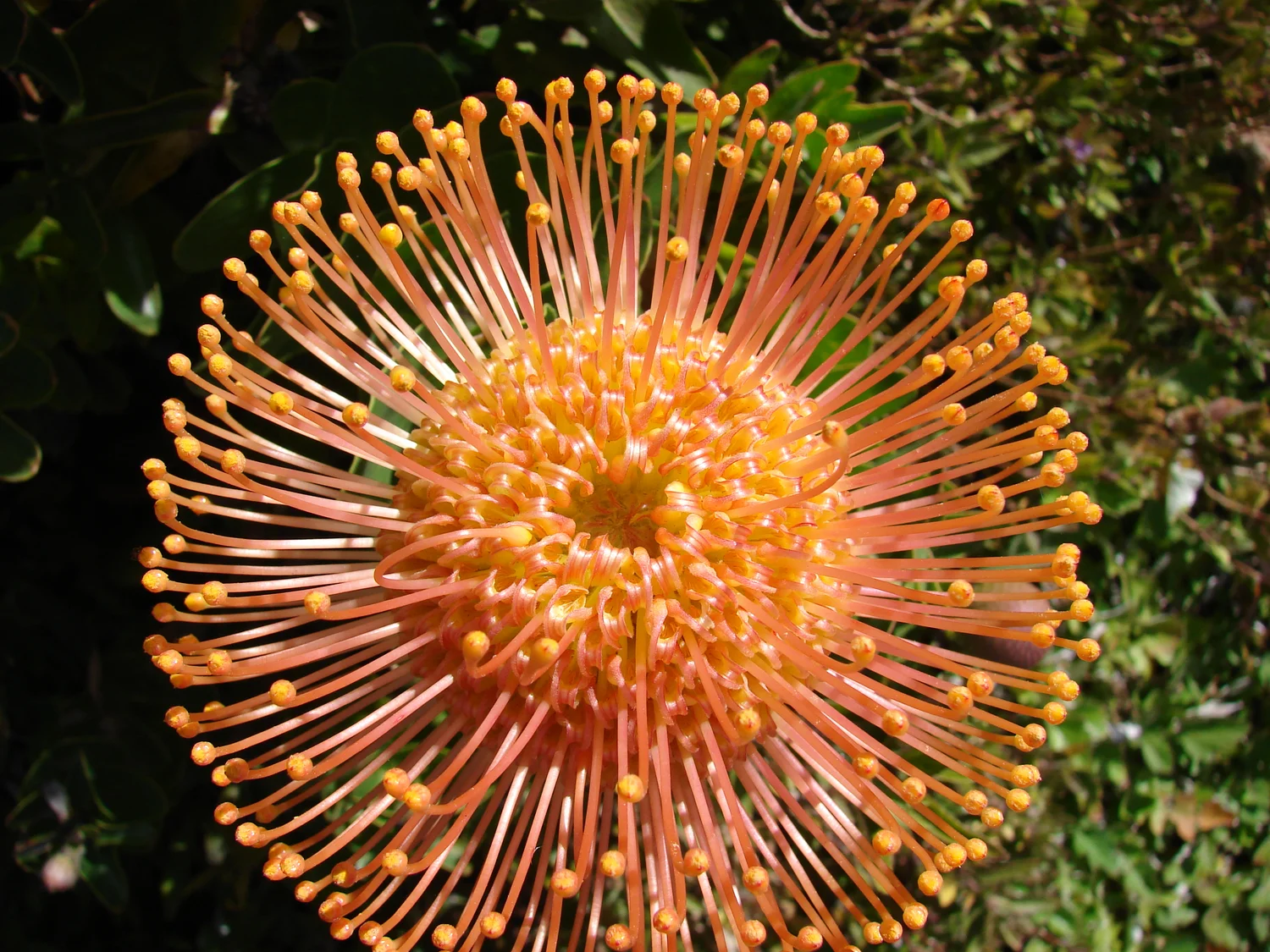
Photo: Forest and Kim Starr, CC BY 3.0 us, via Wikimedia Commons
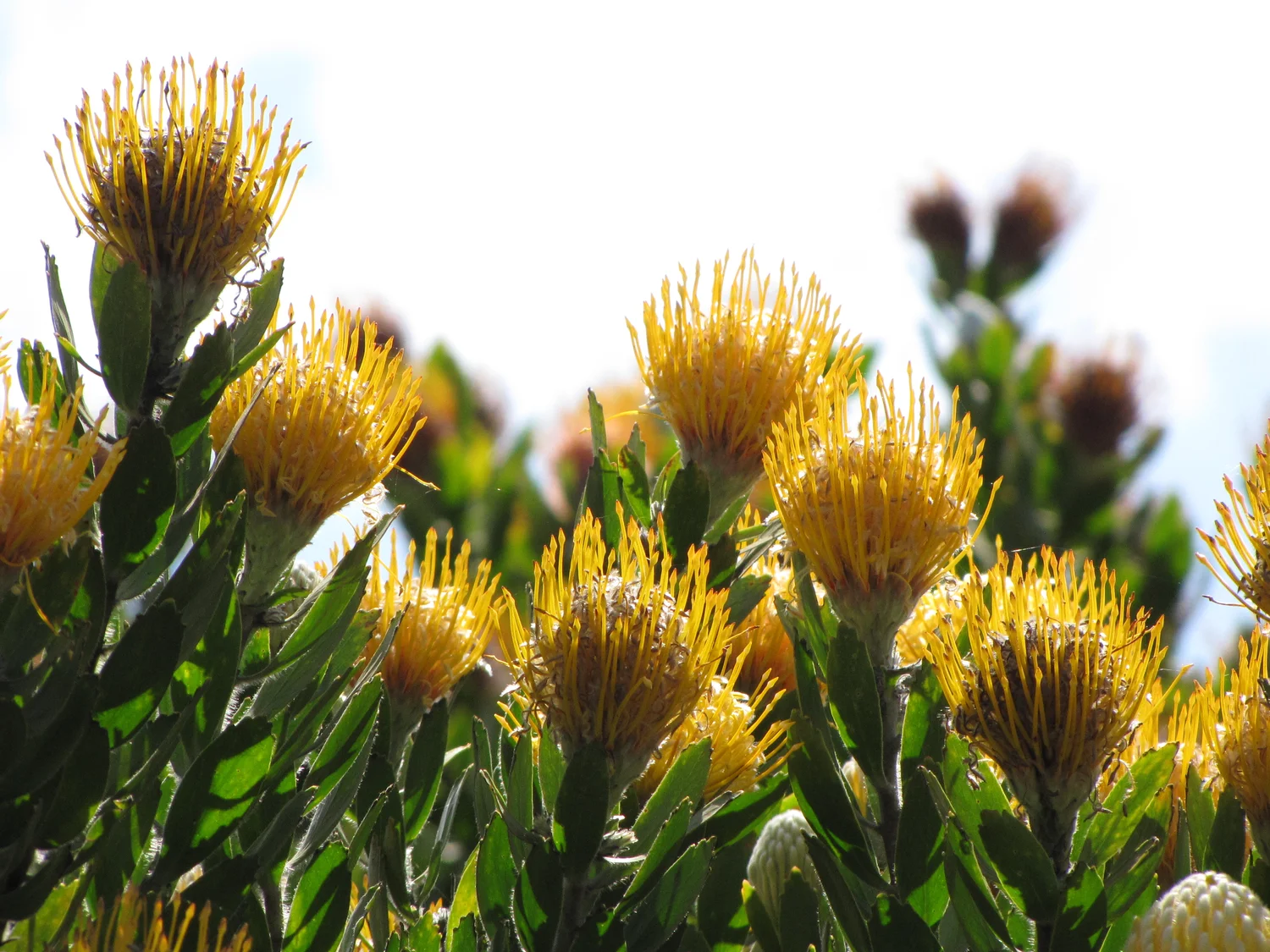
Photo: Forest and Kim Starr, CC BY 3.0 us, via Wikimedia Commons
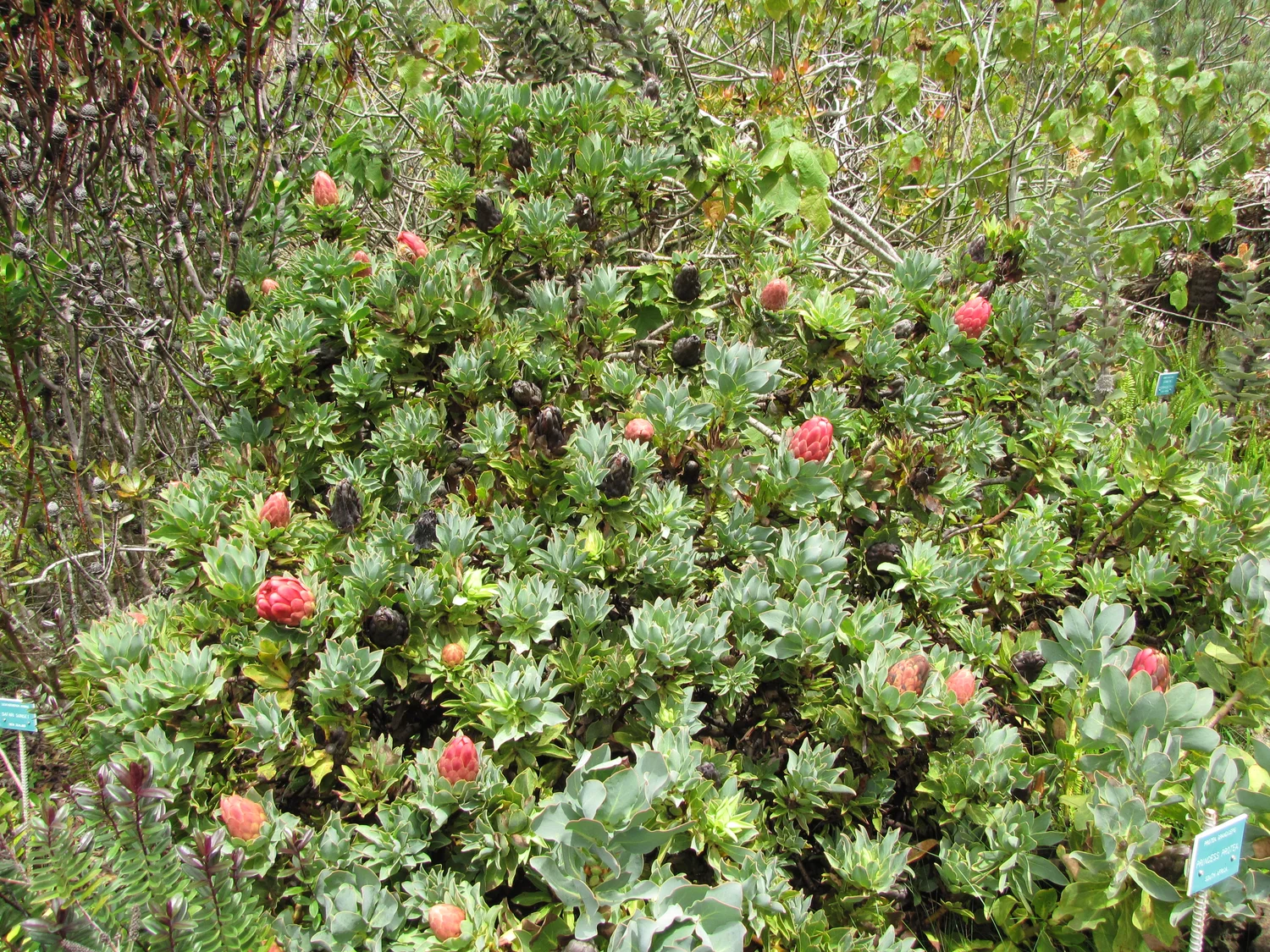
Photo: Forest and Kim Starr, CC BY 3.0 us, via Wikimedia Commons
Care and drying
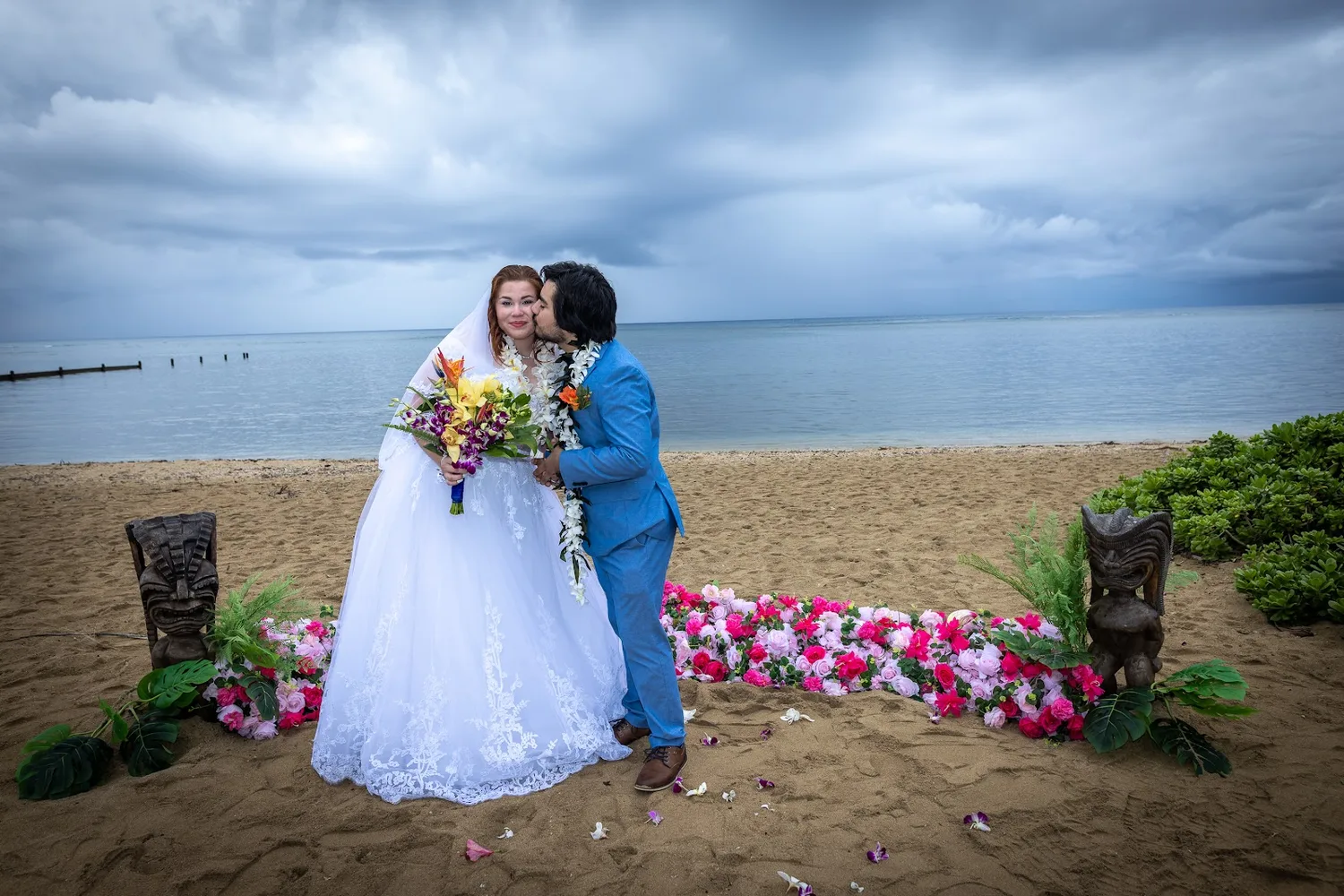
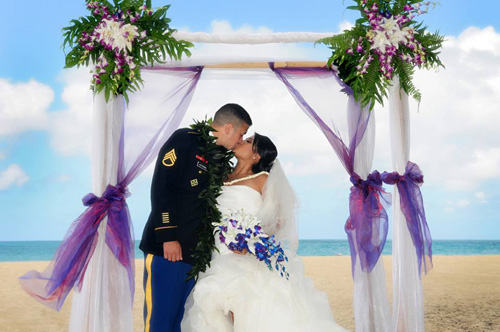
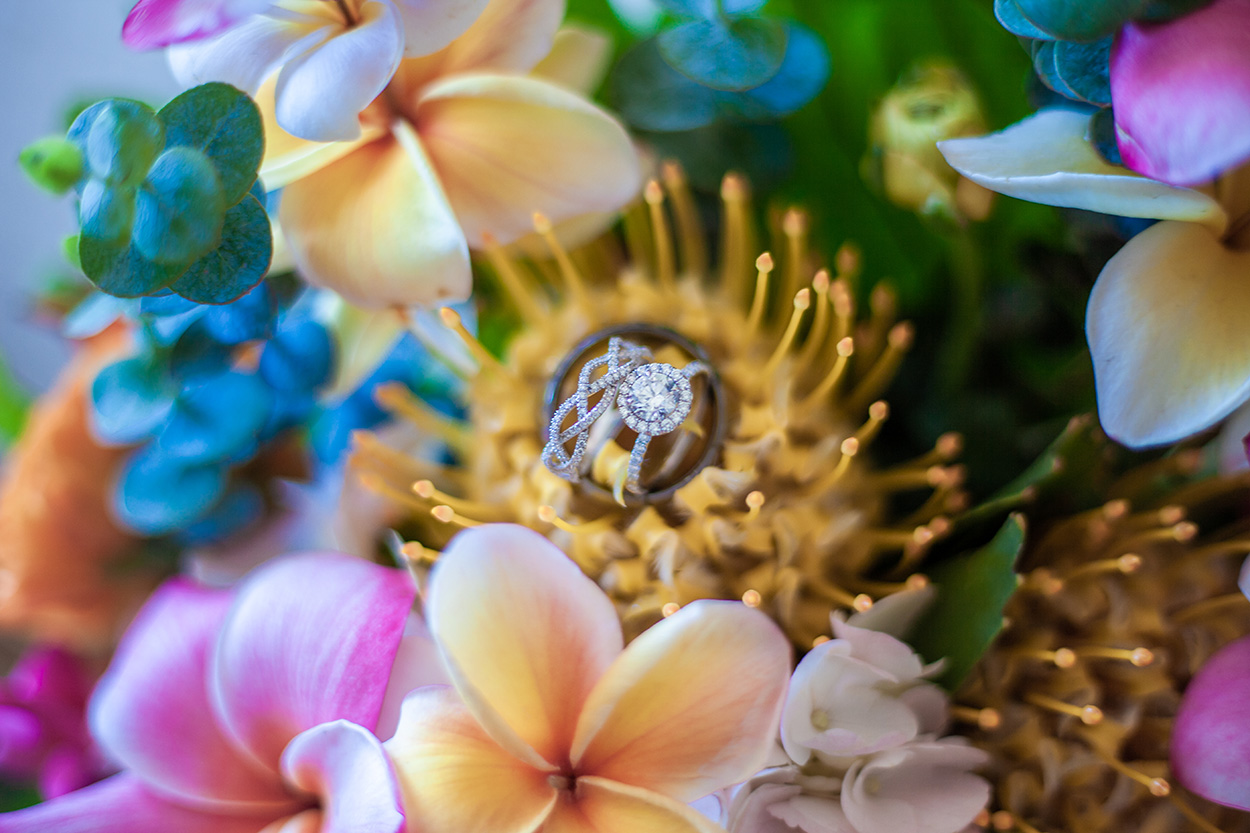
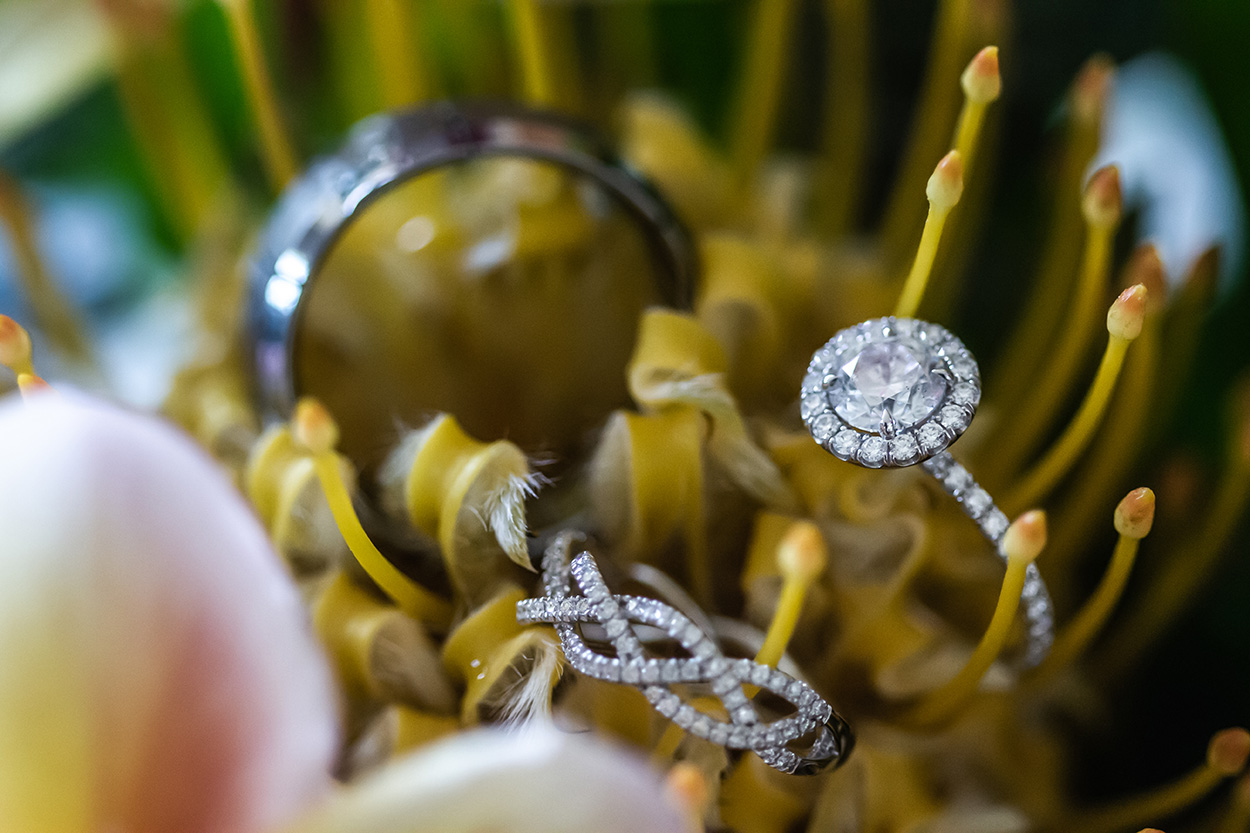
Proteas are among the longest lasting cut flowers. Their woody stems and leathery bracts hold their shape in the heat, which makes them ideal for beach weddings and for shipping from the islands. When they finish, they dry beautifully: hung upside down in a dry room, they keep their shape and much of their color for years, a keepsake that outlasts the wedding day.
In island life
On Maui the protea has become part of the upcountry landscape. Visitors stop at the protea farms on the winding roads up Haleakalā to walk among the blooms, and on the mountain’s high, bare lava slopes a protea may even be found left as an offering among the stones.
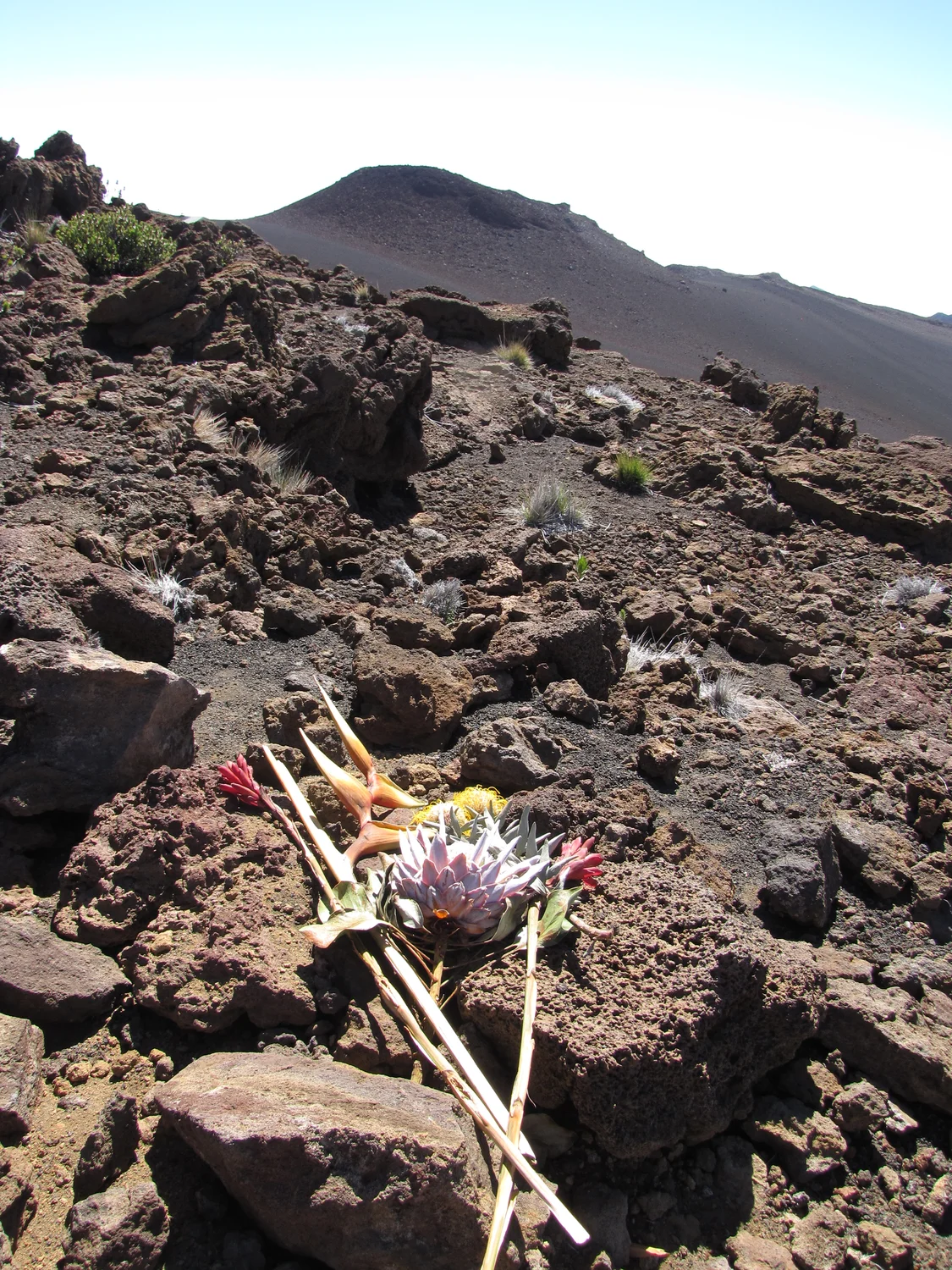
Photo: Forest and Kim Starr, CC BY 3.0 us, via Wikimedia Commons
Use in Hawaiian weddings
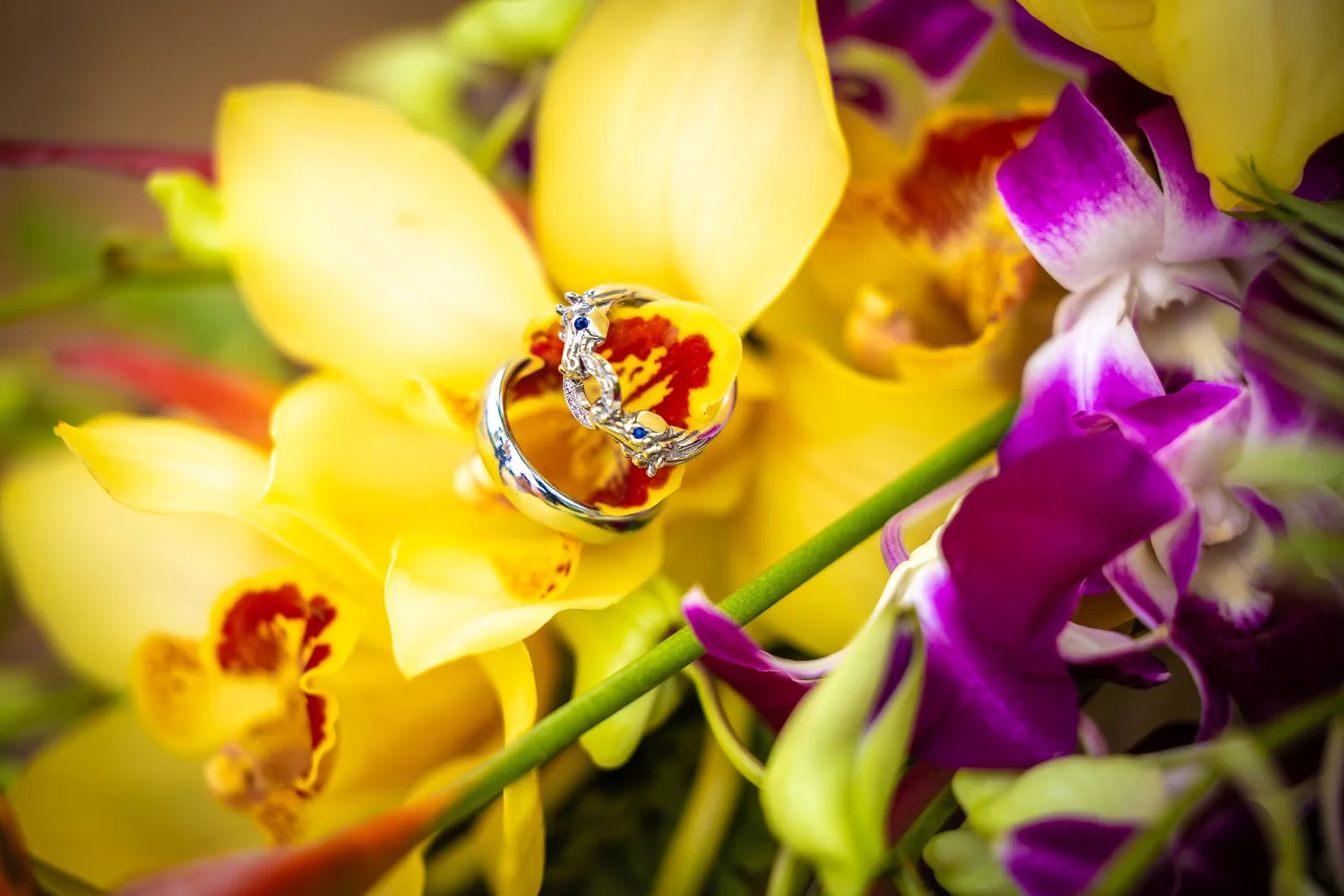
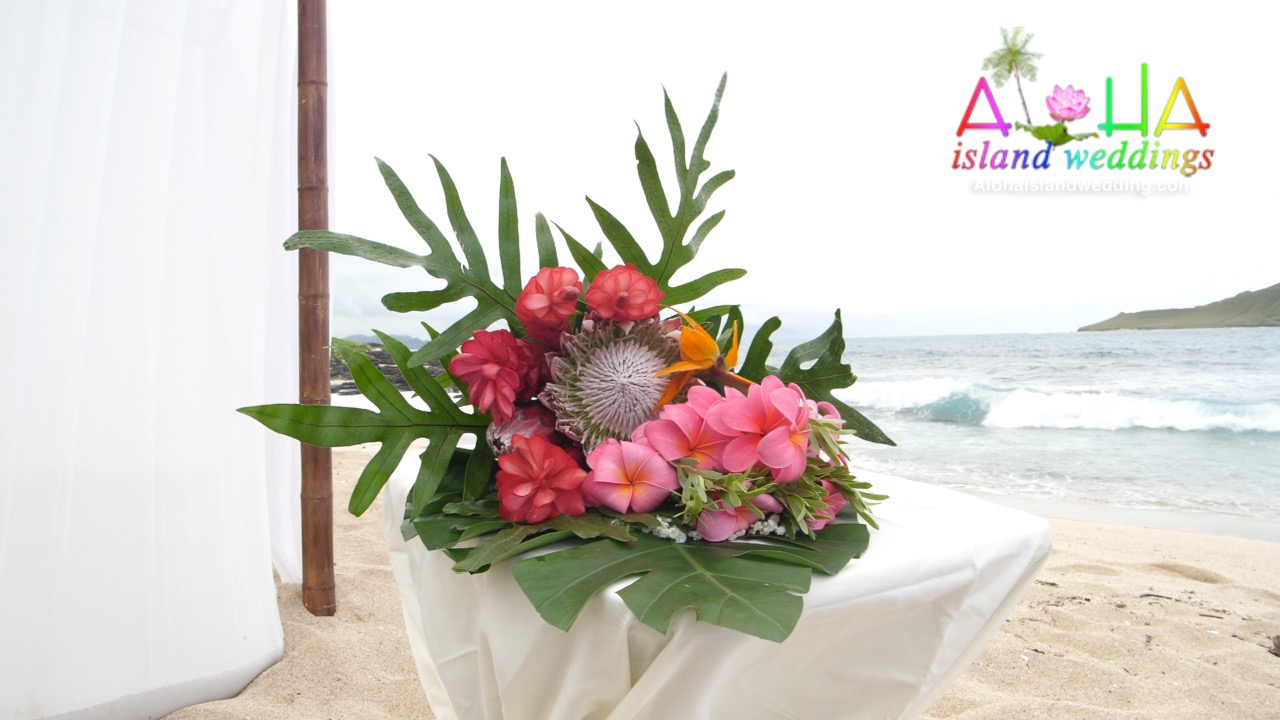
A single king protea makes a dramatic bouquet all on its own, and it pairs beautifully with pink plumerias, red ginger, roses and monstera leaves in a big tropical arrangement. Pincushions add a burst of gold or orange to an orchid bouquet, and both make a striking resting place for the wedding rings in close up photos.

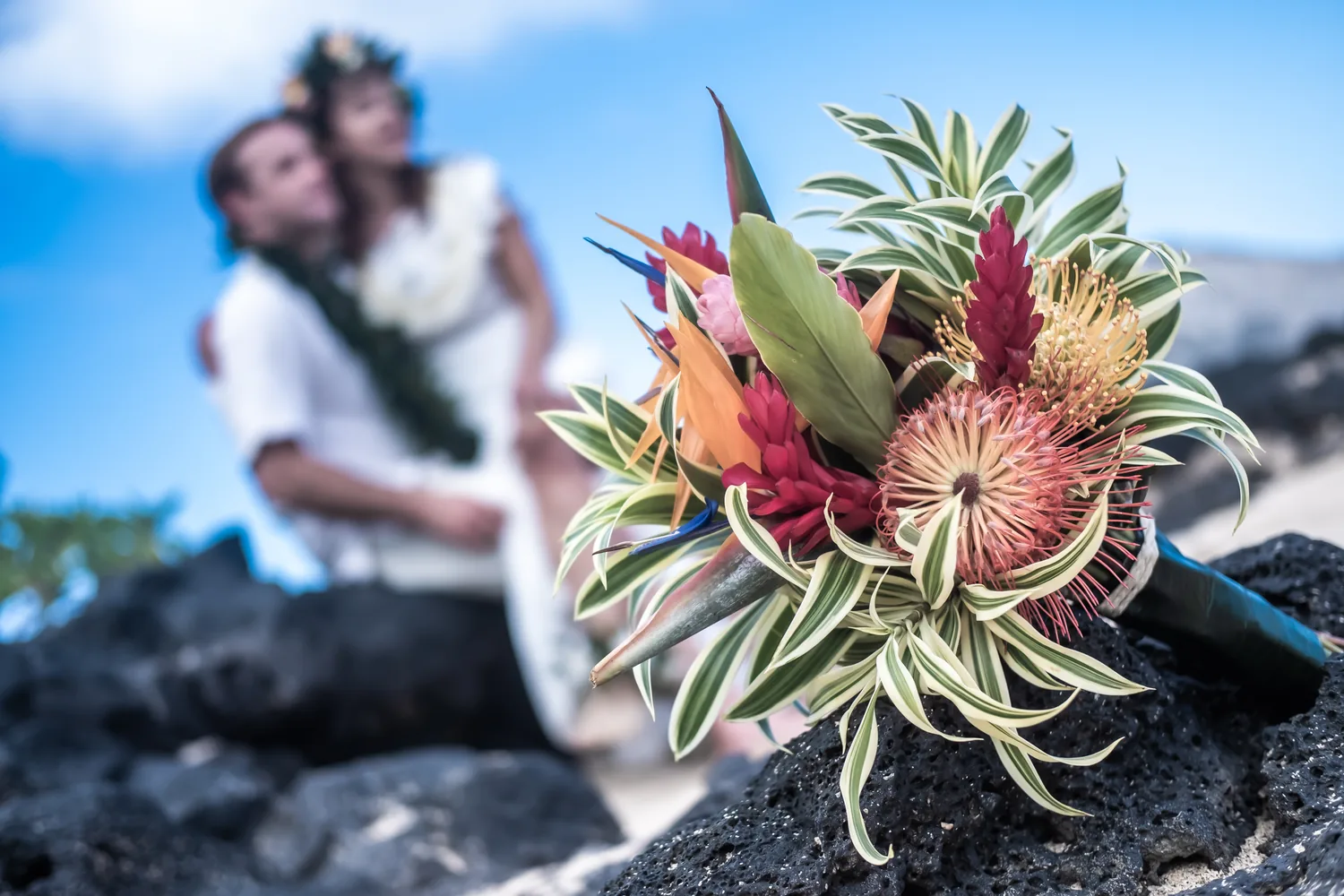
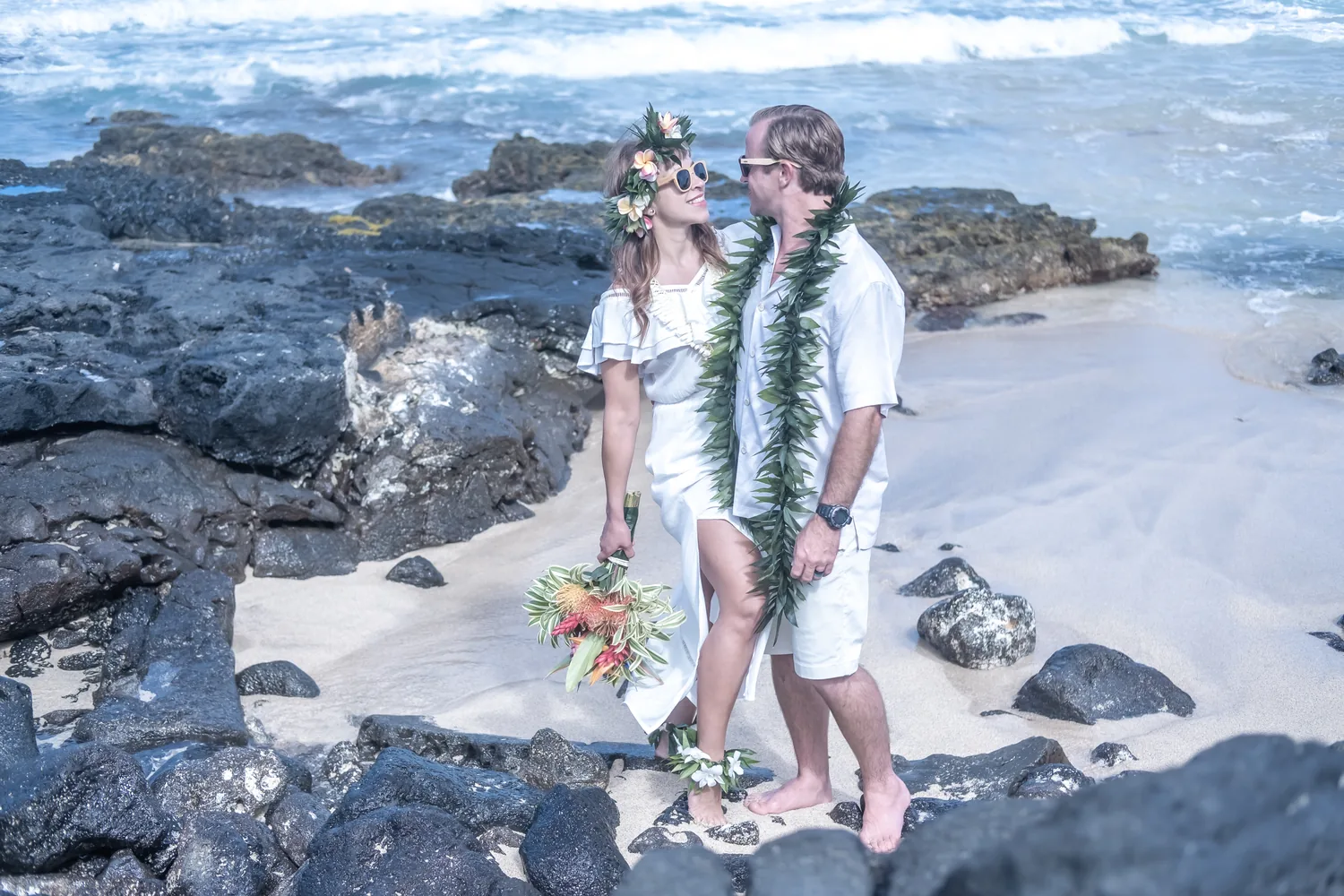
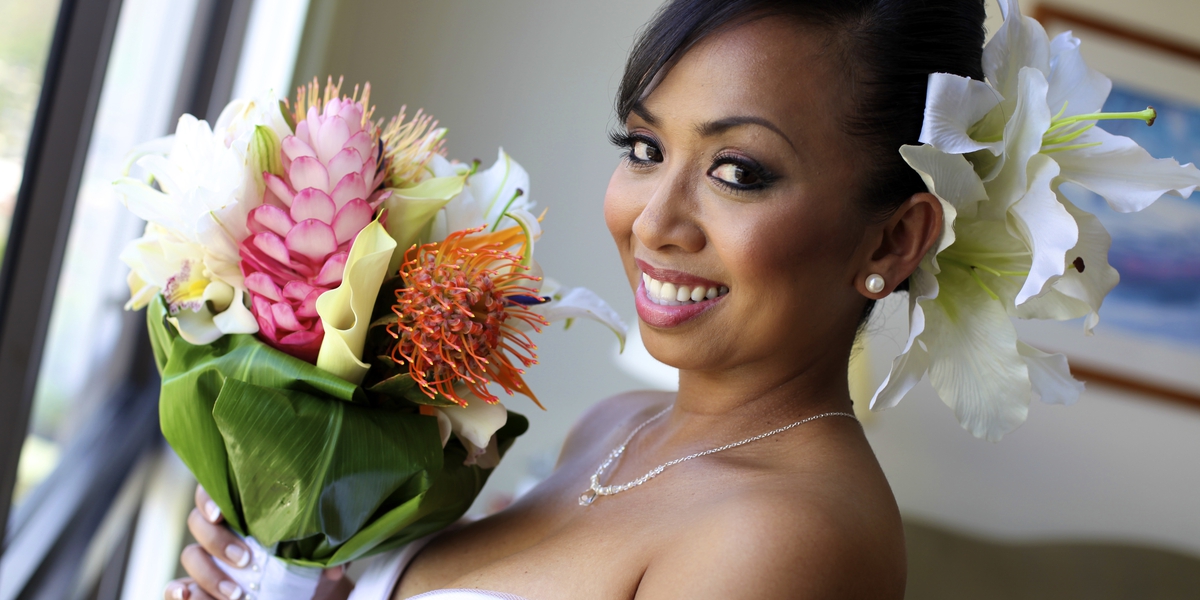
See more on our tropical wedding flowers page, Lauren and Johnathan’s Waimanalo wedding, Elsa and Willy’s tropical Oahu wedding and our bouquets.
Timeline
- 75–80 million years ago: ancestors of the protea family grow on Gondwana[1]
- 1964: Dr. Sam McFadden brings protea seed to Hawaii for trials[3]
- About 1965: the first proteas are planted at Kula, Maui[4][5]
- 1968: Philip Parvin takes charge of the Maui station and its protea breeding[6]
- 1984: more than 40 protea farmers in Upcountry Maui[7]
- 1999: 27 commercial farms, down from about 50[4]
Planning a wedding? Our beach wedding packages run from $350 to $8,000 (all packages), plus 4.712% Hawaii state tax. The average Hawaii wedding costs about $53,369, half of couples spend less than $21,117, and our own couples usually spend $10,000 to $15,000 (The Wedding Report; see our Hawaii wedding statistics).
See also
References
- Protea. Wikipedia.
- Protea cynaroides. Wikipedia.
- Protea: a new crop for Hawaii (New Crops proceedings, 1999). Purdue University.
- Proteas in the garden (1999). Honolulu Star-Bulletin.
- Maui Agricultural Research Center, Kula. Lonely Planet.
- Key player in Hawaii’s protea industry dies (2013). The Maui News.
- Maui: a swing through the island’s wide-open Upcountry (1984). Christian Science Monitor.
- This protea farm on Maui is still going strong. Hawaii Business Magazine.